
Orange County has 30 state-certified adult day health centers — more per capita language access for Korean-speaking families than any other county in California.

Most Orange County families have never heard of Community-Based Adult Services, even though the state’s own certification directory shows the county holds more of these centers than anywhere in California outside Los Angeles — and a language-access advantage that isn’t close. We pulled the California Department of Aging’s current center-by-center directory this week, and the numbers tell a story nobody locally has actually reported: Orange County has 30 certified adult day health centers, and two-thirds of them offer services in Korean or Vietnamese. If you’re caring for an aging parent who needs supervision and medical monitoring during the day but doesn’t need — or want — a nursing facility, this is very likely the program you didn’t know existed.
What CBAS Actually Is, and Why Almost No One Knows the Name
Community-Based Adult Services, or CBAS, is a Medi-Cal managed care benefit that provides a licensed, medically supervised day program for adults who need daytime nursing oversight, therapy, or supervision because of a chronic physical condition, a cognitive impairment, or a mental health condition. It isn’t a senior center and it isn’t a social club, even though socialization is part of it. Every CBAS center is required to have a registered nurse on site, along with access to physical, occupational, and speech therapy, mental health services, personal care assistance, a hot meal, nutritional counseling, and transportation to and from the participant’s home. The program replaced the old Adult Day Health Care model in 2012 during a state Medi-Cal restructuring, which is very likely part of why the name never stuck in the public’s mind — families still ask their doctor about “adult day health care” and get directed to a program that quietly changed its name over a decade ago.
The practical effect for a family is straightforward: a parent who can no longer safely stay home alone all day, but who doesn’t need round-the-clock nursing facility care, attends a CBAS center several days a week. A nurse monitors medications and vital signs, a therapist runs a rehab session, and the participant eats lunch and socializes with peers — all while the working adult child or family caregiver gets the daytime hours back. For Medi-Cal beneficiaries who qualify, it is covered, not an out-of-pocket private-pay expense the way most adult day programs are.
Orange County’s Numbers, Straight From the State’s Own Directory
We downloaded the California Department of Aging’s current CBAS center directory directly from its public data export this week and sorted every one of the state’s 321 certified centers by county. Los Angeles is far ahead with 195 centers, which tracks with its population. What doesn’t track with population alone is second place: Orange County, with 30 open and operating centers, ahead of San Diego’s 13, San Bernardino’s 11, and San Francisco’s 10 — each of those counties combined still falls short of Orange County’s total.
| County | Certified CBAS Centers | Statewide Rank |
|---|---|---|
| Los Angeles | 195 | #1 |
| Orange | 30 | #2 |
| San Diego | 13 | #3 |
| San Bernardino | 11 | #4 |
| San Francisco | 10 | #5 |
| Statewide Total | 321 | — |
All 30 of Orange County’s centers show an “Open” operational status in the state’s current directory — none are pending, suspended, or closed. They’re spread across the county rather than clustered in one city: Santa Ana, Garden Grove, Anaheim, Huntington Beach, Westminster, Tustin, Fullerton, Buena Park, Cypress, Laguna Woods, and Irvine each host at least one certified center.

Every certified CBAS center is required to have a registered nurse on site to monitor medications, vital signs, and chronic conditions throughout the day.
The Language Access Story No One in Orange County Has Told
This is the finding that made us pull the data in the first place. Orange County is home to two of the largest Korean and Vietnamese communities in the United States — the Little Saigon corridor spanning Westminster, Garden Grove, and Santa Ana, and the Koreatown corridor along Garden Grove Boulevard extending into Buena Park. The state’s CBAS language directory shows that isn’t just a demographic footnote; it shows up directly in which centers exist and what languages they operate in.
Of Orange County’s 30 certified centers, 15 — exactly half — list Korean as a language of service, and 11 list Vietnamese. Six centers serve both. Statewide, only 60 CBAS centers in all of California offer Korean-language services, which means Orange County alone accounts for 25% of every Korean-speaking CBAS center in the state, despite holding less than 10% of the state’s total center count. That is a real concentration, not a rounding error, and it means a Korean-speaking senior in Orange County has dramatically better odds of finding a day program where staff and other participants speak their language than almost anywhere else in California.
| Center | City | Languages |
|---|---|---|
| Garden Grove ADHC | Garden Grove | Korean & Vietnamese |
| Healthy Aging Center: Acacia | Garden Grove | Korean & Vietnamese |
| Regent West Adult Day Health Care Center | Garden Grove | Korean & Vietnamese |
| Reimagine Network – Orange | Santa Ana | Korean & Vietnamese |
| Alzheimer’s Family Services Center | Huntington Beach | Korean & Vietnamese |
| ABC Santa Ana Day Health Center | Santa Ana | Vietnamese |
| ABC Westminster Day Health Center | Westminster | Vietnamese |
| Sarang Adult Day Health Care Center | Cypress | Korean |
| Irvine Health Foundation Adult Day Health Services Center | Irvine | Vietnamese |
This table is a sample, not the full list — every family’s next practical step is confirming current openings and language staffing directly with the center and with CalOptima, since availability changes. But the pattern holds across the full state dataset: Garden Grove alone hosts three centers that serve both Korean and Vietnamese speakers, making it the single best-covered city in Orange County for bilingual day care access, and Santa Ana and Westminster anchor the Vietnamese-language cluster consistent with the Little Saigon community they sit inside.
What Actually Happens at a CBAS Center Day to Day
Services Every Certified Center Must Provide
- Individual assessment and an ongoing care plan, reviewed regularly by a registered nurse
- Professional nursing services, including medication management and vital sign monitoring
- Physical, occupational, and speech therapy as prescribed
- Mental health services and therapeutic activities designed around cognitive and emotional wellbeing
- Personal care assistance (bathing, toileting, mobility support) as needed
- A hot meal and individualized nutritional counseling
- Transportation to and from the center, included in the covered benefit
The mix of medical oversight and social engagement is what separates CBAS from a private-pay senior day program. A participant with diabetes, for example, gets blood sugar checks and medication reminders from a nurse as a routine part of the day, not as an add-on service the family has to separately arrange and pay for. For a family managing a parent with early-stage dementia, the structured therapeutic activities and consistent daily routine can meaningfully slow functional decline compared to unstructured time at home alone.
Who Qualifies, and What It Costs a Family
CBAS is a Medi-Cal managed care benefit, which means eligibility runs through the person’s Medi-Cal managed care health plan — in Orange County, that’s CalOptima Health for the vast majority of Medi-Cal beneficiaries. A registered nurse conducts an individual assessment to confirm the person has a chronic medical, cognitive, or mental health condition that puts them at risk of needing nursing facility placement without this level of daytime support. For beneficiaries who qualify under Medi-Cal’s aged and disabled income rules, California’s 2026 monthly income limits are $1,836 for a single applicant and $2,490 when both spouses are applicants, effective April 1, 2026.
For families who qualify, CBAS is covered, not billed out of pocket the way most private adult day programs run $75 to $150 or more per day. For families who don’t yet know whether they qualify, the honest first step is a call to CalOptima or the County of Orange Social Services Agency, not a guess based on income alone — Medi-Cal eligibility categories are more layered than a single income cutoff, and many families disqualify themselves prematurely without checking.
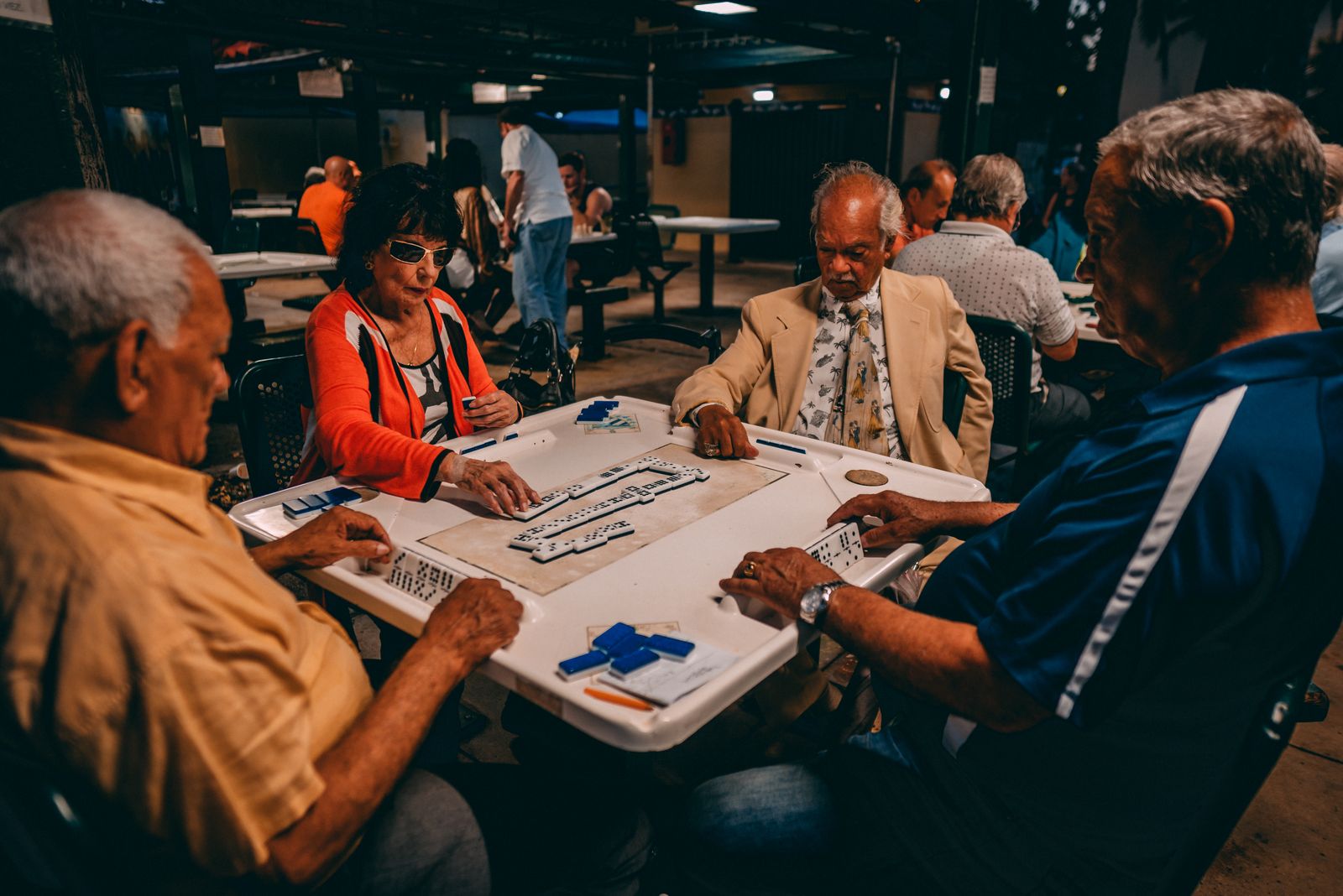
Beyond nursing and therapy, CBAS centers build in daily social time — a documented protective factor against isolation and cognitive decline for older adults.
How to Actually Enroll in Orange County
If Your Parent Already Has Medi-Cal Through CalOptima
Ask their primary care provider or CalOptima’s member services line directly about a CBAS referral. The nurse assessment is typically coordinated through the health plan once a referral is made, and CalOptima can direct you to a certified center near your family based on location and language needs.
If You’re Not Sure Your Parent Qualifies for Medi-Cal Yet
Start with the County of Orange Social Services Agency at 1-800-281-9799, Monday through Friday, 8 a.m. to 5 p.m. Eligibility determinations for aged and disabled Medi-Cal categories are handled at the county level, and staff can walk through whether your family’s income and situation fit the current limits before you commit time to the CBAS-specific assessment step.
If Language Access Is the Deciding Factor
Ask specifically which languages a center’s on-site nursing and activity staff speak day to day, not just which languages appear on a general list — a center’s certification can show a language as offered while actual daily staffing on a given shift varies. Confirming this directly with the center before enrollment avoids a mismatch discovered only after your parent has already started attending.
If your family is exploring in-home options alongside or instead of a day program, our guide to personalized home care covers how in-home support can work alongside a CBAS schedule, and our overview of 2026 Medi-Cal changes walks through the broader eligibility landscape shaping benefits like this one this year.
Is CBAS Worth Exploring for Your Family? Checklist
Click each item as you work through it.
- Confirm whether your parent is already enrolled in Medi-Cal, and if not, call the OC Social Services Agency to check eligibility
- Ask their primary care provider about a CBAS nurse assessment referral
- List the chronic conditions, cognitive changes, or mental health needs that make daytime supervision necessary
- Identify 2-3 certified centers near your home or workplace using the state’s CBAS directory
- If language access matters, call each center directly to confirm current staff language coverage
- Ask each center about transportation logistics and pickup/drop-off scheduling
- Request a tour before enrollment to see the nursing station, activity space, and dining area in person
- Ask what happens on days your parent is sick or the center is closed — and whether in-home backup coverage makes sense
- Confirm how the center communicates daily health updates back to the family
- Set a start date and a 30-day check-in to evaluate how your parent is adjusting
Test What You Know
1. How many certified CBAS centers does Orange County have, according to the state’s current directory?
2. What share of California’s Korean-language CBAS centers are located in Orange County?
3. Which of these is required on-site at every certified CBAS center?
4. How is CBAS eligibility for most Orange County families determined?
5. What program did CBAS replace in 2012?
Frequently Asked Questions
The One Thing to Take From This
Orange County families have quietly had one of the best-covered Community-Based Adult Services networks in California this entire time, including a language-access advantage for Korean and Vietnamese speakers that doesn’t exist almost anywhere else in the state — and many local families have never heard of it. If your family has been trying to piece together daytime supervision for a parent with a chronic condition or early cognitive decline, this isn’t a program to research someday. It’s worth a phone call this week to CalOptima or the County of Orange Social Services Agency to find out whether your parent already qualifies.
Weighing Adult Day Health Care Alongside In-Home Support?
At Home VA Staffing helps Orange County families build care plans that combine programs like CBAS with in-home caregiving for evenings, weekends, and the days a center isn’t in session. Reach out for a no-obligation conversation about what fits your family.
This article is provided for general informational purposes and reflects publicly available data from the California Department of Aging’s CBAS center directory and the California Department of Health Care Services, current as of August 19, 2026. It is not medical or legal advice. Medi-Cal eligibility rules, income limits, and center-level language staffing can change; confirm current details with CalOptima Health, the County of Orange Social Services Agency, or a specific center before making care decisions. At Home VA Staffing is a home care staffing agency, not a Medi-Cal eligibility authority.