If Your IHSS Was Denied in 2026 Because of Immigration Status: An Orange County Family’s Plain-English Plan B
Quick read: California froze new full-scope Medi-Cal enrollment for adults age 19 and older with “unsatisfactory immigration status” on January 1, 2026. Because IHSS eligibility flows directly from Medi-Cal, the freeze also closed the door on new IHSS hours for many Orange County immigrant seniors and adults with disabilities. The 90-day grace period for re-enrollment closed on or about April 1, 2026 — meaning families who missed that window are getting denials right now. This guide is the plain-English Plan B: how to protect coverage if you still have it, how to challenge a denial, and what private and county-funded in-home care options OC families can fall back on when IHSS is no longer on the table.
Update — June 27, 2026
Governor Newsom signed the final 2026-27 state budget on June 26, 2026. Updated October 26, 2026: the dental dates in this article now reflect the final budget. The final 2026-27 budget DELAYED that cut by 12 months — UIS dental coverage now ends July 1, 2027 (Assembly Budget Floor Report, June 11, 2026). The full-scope enrollment freeze (Jan 1, 2026) and the $30/mo UIS premium starting July 1, 2027 remain as described. The $30→$50 premium increase is NOT automatic — it requires the next Governor to authorize it between Jan 10 and Apr 1, 2027. The information below reflects the original story; for the most current rules and dates, see our final 2026-27 budget recap.

What changed on January 1, 2026 — in plain English
For most of the last few years, California allowed adults of any immigration status to qualify for full-scope Medi-Cal — the program that pays for doctor visits, hospital stays, and the In-Home Supportive Services (IHSS) hours that let seniors and people with disabilities stay safely at home. That window narrowed sharply at the start of 2026.
Beginning January 1, 2026, the California Department of Health Care Services (DHCS) stopped processing new full-scope Medi-Cal applications for adults age 19 and older who have what the state calls “unsatisfactory immigration status” (UIS). In practical terms, that includes undocumented adults and certain non-permanent residents who don’t meet federal immigration verification standards.
Three things flow from that policy change, and Orange County families need to understand each one separately:
- The freeze blocks new enrollment, not existing coverage. If a UIS adult was already enrolled in full-scope Medi-Cal on December 31, 2025, that coverage continues — but only if the renewal is filed on time every year.
- IHSS rides on Medi-Cal. California IHSS is a Medi-Cal-funded benefit. Lose Medi-Cal eligibility, and IHSS hours end automatically. There is no separate “IHSS-only” enrollment for UIS adults.
- A 90-day grace period existed for the first wave. Anyone whose coverage lapsed because of late paperwork between January 1 and roughly April 1, 2026 could re-enroll without losing full-scope status. That window has now closed for most cases.
The result: from April forward, every late renewal or paperwork mistake by a UIS adult moves them off full-scope Medi-Cal — and off IHSS — with no easy path back.
Who is affected — and who is not
Not every immigrant family loses access. The freeze targets a specific category. Use this table to check where your loved one falls:
| Status | Full-scope Medi-Cal? | IHSS available? | What changed in 2026 |
|---|---|---|---|
| U.S. citizen | Yes (if income/asset eligible) | Yes | Asset limit reinstated; no immigration impact |
| Lawful permanent resident (5+ years) | Yes | Yes | No change |
| Lawful permanent resident (under 5 years) | Yes for full-scope (state-funded) | Yes | No change to full-scope; dental cut delayed to July 2027 |
| Refugee, asylee, or special immigrant status | Yes | Yes | No change |
| DACA recipient | Yes if enrolled before 1/1/2026 | Yes if enrolled | No new enrollment from 1/1/2026 forward |
| Undocumented adult, age 19+, NOT enrolled by 12/31/2025 | No (restricted-scope only — emergency, pregnancy, nursing home) | No | Frozen out of new enrollment |
| Undocumented adult, age 19+, ENROLLED before 1/1/2026 | Yes — but must renew on time | Yes — tied to Medi-Cal | $30/mo premium begins 7/1/2027; dental cuts begin 7/1/2027 |
| Undocumented child (under 19) | Yes (full-scope continues) | Yes if disability-eligible | No change for children |
| Pregnant person, any status | Yes (full-scope continues during pregnancy) | Limited | No change |
Notice the dividing line: it’s not just about documentation status, it’s about when the person enrolled. An undocumented grandmother who was already on Medi-Cal in December 2025 can keep her coverage and her IHSS aide for years — as long as she renews every year. Her undocumented neighbor with the same medical needs who didn’t apply until February 2026 is locked out.
The yellow envelope: why renewal week matters more than ever
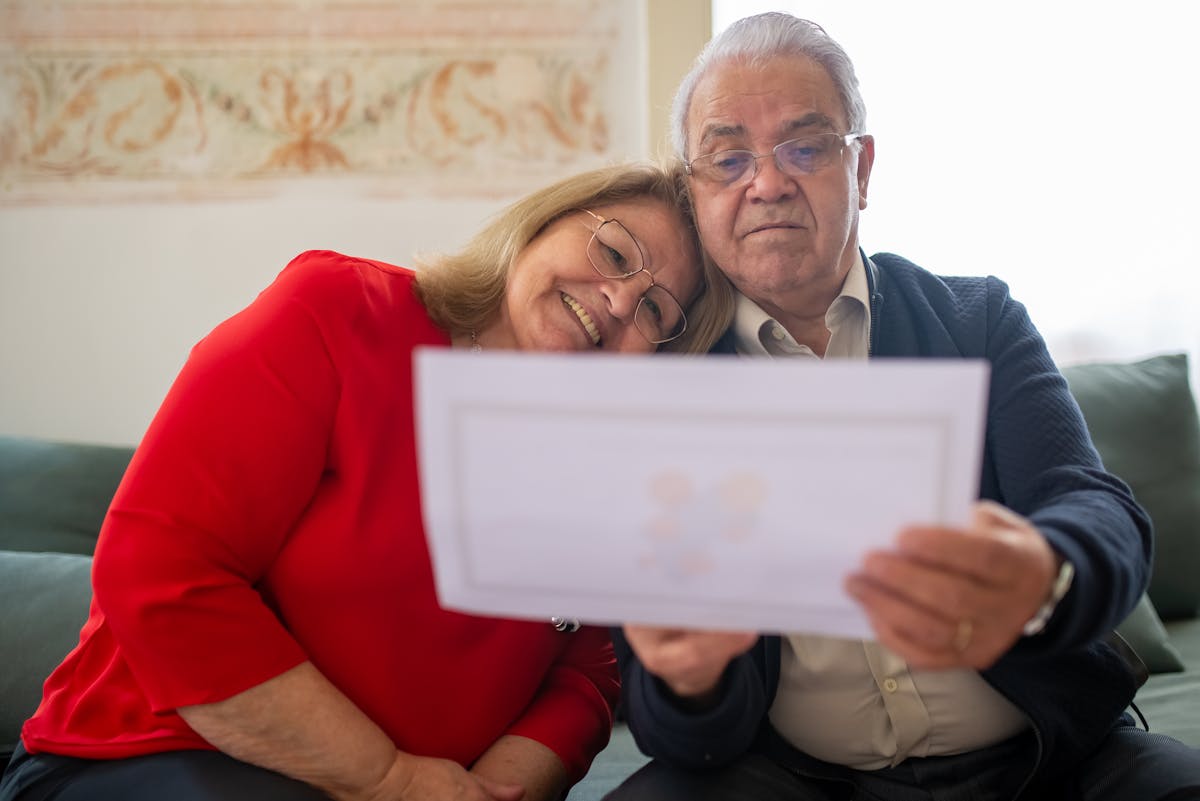
If your family member is one of the people whose coverage was grandfathered in — already enrolled before January 1, 2026 — the single most important thing you can do this year is open the yellow envelope.
That’s not a metaphor. Every year, the Orange County Social Services Agency mails Medi-Cal renewal packets in distinctive yellow envelopes. They look like junk mail. They get set aside. In normal years, missing one was inconvenient — coverage could be reinstated within 90 days through a “cure” period. For UIS adults in 2026, missing one is permanent.
Here is what families need to know about the yellow envelope cycle:
How renewal actually works in 2026
- Roughly 30 days before your annual review month, OC SSA mails a yellow envelope with a renewal form (sometimes an “RFTHI” or “Mid-Year Status Report”). Sometimes the renewal is done automatically if the agency has all the data it needs — but you’ll still get a confirmation in the mail.
- The form must be returned within the deadline printed on the packet — usually 30 to 60 days. Missing the deadline triggers a termination notice.
- Once a UIS adult’s coverage terminates, the freeze prevents re-enrollment. Restricted-scope Medi-Cal (emergency, pregnancy, dialysis, and nursing home only) is the only fallback — and it does not include IHSS hours.
What to do the moment a yellow envelope arrives
- Open it the day it arrives. Don’t wait.
- Write the deadline date on a calendar in two places (kitchen, phone reminder).
- If anything is unclear — language, missing income proof, address change — call OC SSA Customer Service at 1-800-281-9799 the same week, not the same month.
- Submit by mail, fax, in person, or through BenefitsCal.com. Keep a photo of every page submitted.
- Get a confirmation number or stamped copy. Without proof of submission, the burden is on the family to show it was sent.
For Vietnamese-, Spanish-, and Korean-speaking families, OC SSA has bilingual eligibility workers and can pair callers with interpreters. Asking for an interpreter is free. So is requesting paperwork in a translated language — make this request in writing and document it.
If a denial or termination notice has already arrived
Denial notices look intimidating, but they almost always include a section called “Your Right to a Hearing” or “Appeals.” The deadline to request a hearing in California is generally 90 days from the date of the notice, and during the appeal — if the family files within 10 days of the notice — coverage can sometimes be continued (“aid paid pending”) until the hearing decides the case.
Three appeal scenarios specific to the 2026 freeze
Scenario 1: Coverage was terminated mid-year for paperwork
If your loved one was on full-scope Medi-Cal before January 1, 2026 and was terminated for missing a form or income proof, file a hearing request immediately. Within the 90-day grace window (now closed), this was usually fixable. Outside it, the state hearing system will look at whether the notice was correctly delivered, translated, and gave enough time. Errors at the county level still happen often — the appeal is not hopeless.
Scenario 2: A new application was denied because of the freeze
This is the hardest scenario. Adults age 19+ with UIS who applied after January 1, 2026 are correctly denied under current law for full-scope. The appeal route here is narrower: it’s mostly used to (a) confirm the person should have been auto-enrolled before the freeze (e.g., they were already in restricted-scope and should have transitioned), or (b) show eligibility under a different category — pregnancy, refugee status, or qualifying immigration relief.
Scenario 3: IHSS hours ended even though Medi-Cal continues
This happens when the IHSS social worker reads stale Medi-Cal data. If your loved one has full-scope Medi-Cal but received an IHSS termination, call the OC Social Services Agency IHSS program at 1-714-825-3000 the same day. Bring a recent Medi-Cal benefits identification card (BIC) and a copy of any current renewal confirmation. Most of these are clerical and reverse within 1-2 weeks.
Free help to file the appeal
Three OC organizations file Medi-Cal hearing requests at no cost: Legal Aid Society of Orange County (1-800-834-5001), Public Law Center (714-541-1010), and Council on Aging Southern California’s HICAP for ages 60+ (714-560-0035). These are nonprofits — they will not report immigration status to ICE.
Preparing for a state hearing
State hearings are usually held by phone within 60 to 90 days of filing. They are informal compared to court — there’s no judge robe, no jury. Bring (or have ready):
- The denial or termination notice (the “NOA”).
- Any returned yellow envelope receipts, postal certified mail slips, or BenefitsCal screenshots.
- A short written timeline of what happened.
- Translation needs — request a state-paid interpreter when you file. Don’t bring a child or family member to interpret; the hearing officer will not let them.
If the hearing is unsuccessful, the family can request a “rehearing” within 30 days, and after that, file in superior court within one year. For most OC immigrant families, the practical end of the road is the state hearing — but free legal aid almost always tries the rehearing if there are facts to argue.
If IHSS isn’t going to come back: building a Plan B

This is the question Orange County families are calling about every week: If Medi-Cal won’t pay for the IHSS hours, what do we do? The honest answer is that no single program fully replaces IHSS. But several local programs, combined, can cover the gap for many families — sometimes without paying anything out of pocket.
1. Restricted-scope Medi-Cal still covers some critical services
Even when full-scope is closed, UIS adults can usually get restricted-scope Medi-Cal. It will not pay for IHSS, but it does cover:
- Emergency room and ambulance care.
- Pregnancy-related care (full-scope during pregnancy and 12 months postpartum).
- Dialysis.
- Nursing facility care for adults who meet the medical level-of-care criteria.
- Long-term-care services in a skilled nursing facility (a route some families end up using when home care is no longer possible).
The key word is emergency. Restricted-scope is what kicks in when an OC family member is rushed to Hoag, UCI Medical Center, or Kaiser Permanente Anaheim with chest pain or a stroke. It is not “no coverage” — but it is not in-home support, either.
2. Regional Center of Orange County (RCOC) — for developmental disabilities
If the person needing care has a developmental disability that began before age 18 — including intellectual disability, autism, cerebral palsy, or epilepsy — they may qualify for services through the Regional Center of Orange County regardless of immigration status. RCOC provides:
- Respite care (someone comes in to give the family caregiver a break).
- Personal assistance hours (similar in spirit to IHSS).
- Transportation, day programs, behavior services.
RCOC services are funded by California’s Lanterman Act, which is not tied to Medi-Cal in the same way IHSS is. For UIS families with a child or adult with a developmental disability, this is the most important call to make.
3. CalOptima Community Supports (CalAIM) — limited but worth checking
CalOptima, Orange County’s Medi-Cal managed care plan, offers a set of “Community Supports” through CalAIM that can include personal care, respite, and home modifications. These supports are tied to Medi-Cal eligibility — so a UIS adult without full-scope Medi-Cal generally does not qualify. However, family members in the same household who do have Medi-Cal may qualify for caregiver-respite-style supports that indirectly help. Call CalOptima Customer Service at 1-888-587-8088 to ask which supports your specific family situation can layer in.
4. Faith- and community-based volunteer caregiving
Orange County has the highest density of faith-based care networks of any county in Southern California. Families with no immigration-related barrier to community programs can tap:
- Catholic Charities of Orange County — friendly visitor and respite volunteer programs.
- Korean Community Services (KCS) in Buena Park and Garden Grove — bilingual senior outreach, meal delivery, and case management.
- The Cambodian Family in Santa Ana — Vietnamese and Khmer family caregiving support.
- OASIS Orange County at Hoag and Saddleback — peer-to-peer aging support that often includes home check-ins.
- Council on Aging Southern California’s Friendly Visitor program — trained volunteers who visit weekly, free to OC residents 60+.
5. Private-pay home care — when the family can fund part of the gap
For families with some ability to pay, private-pay home care from a licensed Home Care Organization (HCO) is the most flexible Plan B. A small number of paid hours per week — even 3 to 8 — can cover the highest-risk parts of the day (morning routine, afternoon meal, evening medication, bathing). Compared to a full IHSS schedule, it sounds limited; in practice, families combining private hours with family caregiving and a community visitor program can replicate most of what IHSS provided.
At At Home VA Staffing, our caregivers are licensed, W-2 employees who can step in for as few or as many hours as a family needs. We work with OC families across Anaheim, Santa Ana, Garden Grove, Westminster, Fullerton, Irvine, and the rest of the county, in English, Spanish, and Vietnamese.
Comparing IHSS and the Plan B options side-by-side
Many families come into the conversation thinking IHSS is the only meaningful option. Once the IHSS door closes, the real comparison is between restricted-scope Medi-Cal, RCOC, faith-based volunteer support, and private pay. Here’s how they stack up:
| Option | Cost to family | Hours available | Immigration status required? | How fast to start |
|---|---|---|---|---|
| IHSS (if eligible) | $0 | Up to 283 hrs/mo | Tied to Medi-Cal | 30-60 days |
| Restricted-scope Medi-Cal | $0 | Emergency only | Available regardless of status | Immediate for emergencies |
| RCOC services | $0 | Varies by need | Not required | Intake within 60 days |
| CalOptima Community Supports | $0 if eligible | Varies | Tied to Medi-Cal | 30 days after referral |
| Faith/community volunteer | $0 | 1-4 hrs/week typical | Not required | 1-3 weeks |
| Private-pay home care (AHVA) | $32-$42/hr | Any (1 hr to 24/7) | Not required | 1-7 days |
| Family caregiving (unpaid) | $0 cash; high opportunity cost | Whatever family can give | Not required | Immediate |
The strongest Plan B usually combines three of these — restricted-scope for emergencies, a community organization for socialization, and a small private-pay home care schedule for the highest-risk care moments.
The 2027 premium and dental cliff: what’s coming next
Two more changes will land before this conversation is over. Families need to plan for them now, not later.
July 1, 2027 — Dental coverage narrows
Starting July 1, 2027, full dental coverage will no longer be available for UIS adults — even those who are grandfathered into full-scope medical Medi-Cal. The remaining dental benefit will be limited to emergency services like infection drainage. Families should book any pending major dental work — fillings, dentures, extractions — before the end of June 2027 while the benefit is still active. This applies to lawful permanent residents under the 5-year bar as well.
July 1, 2027 — $30/month premium begins for adults 19-59
UIS adults aged 19 to 59 who are still enrolled in full-scope Medi-Cal will start paying a $30 monthly premium on July 1, 2027 (currently the official start date in the 2025-26 budget). For a family with two working-age UIS adults, that’s $720 a year. The premium does not apply to children, pregnant people, or seniors 60+. Failure to pay the premium is grounds for termination — and termination during the freeze means no path back. Set up automatic payment as soon as the option appears.
The May Revise (May 14, 2026) is the next big watch date
Governor Newsom’s May Revise budget update lands May 14, 2026. The January proposal already shifted $233.6 million in IHSS hours costs from the state to counties. If that shift survives the May Revise, OC’s roughly 55,000 IHSS recipients could see slower service approvals, downstream service caps, or longer eligibility processing times as the County of Orange absorbs the cost. Watch this space — we’ll publish a follow-up the morning the May Revise drops.
Your protection checklist — 10 actions for the rest of May 2026
Use this checklist to walk through the most important protective actions for Orange County immigrant families. Tap each item as you complete it.
- Find every Medi-Cal yellow envelope in your home — including ones already opened — and write the renewal due date on your kitchen calendar.
- Check your loved one’s Medi-Cal status today by calling OC SSA at 1-800-281-9799 or logging into BenefitsCal.com.
- If a denial or termination notice arrived in the last 90 days, request a state hearing this week through Legal Aid Society of OC (1-800-834-5001).
- Confirm IHSS hours are still active by calling the OC Social Services Agency IHSS program at 1-714-825-3000.
- If your loved one has a developmental disability, call Regional Center of OC for an intake — services are not tied to Medi-Cal.
- Request a CalOptima Community Supports referral if your loved one still has full-scope Medi-Cal — call 1-888-587-8088.
- Schedule any pending dental work before June 30, 2027 if the patient is a UIS adult or LPR under 5 years.
- Save the BIC card, citizenship/immigration documents, and last two pay stubs in one folder you can find in 30 seconds.
- Sign up for an in-language renewal reminder through OC SSA — Spanish, Vietnamese, Korean, Mandarin, and Farsi are all available.
- If your family will need supplemental private-pay hours, start interviewing licensed Home Care Organizations now — wait times are growing as more families adjust.
Test your understanding: 5-question quiz
What you’ve learned
1. When did California’s full-scope Medi-Cal enrollment freeze for adults with unsatisfactory immigration status take effect?
2. If an undocumented Orange County adult was already enrolled in full-scope Medi-Cal on December 31, 2025, what happens to their IHSS in 2026?
3. What is the deadline for filing a Medi-Cal state hearing after receiving a denial or termination notice?
4. Which Orange County program provides home-care-style supports to adults with developmental disabilities regardless of immigration status?
5. When does the new $30/month Medi-Cal premium for UIS adults aged 19-59 begin?
Frequently asked questions
For most categories, no. It depends on who is applying, and the answer changed on September 18, 2026. A new DHS public charge final rule (published July 20, 2026 at 91 FR 45324) replaced the 2022 standard as of that date. Two situations, two different answers. First, if the person using Medi-Cal is not the one applying for status — a U.S. citizen child, a spouse who already has a green card — their benefit use is still not counted against the applicant. That family-attribution protection carries forward under the new rule. Second, if the person applying for a green card or visa is themselves receiving home and community-based services like IHSS, that use is no longer categorically excluded the way it was before. It becomes one factor DHS weighs in a totality-of-the-circumstances review, and DHS may weigh it favorably because HCBS costs far less than a nursing facility — but it is not exempt. Emergency services, prenatal care, and children’s coverage remain outside the test. We break the whole thing down here: The Public Charge Rule Changes September 18, 2026: What Orange County Families Need to Know. Always confirm with an immigration attorney before relying on a general rule. Free immigration consultations in OC are available through the Public Law Center (714-541-1010) and Catholic Charities Immigration Services (714-668-1330).
Yes. The freeze applies only to UIS adults age 19 and older. U.S. citizen and lawfully present children — including those under 19 — continue to qualify for full-scope Medi-Cal and IHSS based on their own status, regardless of their parents’ status. A child’s Medi-Cal application does not require parents to share their immigration documentation.
Call the Orange County Social Services Agency IHSS program at 1-714-825-3000 the same day. Most of these terminations are clerical — the IHSS social worker may be reading stale Medi-Cal data. Have a current Benefits Identification Card (BIC) and the most recent renewal confirmation in front of you. If the social worker confirms the termination is correct because of “redetermination,” ask for a written notice and the appeal deadline.
Yes. Licensed Home Care Organizations like At Home VA Staffing (AHVA) serve any OC family that is paying privately or through a non-Medi-Cal funding source (long-term-care insurance, VA Aid & Attendance, Regional Center authorization, or family funds). AHVA does not ask about immigration status of clients or family members and does not share client information with immigration authorities. Our caregivers are licensed, W-2, and bilingual where requested.
The freeze does not apply to lawful permanent residents (LPRs). LPRs under the 5-year bar can still get full-scope Medi-Cal because California funds the state-only portion. However, the July 2027 dental changes do affect LPRs under 5 years — they will lose full dental coverage on July 1, 2027 the same way UIS adults will. Schedule any major dental work before that date.
Yes. Hospitals in California are required by EMTALA (federal law) to stabilize anyone presenting in an emergency, and most OC hospitals — Hoag, UCI Medical Center, Kaiser Permanente Anaheim, MemorialCare, AHMC — also offer financial-assistance programs for patients without coverage. Restricted-scope Medi-Cal will pay for the emergency portion. After stabilization, the family will need a private payment plan or charity care application for any non-emergency follow-up. The hospital social worker is the right starting point.
The bigger picture for OC immigrant families

Orange County has one of the largest immigrant senior populations in California. Vietnamese, Mexican, Korean, Chinese, Iranian, and Filipino families have built multigenerational households across Westminster, Garden Grove, Santa Ana, Anaheim, and Buena Park for decades. The 2026 Medi-Cal and IHSS changes hit these families harder than most — not because they did anything wrong, but because the rules changed mid-stream.
The most important message for the next twelve months is straightforward: protect what you already have, then patch the rest. If your loved one was on full-scope Medi-Cal at the end of 2025, the renewal envelope is now the most important piece of mail in your home. If a denial has already arrived, you have appeal rights and three free legal-aid organizations that will file the paperwork. And if IHSS isn’t going to come back, RCOC, faith-based programs, restricted-scope coverage, and a small private-pay home care schedule together can replicate most of what IHSS provided.
OC families have done this before — through every previous round of state and federal Medicaid changes — and they will do it again. The Plan B exists. It just takes a few phone calls and a folder full of paperwork to assemble it.
Need help building your Plan B?
At Home VA Staffing helps Orange County families fill the gaps when IHSS isn’t available. Bilingual caregivers (English, Spanish, Vietnamese), as few as three hours a week, no immigration questions asked.
Talk to Our TeamOr call us: (213) 326-7452
Related AHVA articles
- The 2026 Medi-Cal Asset Limit Is Back: What OC Seniors Must Do Before Their Redetermination
- How to Request Home Care Through CalOptima’s Community Supports
- IHSS Pay Rate Increase 2026: What It Means for OC Caregivers
- SB 525 Healthcare Minimum Wage and OC Home Care Rates
- CalFresh Work Requirements Hit June 1, 2026: OC Caregiver Exemption Guide
Outside resources
- DHCS — Immigration Status and Changes to Medi-Cal Eligibility
- OC Social Services Agency — January 1, 2026 changes
- CDSS — In-Home Supportive Services Program
- Community Legal Aid SoCal (formerly Legal Aid Society of Orange County)
- Regional Center of Orange County
- BenefitsCal — Apply or renew Medi-Cal online