
On the morning of April 29, 2026, more than 250 people gathered in the parking lot of Asian Garden Mall in Westminster — the heart of Orange County’s Little Saigon — to rally behind a workforce that most OC residents have never heard of but tens of thousands of families depend on every single day.
They were there for the 48,000 men and women who work as In-Home Supportive Services (IHSS) caregivers across Orange County: the people who help elderly parents get out of bed, prepare meals for adults with disabilities, and allow tens of thousands of Orange County residents to stay in their homes instead of entering institutions. Their labor contract with the county expires June 30, 2026 — 47 days from now — and negotiations have stalled.
If you or someone in your family receives IHSS services in Orange County, this deadline directly affects you. Here’s what you need to know and, more importantly, what you can do right now.

OC’s IHSS caregivers serve 55,000 seniors and adults with disabilities. Their contract expires June 30, 2026.
What Is the OC IHSS Caregiver Contract?
IHSS is a California state program that allows elderly adults and people with disabilities to hire low-cost in-home caregivers — often family members — to help with daily tasks like bathing, cooking, cleaning, and mobility. In Orange County, the program is administered through the county’s Social Services Agency, and caregiver wages are set through a collective bargaining process between the Orange County Board of Supervisors and the United Domestic Workers of America (UDW), AFSCME Local 3930.
The formal document that governs this relationship — setting wages, benefits, and working conditions for OC’s 48,000 IHSS providers — is called a Memorandum of Understanding (MOU). The current MOU, which covers the period January 1, 2025 through June 30, 2026, is set to expire in six weeks.
Per the agreement, the County and UDW were required to begin bargaining for the next contract on or around February 1, 2026. More than three months later, no new deal has been announced.
The Wage Gap That Is Driving the Crisis
OC’s IHSS caregivers currently earn $18.90 per hour. At first glance, that might sound adequate. But the numbers tell a different story.
According to MIT’s Living Wage Calculator, a single adult living in Orange County needs to earn at least $36.53 per hour to cover basic living expenses — rent, food, transportation, healthcare, and a modest emergency fund. At $18.90, OC’s IHSS workers earn barely half of what they need to survive in one of the most expensive counties in California.
This wage gap is not just a labor issue — it is a home care supply crisis. When caregivers cannot afford to live in the communities they serve, they leave for better-paying jobs, relocate to cheaper areas, or exit the profession entirely. When they leave, their clients lose care.
IHSS caregivers are not eligible for many of the county’s traditional employment benefits. Many work part-time hours spread across multiple clients, limiting their ability to hold second jobs. The work itself — managing mobility, medication reminders, and behavioral challenges for medically complex clients — demands skill, patience, and physical stamina that is chronically undervalued in the public sector wage structure.
“Home care workers provide vital services to seniors and people with disabilities, but are paid just $18.90 per hour. That is not a sustainable wage for Orange County.” — UDW members at the April 29 rally
Who Depends on This Workforce?
The 55,000 Orange County residents who rely on IHSS include:
- Adults 65 and older who need help with daily personal care and home tasks to remain safely in their own homes
- Adults under 65 with physical disabilities, including those with spinal cord injuries, multiple sclerosis, ALS, and other conditions
- Adults with developmental disabilities who receive IHSS alongside Regional Center services
- Children with significant medical needs whose parents receive IHSS hours to provide care
In many cases, the IHSS caregiver is the only professional contact a recipient has during the week. The caregiver is often a trained eye for early warning signs — a change in appetite, a new confusion pattern, a fall risk that wasn’t there last month. When that relationship is disrupted, medical deterioration frequently follows.
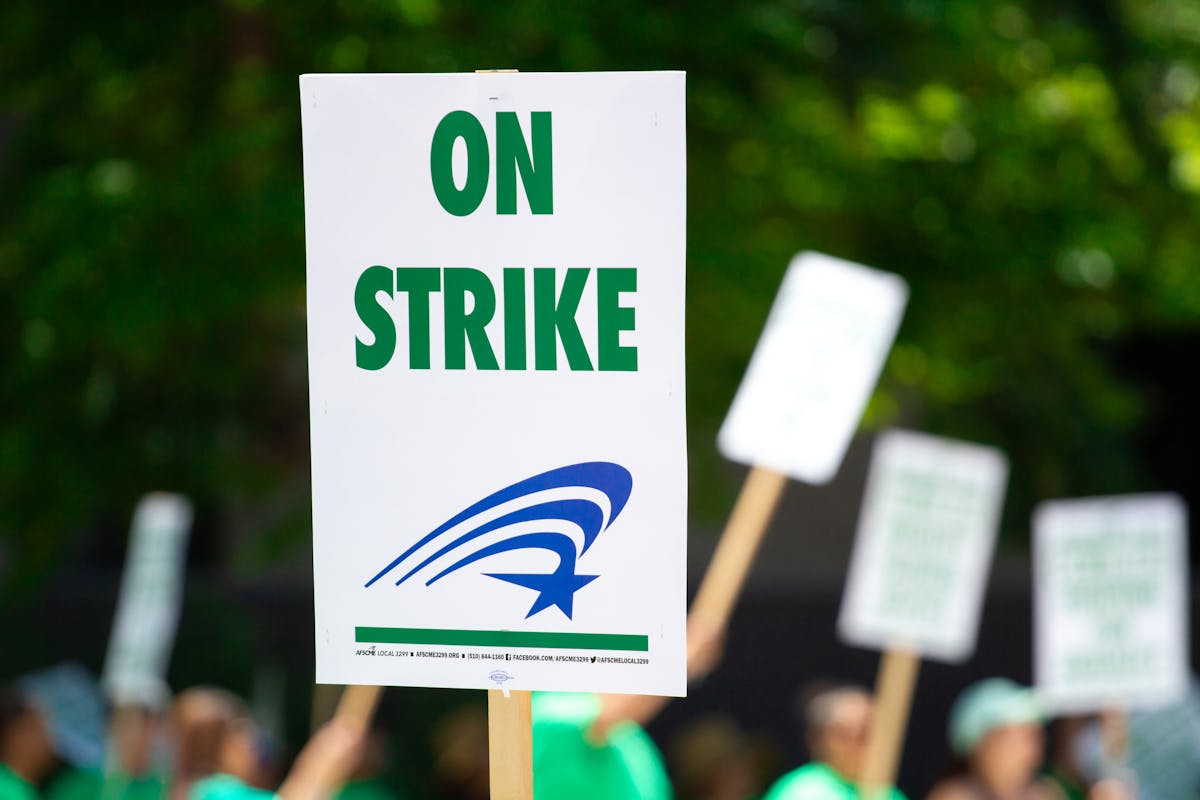
More than 250 people rallied at Asian Garden Mall on April 29 to support OC’s IHSS workers ahead of the June 30 MOU expiration.
What Happens When an MOU Expires Without a New Deal?
The expiration of an MOU does not automatically mean caregivers stop working. Under California labor law, existing terms typically remain in effect on a status-quo basis while bargaining continues. However, the practical risks are significant:
Caregiver retention collapses. When a contract expires without a resolution, caregivers face months of wage uncertainty. Many will leave the IHSS program for private sector care agencies or other industries that offer more predictable compensation. OC is already experiencing a caregiver shortage — the county’s vacancy rate for IHSS providers has grown steadily as the cost of living has outpaced wages. A protracted contract standoff accelerates that trend.
New caregivers are harder to recruit. IHSS relies on a constant pipeline of new providers to replace those who exit. When wage negotiations stall, word spreads quickly in immigrant communities and working-class households that are the primary pipeline for IHSS workers in OC. Recruitment dries up.
Care gaps appear. For recipients who do not have family members available to step in, a caregiver departure means uncovered care hours. This can lead to missed medication schedules, falls, dehydration, and emergency hospitalizations — all of which are far more expensive for both families and the county than a wage increase would have been.
$20 Million the County Is Leaving on the Table
Here is the part of this story that frustrates advocates most: California has already committed to participate in up to $20 million in state matching funds if Orange County increases IHSS wages over the next three years.
The state funding mechanism is designed precisely for this kind of situation — to help counties that face fiscal pressure around IHSS wage increases. Sacramento has essentially pre-approved the financial support. The question is whether the Orange County Board of Supervisors will move forward with a deal in time to access it.
So far, the Board’s response to union requests has been described as slow. That stands in sharp contrast to Riverside County, which recently reached a tentative agreement with its IHSS caregivers — a deal that included a meaningful wage increase and cleared the path for state matching dollars to flow into the local care economy.
Orange County’s delay is not just a labor dispute. It is a fiscal decision with direct consequences for 55,000 households.
What OC Families Should Do Right Now
Regardless of how the contract negotiations resolve, there are steps every family with an IHSS-dependent loved one should take today. A disruption in care — even a temporary one — can be dangerous for people with significant needs. A backup plan developed now costs nothing. A scramble for care during a crisis can cost everything.

Developing a backup care plan now — before any disruption — is the single most important thing OC families can do.
Use This Checklist to Get Your Family Ready
Click each item as you complete it:
- Know your IHSS caregiver’s full name and direct phone number
- Have the OC IHSS Public Authority contact on hand: (714) 825-3174 or ocihsspa.com
- Know your loved one’s exact authorized IHSS hours and which services are approved
- Have a copy of your loved one’s current IHSS care plan (ask your caseworker if you don’t have one)
- Identify at least one family member or neighbor who could cover care in an emergency
- Research at least two licensed private home care agencies in your area as backup options
- Understand which services IHSS covers vs. what would need private pay to supplement
- Know your caseworker’s name and direct line — call them before a crisis, not during one
- Review whether your loved one qualifies for any Medi-Cal supplemental services (CalOptima, PACE, CalAIM) that could fill gaps
- Schedule a conversation with a private home care agency to understand your options — even if you never need them
Private Home Care as a Backup: What OC Families Need to Know
Licensed private home care agencies are not a replacement for IHSS — they operate on a different funding model and typically cost more per hour. But they serve a critical function that most IHSS families do not discover until they urgently need it: they can fill care gaps quickly, with trained and vetted staff, on short notice.
Unlike IHSS, which requires a county assessment process and provider matching, a private home care agency can typically begin services within 24 to 72 hours of intake. For a family facing an unexpected care gap — because a caregiver left, an MOU dispute interrupted services, or an IHSS application is still pending — that speed is invaluable.
Private agencies also provide services that IHSS does not cover, including:
- Overnight and live-in care
- Companion care and social engagement
- Transportation to medical appointments
- Dementia and Alzheimer’s specialized care
- Respite care for family caregivers
At AHVA — At Home VA Staffing — we provide non-medical in-home care across Orange County. Our caregivers are background-checked, insured, and trained in personal care, companionship, and dementia support. We work alongside IHSS rather than against it, and we can step in immediately when public program care is unavailable or insufficient.
If you are concerned about what happens to your family’s care after June 30, we encourage you to call us before you need us: (213) 326-7452. A conversation today costs nothing and gives you options tomorrow.
Test Your IHSS Knowledge: 5-Question Quiz
How much do you know about Orange County’s IHSS program? Take the quiz to find out:
Frequently Asked Questions
The Bottom Line
Orange County’s 48,000 IHSS caregivers are the invisible backbone of the county’s senior care system. They make it possible for 55,000 of the most vulnerable OC residents to remain in their homes, connected to their communities, and out of far more expensive institutional settings. Their current contract expires in six weeks, negotiations are stalled, and a $20 million state matching fund is waiting.
Whatever the Board of Supervisors ultimately decides, OC families who depend on IHSS should not wait to see how it plays out. Build your backup plan now. Know your care options. And if you need help navigating what comes next, AHVA is here.
Call AHVA today for a free in-home care consultation: (213) 326-7452 | Contact us online
Sources: Fullerton Observer (May 4, 2026); OC IHSS Public Authority; OC IHSS MOU 2025–2026; Citizen Portal; MIT Living Wage Calculator.