
5 Ways Orange County Families Can Champion a Senior’s Health This May (2026)
This May, the Administration for Community Living’s national theme for Older Americans Month is “Champion Your Health: Live Longer, Stronger, Healthier.” It is not a slogan we expect Orange County families to put on a coffee mug. It is a quietly aggressive ask: that we stop treating an older parent’s wellbeing as something the doctor will handle at the next appointment, and start treating it as a daily, family-led project.
The timing matters here. Mother’s Day falls on Sunday, May 10. The Orange County Older Adults Advisory Commission met today (May 8) at the County Operations Data Center on South Grand Avenue in Santa Ana, with the OC CARES Master Plan for Aging on the agenda. And summer heat, wildfire smoke, and pollen are about to test every senior’s resilience. May is when the year’s health trajectory gets set, for better or worse.
If you have an older parent or grandparent in Orange County — whether they live in Mission Viejo, Anaheim, Huntington Beach, or your spare bedroom — here are five practical, evidence-backed ways to actively champion their health this month, plus the local OC resources that make each one easier.
Why “Champion Your Health” Lands Differently in 2026
The Administration for Community Living picks the May theme each year, and 2026’s framing is deliberate. After several pandemic-era themes that focused on resilience and connection, the agency is steering families and seniors toward active stewardship — preventive habits, self-management of chronic disease, and the small daily routines that determine whether someone stays in their home into their late 80s or moves to assisted living at 76.
For Orange County, the math is straightforward. We have one of the largest 65-plus populations in California, growing roughly 4% per year. The county’s OC CARES Master Plan for Aging — the local rollout of California’s statewide MPA — is being actively shaped right now by the Older Adults Advisory Commission. Today’s commission meeting included scheduled updates on the implementation framework. The plan will eventually steer county-funded programs in transportation, nutrition, caregiver support, and dementia services. May is when the public still gets a meaningful voice.
The five concrete actions below are how we suggest a family translate “Champion Your Health” into something a parent or grandparent will actually feel — by Memorial Day, not by next year.
Way 1 — Build a Real Movement Habit (Not “Exercise”)
“Exercise” sounds like a chore. Movement is what older adults actually need: daily, low-stakes, varied, and ideally outdoors. The CDC’s most recent guidance recommends adults 65 and older accumulate 150 minutes per week of moderate aerobic activity (a brisk walk counts), plus two days of light strength work and balance practice. Almost no one in the 70-plus age bracket hits all three.
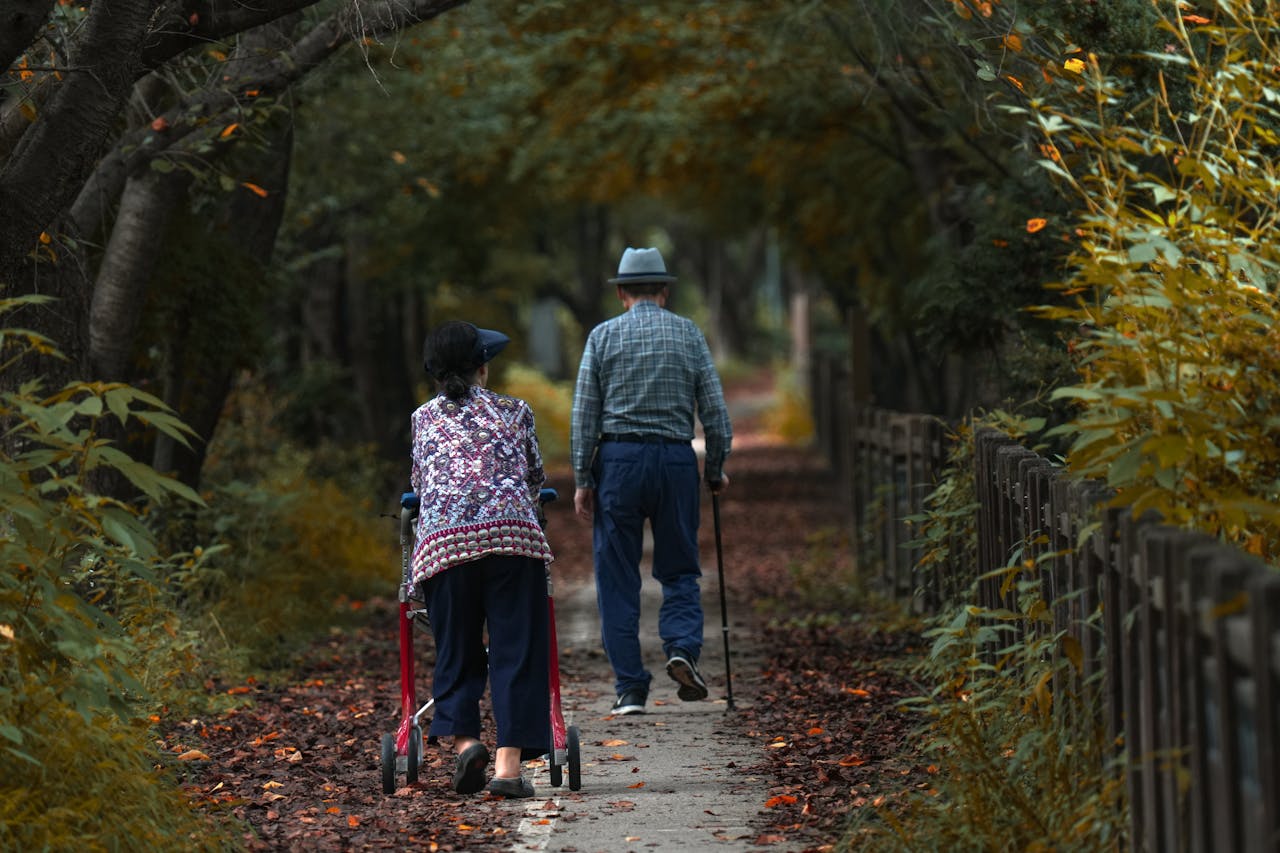
The good news: in Orange County, geography is on our side. Mason Regional Park in Irvine, Mile Square in Fountain Valley, the Back Bay Loop in Newport Beach, Pioneer Park in Tustin, and the Huntington Beach pier are all flat, paved, shaded for stretches, and have benches every few hundred feet. Walking those routes 4 days a week with a senior — slowly, with no pressure to “complete” anything — is more durable than any gym membership.

OC programs to plug into this month
- OC Parks Fitness Trails: free, drop-in, accessible at most regional parks — no enrollment, no fees.
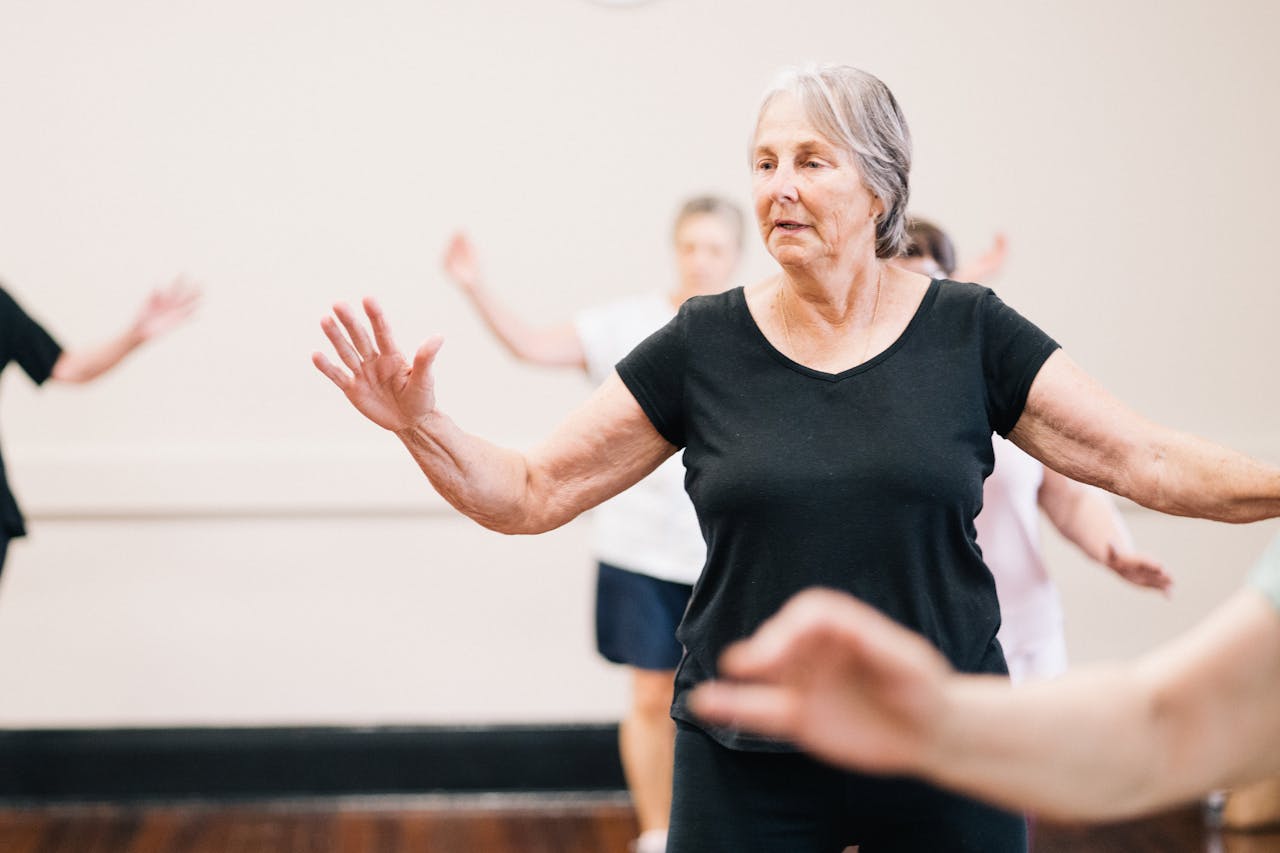
- Age Well Senior Services Active Aging classes: chair yoga, Tai Chi for Arthritis, and Stay Active programs at multiple South County senior centers.
- SilverSneakers: covered by most Medicare Advantage plans operating in OC, including SCAN, Kaiser Senior Advantage, and CalOptima OneCare. Many local YMCA and 24 Hour Fitness locations participate.
- City of Anaheim Downtown Senior Center: walking groups depart most weekday mornings.
- OC Office on Aging: the (800) 510-2020 information line can match a senior to a nearby fall-prevention class through the area agency network.
If your parent has had a fall in the last 12 months, ask the primary care doctor about a referral to the Otago Exercise Program or A Matter of Balance — both are evidence-based, often Medicare-covered, and offered through OC area agencies.
Way 2 — Champion Their Nutrition (the Kitchen Reset)
By age 70, appetite typically drops. Taste shifts. Cooking for one becomes lonely; cooking for two becomes exhausting. The result is the protein-and-produce gap — older adults eating enough calories from packaged foods to maintain weight on the bathroom scale, while quietly losing muscle mass and accumulating sodium, refined-carb, and inflammation load. Sarcopenia, the technical name for this muscle loss, is the single biggest predictor of losing independence in your 80s.
You don’t have to make over a senior’s diet. You have to fix one meal a day, four days a week, and stock the fridge so the easy choice is the right choice.

Common Pitfalls
- Cereal + milk + a banana as the “real” meal of the day
- Frozen entrees with 1,200+ mg sodium per serving
- “I’m not hungry” for breakfast every day
- No protein at breakfast or lunch — only at dinner
- Vitamin D supplements skipped because “I’m fine”
The Kitchen Reset
- 20-30g protein at breakfast (eggs, Greek yogurt, cottage cheese)
- One vegetable on the plate at every lunch and dinner
- Pre-portioned protein packs in the fridge (rotisserie chicken, tuna pouches, hard-boiled eggs)
- Sodium under 2,000 mg/day — read the freezer-aisle labels
- Hydration schedule: a glass with each meal, plus mid-afternoon
OC nutrition resources worth a phone call
- Meals on Wheels Orange County — home-delivered meals, sliding-scale fees, OC-wide service area. Many CalAIM-eligible seniors qualify for free delivery through Medically Tailored Meals as a CalOptima Community Support.
- Council on Aging Southern California — operates 18 congregate dining sites across OC. A free lunch with other seniors solves the “cooking for one is depressing” problem in one stop.
- CalFresh (food stamps): 2026 maximum benefit for a one-person household is $292/month. The OC Social Services Agency takes applications by phone at (800) 281-9799.
- OC Food Bank Senior Grocery Program — monthly box of staples for income-eligible seniors 60+, distributed through local pantries.
Way 3 — Champion Their Mind (Cognitive Engagement That Actually Works)
Crossword puzzles will not prevent dementia. The research is unambiguous on this — single-domain “brain games” produce gains only in the specific game. What does protect cognition over decades is varied, social, mildly challenging engagement: language learning, music, group conversation, volunteering, learning a new physical skill, and reading material the senior would have to discuss afterward.
This is why community matters more than apps. Champion your senior’s mind by enrolling them in something that puts a calendar entry in their week with other humans in the room.

What we recommend in OC
- OLLI at Cal State Fullerton — Osher Lifelong Learning Institute, 8-week courses on history, art, science, taught by retired professors. Annual membership is modest. Mostly in-person at the CSUF campus.
- OASIS Mission Viejo — lectures, language classes, music groups, intergenerational tutoring program (the OASIS tutoring of K-3 students is unusually rewarding cognitive engagement).
- OC Public Library system — book clubs at most branches; the Costa Mesa Donald Dungan Library and Heritage Park Regional in Irvine have particularly active senior programming.
- Bowers Museum — docent-led senior tours; some discounted memberships through OC Community Services.
- Alzheimer’s OC — early-stage cognitive engagement programs designed specifically for adults with mild cognitive impairment, free of charge, multiple OC locations.
If your parent’s primary care doctor is part of CalOptima’s network, ask whether the patient qualifies for the new CMS GUIDE Model dementia care benefit — Medicare-covered comprehensive dementia care, with built-in caregiver respite, that just expanded in OC. We covered the GUIDE rollout for OC families in our recent guide to the program.
Way 4 — Champion Their Connection (Loneliness Is a Clinical Condition)
The U.S. Surgeon General’s 2023 advisory was blunt: chronic loneliness in older adults carries a mortality risk comparable to smoking 15 cigarettes a day. The data has held up. Among adults 65 and older nationally, 23% report experiencing loneliness in the past week — and the number is higher in suburban Orange County than in dense urban neighborhoods, because the geography itself works against casual social contact.
This is the area where families most often default to the wrong solution. We give a lonely parent a tablet. We sign them up for one weekly visit. We tell them to call us if they need anything. None of that creates the texture of social life that the brain and immune system actually respond to.
Connection scaffolding to install this May
- City senior centers (free in most OC cities): Anaheim Downtown, Newport Beach OASIS, Costa Mesa Senior Center, Tustin Area Senior Center, Westminster Senior Center, Yorba Linda Senior Center. Most run weekly bridge, mahjong, dance, ceramics, and lunch programs.
- OC Faith Communities: congregations are still the largest source of regular non-family social contact for seniors. If your parent is a member but stopped attending, ride-coordination is often the actual barrier — fix that first.
- OCTA Senior Mobility Program (SMP): shared rides for adults 60+ to medical, shopping, and senior center destinations. Cities like Mission Viejo and Aliso Viejo have particularly active SMP routes.
- Friendly visitor and phone reassurance programs through Council on Aging Southern California — pairs volunteers with isolated seniors for weekly calls or visits.
- Volunteer roles: CHOC Children’s Hospital, OC Animal Care, the OC Food Bank, and most public libraries place senior volunteers in roles that fit their stamina.
Way 5 — Champion Their Preventive Care (the Appointments Most Seniors Skip)
Older adults skip preventive appointments at much higher rates than they admit to. The visit they show up for is the one their doctor schedules. The visits they should be initiating themselves — annual hearing test, annual eye exam, dermatology check, dental cleaning, cognitive screening, depression screening — slip past, year after year.
May is a clean month to do the audit. Pull up the senior’s preventive-care calendar (most plans expose this online or via the Member Services line) and figure out what’s overdue. Then schedule the easy ones.
| Preventive screening | Recommended frequency for 65+ | How to schedule in OC |
|---|---|---|
| Annual Wellness Visit | Once per year | Free under Medicare Part B; book through PCP |
| Cognitive screening | Annually after age 65 | Built into the Annual Wellness Visit — ask explicitly |
| Depression screening | Annually | PHQ-9 or similar, primary care |
| Hearing exam | Every 1-2 years | Many MA plans cover hearing aid benefits in 2026 |
| Dilated eye exam | Annually | Especially if diabetic; covered under most MA plans |
| Bone density (DEXA) | Every 2 years for women 65+ | PCP referral, Medicare-covered |
| Skin check | Annually | Dermatology referral — not always volunteered |
| Pneumococcal & RSV vaccines | Per CDC schedule | Most OC pharmacies stock both |
| Fall risk assessment | Annually | Ask PCP for STEADI screening; OC referrals to Otago/AMOB |
If your parent has a Medicare Advantage plan in Orange County, this is also the time to find out whether they have unused supplemental benefits — the new mid-year notification rule means plans now disclose what’s sitting on the table. Common 2026 supplemental benefits include OTC allowances, fitness benefits, dental, vision, hearing, transportation, and in-home support hours through Special Supplemental Benefits for the Chronically Ill (SSBCI). Our recent guide on hidden Medicare Advantage benefits in OC walks through how to check.
The OC CARES Master Plan for Aging — Why Your Voice Matters Right Now
Orange County is in the middle of finalizing its local Master Plan for Aging implementation framework. The OC CARES initiative — short for Comprehensive Aging Resources for Equity in Services — is the county’s blueprint for how it will spend on senior transportation, caregiver support, dementia services, housing for older adults, and emergency preparedness over the next decade.
The Older Adults Advisory Commission is the formal vehicle for public input. The commission’s regular meeting schedule runs at the County Operations Data Center on South Grand Avenue in Santa Ana, with agendas posted in advance through the OC Office on Aging. Today’s meeting (May 8) was open to the public; the next several meetings will be the meaningful chances to weigh in before the framework is locked.
If you have an older parent in OC, your story belongs in this room. The commissioners care about specifics — “my mother in Garden Grove waited 4 months for an IHSS assessment” lands differently than abstract policy memos.
If May Feels Overwhelming — Start With Mother’s Day
This Sunday, May 10, is Mother’s Day. If you only do one thing on this list, do this: spend Sunday on a walk with your mother, grandmother, or the older woman who raised you. Take her phone with you. Stop for coffee. Ask her what she wants the next year of her health to look like.
That conversation, repeated four times across the month, is more valuable than any of the resources we’ve listed. The resources are how you act on what she tells you.
For families who need a second set of hands — a few hours of respite for a primary caregiver, a companion to walk with a parent, help getting to the senior center — that’s the work At Home VA Staffing does across Orange County. We staff non-medical home care across all 34 OC cities, with caregivers credentialed through the California Home Care Aide Registry, and we coordinate with CalAIM Community Supports, VA Aid & Attendance, and most major Medicare Advantage in-home support benefits. Older Americans Month is also our internal moment to recommit to that work.
Your May “Champion Your Health” Checklist
Tap each item to mark it done. Aim for 7+ before Memorial Day.
Quick Quiz: How Well Do You Know OC Senior Health Resources?
1. Which OC program delivers home-delivered meals to qualifying seniors, often free through CalAIM Community Supports?
2. The 2026 ACL theme for Older Americans Month is:
3. Roughly how many minutes per week of moderate aerobic activity does the CDC recommend for adults 65 and older?
4. Which OC commission is shaping the local Master Plan for Aging implementation right now?
5. Chronic loneliness in older adults carries a mortality risk roughly comparable to:
Frequently Asked Questions
No — and the difference matters. The Medicare Annual Wellness Visit is a preventive-care planning appointment that’s free under Part B. It’s where the senior should be getting cognitive screening, fall risk assessment, depression screening, and an updated preventive-care schedule. A “yearly physical” is a more traditional exam, often involving labs, that may or may not be billed as preventive. Ask the office which one is being scheduled.
For Medi-Cal members, ask about Community Supports — Personal Care Services, Homemaker, Respite (336 hours/year cap, with MCP-authorized exceptions), and Medically Tailored Meals are among the most relevant non-medical services. CalOptima OneCare members (dual-eligibles on Medi-Medi) often have additional Medicare Advantage benefits stacked on top. Call CalOptima Member Services and ask specifically about Community Supports referrals — many families don’t realize the benefit exists.
The OC Office on Aging (a division of the OC Social Services Agency) is the lead county office. Older Adults Advisory Commission meeting agendas are posted in advance — the meetings are public, and written comment is accepted. The OC Office on Aging information line is (800) 510-2020. Statewide context for the Master Plan for Aging is at MPA California’s portal, but the OC-specific implementation framework is being shaped locally.
Resistance to senior centers is almost always about the label, not the activity. Try one specific drop-in class — chair yoga, ceramics, a lecture series at OASIS — without using the words “senior center.” Go with her the first time. The activation barrier is the first visit; once she has a familiar face there, she’s much more likely to keep going. If transportation is the actual barrier, the OCTA Senior Mobility Program is the answer in most South OC cities.
IHSS (In-Home Supportive Services) is a Medi-Cal benefit — the recipient hires their own caregiver, often a family member, and the state pays the caregiver wages directly. It’s free to eligible recipients but requires Medi-Cal eligibility and a needs assessment. A private home care agency like At Home VA Staffing employs caregivers, handles taxes/insurance/scheduling, and lets families pay privately, through long-term care insurance, VA Aid & Attendance, or certain MA supplemental benefits. Many OC families use both — IHSS for daily personal care and a private agency for additional respite hours, weekend coverage, or complex needs.
You can say it directly: “I’d like cognitive screening included at this year’s Annual Wellness Visit.” It’s a covered, routine part of the AWV under Medicare. Most primary care offices use the Mini-Cog or similar 3-5 minute screen. If you want a more thorough assessment, ask for a referral to a memory clinic — Hoag, UCI, and Alzheimer’s OC all run them. Early detection matters because new disease-modifying treatments like at-home Leqembi only work in early-stage Alzheimer’s.
Need a hand championing your senior’s health this May?
At Home VA Staffing provides non-medical in-home care, respite, and companionship across Orange County. Talk to our team about a care plan that fits your family.
Call (213) 326-7452 Contact Us