
OC Senior Home Repair Grants 2026: How Orange County Homeowners Can Get Up to $55,000 in Forgivable Funds to Age in Place
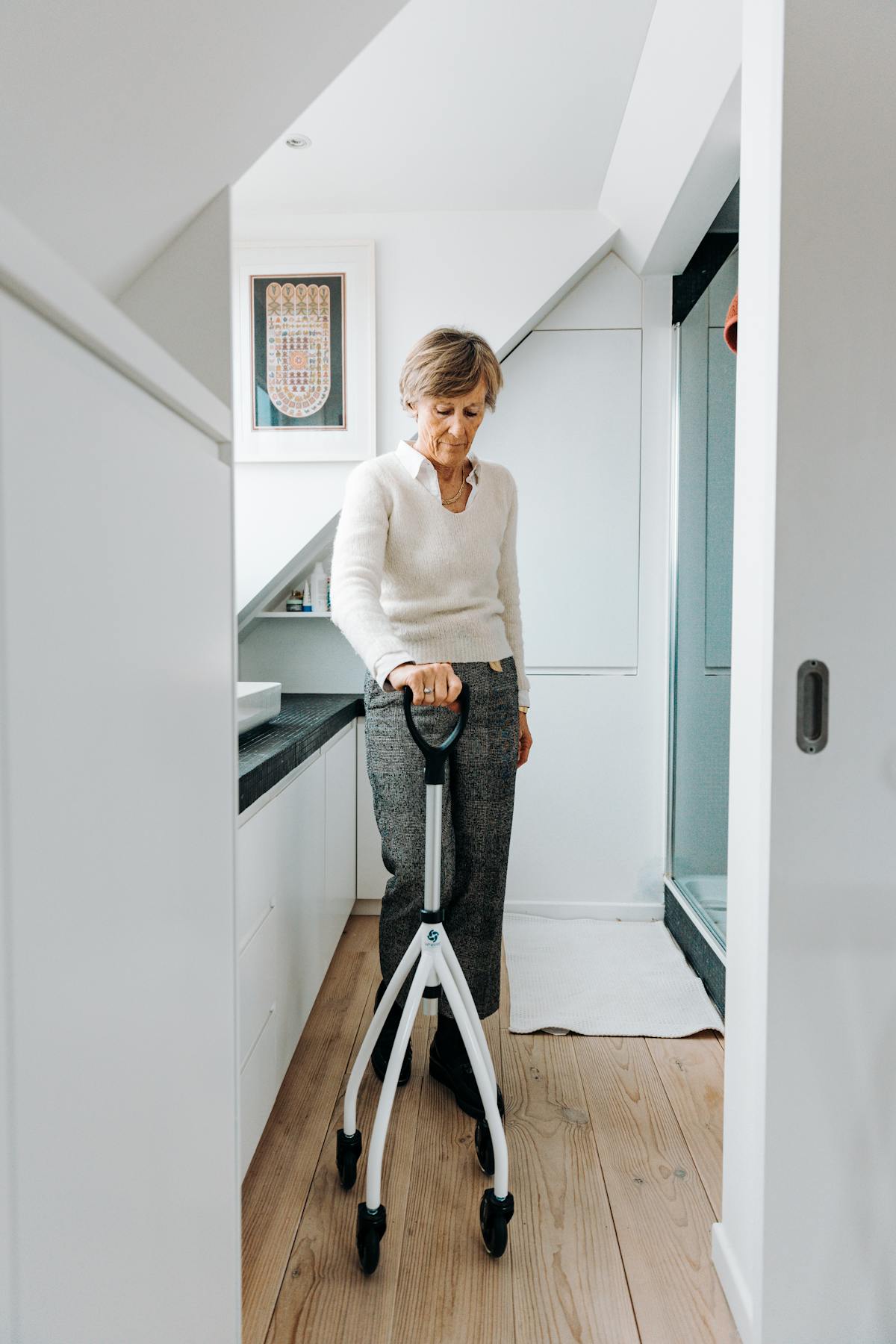
Most OC seniors who could qualify for forgivable home modification grants never apply — because nobody told them the programs exist (Photo: Pexels — Free License).
If you have a parent in Anaheim, Santa Ana, Garden Grove, or Costa Mesa whose 1960s tract home is starting to feel unsafe — the bathroom has no grab bars, the front step is too tall, the only shower is over a tub they can no longer climb into — you have probably already done the math on what it would cost to fix.
The bids come in at $4,000 for a walk-in shower conversion. $1,800 for a porch ramp. $9,500 for a new roof. $14,000 for an ADA bathroom remodel. And that is before any of the work that aging-in-place specialists actually recommend: widened doorways, lever handles, no-step thresholds, accessible kitchens.
For an Orange County senior on Social Security and a small pension, those numbers translate to one quiet, painful answer: we cannot afford it. So they stay in a home that is steadily getting more dangerous, until a fall or a hospitalization forces a move they did not want to make.
Here is what every OC family should know: there are at least four real, currently funded grant and forgivable-loan programs that will pay for those modifications — and most of them have very little competition for the money in 2026. Habitat for Humanity Orange County alone offers up to $55,000 per household. Most OC homeowners 62 and older who earn less than 80% of the county median income qualify for at least one of them.
This guide walks through every program AHVA has verified as active for OC seniors in 2026, what each one funds, who is eligible, and exactly how to apply — including the application mistake that disqualifies more applicants than any other reason.
The Four OC Senior Home Repair Programs Worth Applying For in 2026
AHVA cross-checked every senior home modification program serving Orange County as of April 2026. The four below are currently accepting applications, fund residential repairs and accessibility work specifically (not just down payments or rentals), and have realistic award amounts that materially help an OC family.
| Program | Maximum Award | Who Qualifies | What It Funds |
|---|---|---|---|
| Habitat OC CalHome (mobile homes) | Up to $55,000 forgivable 0% loan, 20-year term | OC mobile home owners earning ≤ 80% AMI | Roof, electrical, plumbing, accessibility (ADA bath, ramps, grab bars), termite, mold, windows |
| Habitat OC CalHome (single-family homes) | Up to $45,000 0% loan, 30-year term, no payment until sale | OC single-family homeowners earning ≤ 80% AMI | Same as above — critical health & safety repairs and accessibility upgrades |
| Dignity at Home Fall Prevention Program (CDA) | Home assessment + supplied equipment, no copay for eligible | OC residents 60+ or with a disability (any age), at risk of falling, household income ≤ 80% AMI | Grab bars, shower benches, raised toilets, lighting, tripping-hazard remediation, fall-prevention education |
| USDA Section 504 Repair Program | Up to $10,000 grant (62+) and/or $40,000 loan | Owner-occupants in USDA-eligible rural OC areas (parts of Trabuco Canyon, Silverado, Modjeska) | Health & safety repairs; grant funds only for hazard removal and accessibility |
Program 1: Habitat for Humanity OC CalHome — the largest single award
Habitat OC’s CalHome Home Repair Program is the most generous active senior home repair fund serving Orange County. Funded through the California Department of Housing and Community Development, it provides up to $55,000 for mobile homes and up to $45,000 for site-built single-family homes — structured as a 0% interest forgivable loan, with no monthly payments. The loan is forgiven over 20 years for mobile homes; for single-family homes it does not have to be repaid until the property is sold or transferred.
What it funds is broader than most families expect. Roof replacement, plumbing, electrical, water heaters, mold and termite remediation, window replacements, exterior painting — plus the accessibility work that lets a senior age in place safely: ADA bathroom conversions, walk-in showers, wheelchair ramps, lever-handle hardware, and lighting upgrades. The program prioritizes homeowners who are 62 or older, on a fixed income, with a disability, or veterans.
Income eligibility is set at 80% or less of the Orange County median income. For 2026, that is roughly $90,300 for a single person and $103,200 for a household of two — numbers that surprise most OC families because they are higher than the typical “low-income” threshold. A widow on Social Security plus a small pension will almost always qualify.
To apply, email HomeRepair@HabitatOC.org or call (714) 434-6200 ext. 233. Habitat OC is currently accepting new applications for 2026 funding cycles.

Most Habitat OC repair projects use licensed, vetted contractors; families do not coordinate the work themselves (Photo: Pexels — Free License).
Program 2: California’s Dignity at Home Fall Prevention Program
Run by the California Department of Aging and administered locally through Area Agencies on Aging, Dignity at Home pays for the modifications that stop the most preventable cause of senior hospitalization in Orange County: falls. For OC residents, the local administrator is the Office on Aging Orange County.
The program sends a trained assessor to the home to identify fall hazards — not just the obvious ones like loose rugs and missing grab bars, but the harder-to-see risks: poor lighting on stairs, the shower threshold that is just too high, the cabinet hardware that requires a tight grip, the chair height that is wrong for safe transfers. Equipment, installation, and a tailored fall prevention plan are then provided at no cost to qualifying participants.
Eligibility is broader than most OC families realize. Per the California Department of Aging, the program serves adults 60 and older and persons with disabilities of any age who are at risk of falling or institutionalization. There is an income test: adjusted household income may not exceed 80 percent of the area median income. An adult who has already fallen once in the past 12 months is a strong candidate for the at-risk criterion.
To apply, contact the Office on Aging Orange County’s Information & Assistance line at (800) 510-2020 (Wellness Line) or (714) 480-6450, and request a Dignity at Home Fall Prevention referral.
Program 3: USDA Section 504 Home Repair (rural OC only)
Most Orange County is too urban to qualify, but if your loved one’s home sits in Trabuco Canyon, Silverado Canyon, Modjeska Canyon, or another USDA-designated rural area, the Section 504 program is one of the few federal grants specifically structured for senior homeowners. It provides up to $10,000 in grant funds (no repayment, ever) for owners aged 62 or older to remove health and safety hazards or add accessibility features. Larger projects can be combined with up to $40,000 in low-interest 1% loans for a total of $50,000.
The catch: USDA grant dollars can only be used for hazard removal — not cosmetic upgrades, not energy-efficiency-only work. To check eligibility, look up the property at the USDA Rural Development eligibility map and contact the local USDA Rural Development office for California.
Program 4: City-level rehab programs (active and paused)
Several OC cities run their own residential rehabilitation programs in addition to the county and state options. Two notes for 2026: Tustin’s Home Repair Program is currently active and provides forgivable funding for income-qualified senior homeowners within city limits; the City of Anaheim Residential Rehabilitation Program stopped accepting new applications in early 2025 due to a federal funding pause and remains paused as of April 2026. Always confirm your city’s current status before counting on a municipal program in a planning timeline.
What Actually Gets Covered — Walk Through Your Home Like a Grant Reviewer
The single most common reason an OC senior application gets underfunded is that the homeowner asks for too little. Reviewers expect to see the full scope of legitimate health, safety, and accessibility needs — not a single grab bar request. Use the checklist below to walk through the home and tag every item that is currently a barrier or hazard. The more you document, the stronger the application.
OC Aging-in-Place Home Audit Checklist
Income Eligibility: How “80% AMI” Actually Works in OC
“80% of Area Median Income” is the eligibility threshold that opens almost every grant on this list. It is not the same as poverty-level. For Orange County in 2026, HUD’s Area Median Income for a household of two is approximately $129,000. Eighty percent of that — the qualification ceiling — is around $103,200. For a single-person household, the ceiling is approximately $90,300.
Many OC seniors who assume they “earn too much” qualify easily. A retired couple receiving combined Social Security and pension income of $80,000 a year is well under the ceiling. A widowed homeowner with $55,000 in annual income is comfortably eligible. Income is calculated based on current gross household income, not net worth — the value of the home itself does not disqualify you.
Practical tip: Bring two months of bank statements, the most recent Social Security benefit letter, and any pension or 1099 statements when you apply. Habitat OC and the Office on Aging both move faster when income documentation is complete on day one.
The Four-Step OC Application Process
Across all four programs, the application path is similar:
Step 1: Pre-screen by phone. Call the program intake line to confirm you meet basic eligibility before doing any paperwork. This takes 10 minutes and saves you weeks if you do not qualify.
Step 2: Submit the application packet. Each program has its own form. Habitat OC accepts applications by email (HomeRepair@HabitatOC.org). Dignity at Home referrals start with the Office on Aging. USDA Section 504 uses Form RD 410-4. Submit complete documentation in one batch — partial applications go to the back of the queue.
Step 3: Home assessment. A program staff member or licensed contractor will visit the home, document conditions, and produce a scope of work. This is the moment when underfunding usually happens; ask for everything that is genuinely a health, safety, or accessibility issue.
Step 4: Award and contractor coordination. Once funding is approved, the program coordinates the licensed contractor — you do not have to find or pay one yourself. Most projects complete within 60 to 120 days of approval.

The application that gets approved is almost always the one with complete documentation submitted in one batch (Photo: Pexels — Free License).
OC Senior Home Repair Grants: Quick Knowledge Check
5-Question Eligibility Quiz
Q1. 1. What is the maximum forgivable Habitat OC CalHome award for an Orange County mobile home in 2026?
Q2. 2. Which agency administers California’s Dignity at Home Fall Prevention Program in Orange County?
Q3. 3. Approximately what is the 2026 Orange County 80% AMI ceiling for a household of two?
Q4. 4. The USDA Section 504 grant program serves which Orange County areas?
Q5. 5. What is the most common reason an OC senior application gets underfunded?
Frequently Asked Questions
Why This Matters for OC Aging-in-Place Plans

A safe, accessible home is the foundation of every successful aging-in-place plan in Orange County (Photo: Pexels — Free License).
Home modifications are the quietest, most underused tool in OC aging-in-place planning. A $4,000 walk-in shower conversion can prevent a $40,000 hip fracture. A $1,500 ramp can mean the difference between staying home and moving into a facility. The grants on this list are designed to make those modifications possible without forcing a family to drain savings or take on a second mortgage.
If your loved one is starting to need home care services, the right time to apply for a home modification grant is now — before the fall, before the hospitalization, before the discharge planner pushes for placement. A safer home is what makes a home care plan actually work.
Need help planning aging-in-place modifications and home care together?
AHVA’s Orange County care coordinators can walk you through which grant programs fit, which modifications matter most for your parent’s specific needs, and how a home care plan layers on top.
Talk to Our Team · (213) 326-7452