
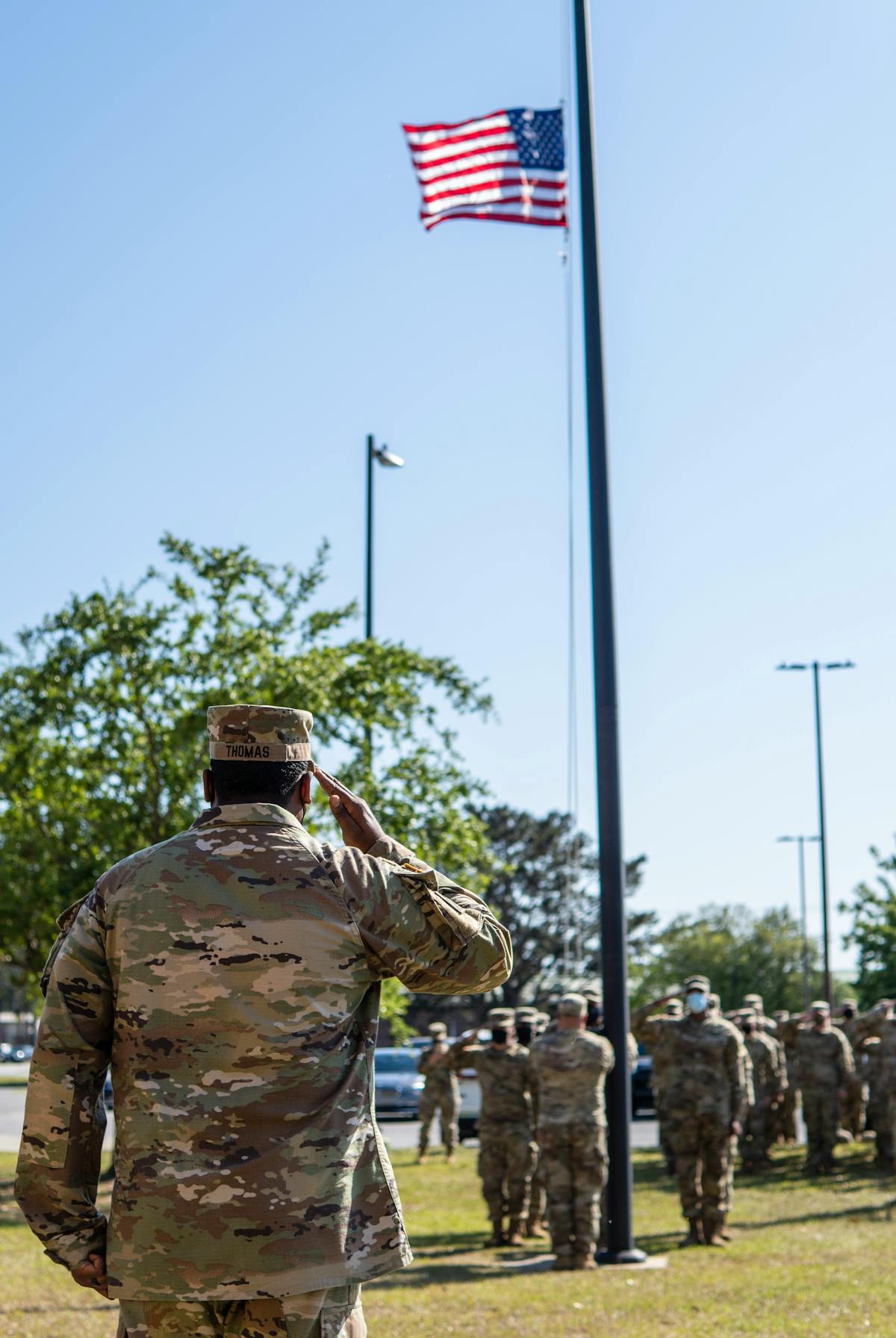
VA Aid & Attendance 2026: The Orange County Veteran’s Guide to Up to $3,845/Month Tax-Free for Home Care
If your dad served in Vietnam and needs help bathing. If your mom is the surviving spouse of a Korean War veteran and can’t remember to take her medications. If the World War II vet down the hall at your parent’s assisted living keeps saying he can’t afford to stay another year. There’s a federal benefit most Orange County families have never heard of — and in 2026, it just got bigger.
The VA’s Aid & Attendance pension pays qualifying wartime veterans and surviving spouses up to $3,845 per month, tax-free, to help cover home care, assisted living, or nursing home costs. A 2.8% cost-of-living adjustment took effect December 1, 2025. And in a county where 84,235 veterans call home — and nearly one in three of them is 75 or older — this benefit should be everywhere. It isn’t.
At At Home VA Staffing, we’re named after the veterans our company was built to serve. This guide walks you through the 2026 rates, who qualifies, what trips families up, and how to actually get the check written — in plain language, with the Orange County details that national guides skip.
What is VA Aid & Attendance?
Aid & Attendance (A&A) is an enhanced monthly pension paid on top of the basic VA Pension. It was created in the 1950s for wartime veterans who need help with daily living — bathing, dressing, eating, transferring, toileting, or medication management — or who are bedridden, in a nursing home, or have severely limited eyesight.
Here’s what makes A&A unusual among federal programs:
- It’s tax-free. Unlike Social Security, these dollars don’t get reported as income on your 1040.
- It can cover non-medical home care. Most Medicare benefits won’t touch companion or personal care. A&A will.
- Service-connected disability is not required. You don’t need a Purple Heart. You need wartime service, an income test, and a care need.
- Surviving spouses qualify too. About 30% of our calls about A&A come from widowed spouses who assumed the benefit died with their husband. It didn’t.
The 2026 Rate Table
Effective December 1, 2025 through November 30, 2026, the Maximum Annual Pension Rate (MAPR) with Aid & Attendance — which is the ceiling the VA will pay — looks like this:
| Beneficiary Category | Monthly Max (2026) | Annual Max |
|---|---|---|
| Single veteran, no dependents | $2,358 | $28,300 |
| Veteran with one dependent (spouse or child) | $2,795 | $33,548 |
| Two veterans married to each other, both need A&A | $3,740 | $44,886 |
| Veteran housebound, no dependents | $1,776 | $21,316 |
| Surviving spouse, no dependents | $1,558 | $18,694 |
| Surviving spouse with one dependent | $1,860 | $22,318 |
| Surviving spouse housebound | $1,189 | $14,276 |
The $3,845/month figure you may see in news articles reflects the highest-tier combination (two veterans married to each other, both requiring A&A, plus early income offsets). For most OC families, the numbers above are the ones that matter.

Who Qualifies? The Four Tests
To get the check, a veteran (or surviving spouse) has to clear four gates.
1. Service Test — Wartime Eligibility
The veteran must have served at least 90 days on active duty, with at least one day during a wartime period. The VA’s definition of “wartime” is broader than most people think:
| Wartime Period | Dates |
|---|---|
| World War II | December 7, 1941 – December 31, 1946 |
| Korean Conflict | June 27, 1950 – January 31, 1955 |
| Vietnam Era | February 28, 1961 (boots-on-ground) or August 5, 1964 – May 7, 1975 |
| Gulf War | August 2, 1990 – undetermined |
Orange County’s 2023–24 Veteran Demographics Report found 36.8% of OC veterans served during Vietnam — more than any other era. That cohort is now 75 to 85 years old and smack in the middle of peak A&A eligibility.
2. Discharge Test
Any discharge other than dishonorable qualifies. Honorable, general under honorable, and most other-than-honorable discharges work. If the discharge was dishonorable, A&A is off the table unless the character of discharge is upgraded.
3. Medical Test — The “Need for Aid”
A physician has to document that the veteran or surviving spouse needs regular help with at least two activities of daily living (ADLs), or is housebound, or is blind (5/200 or worse), or resides in a nursing home. The VA uses form 21-2680 (“Examination for Housebound Status or Permanent Need for Regular Aid and Attendance”) — get your primary care doctor or your home care agency’s RN to fill this out carefully. This is the single most commonly botched part of the application.
4. Financial Test — Income & Net Worth
The 2026 net worth limit is $163,699. That combines the applicant’s assets and annualized income, and it excludes the primary residence, one vehicle, and personal effects. Countable income is offset by Unreimbursed Medical Expenses (UME) — we’ll get to why this matters in the next section.
The UME Math That Makes It Work
Most OC families look at their parent’s $2,400 Social Security check and assume “too much income — no A&A.” That’s wrong. Here’s the formula the VA actually uses:
Let me translate that with a real OC example. Dorothy is 84, a surviving spouse of a Korean War veteran, living in Mission Viejo.
- Monthly Social Security: $2,100 → $25,200/year income
- Monthly home care (12 hrs/week, $42/hr): $2,184 → $26,208/year
- Monthly Medicare supplement premium: $295 → $3,540/year
- Total UMEs: $29,748/year
- 5% of surviving-spouse MAPR ($18,694) = $935 threshold
- Deductible UMEs: $29,748 − $935 = $28,813
- Countable income: $25,200 − $28,813 = $0 (can’t go below zero)
- A&A benefit: $18,694 − $0 = $18,694/year, or $1,558/month
Dorothy, with a $2,100 monthly Social Security check and significant home care costs, qualifies for the maximum surviving-spouse A&A benefit. Families routinely leave this money on the table because they didn’t know about the UME offset.

The Three-Year Look-Back: Where Families Get Burned
Since October 2018, the VA applies a 36-month look-back on asset transfers. Give a grandchild $20,000 for college in 2024 and apply for A&A in 2026? The VA will treat that gift as if you still have the money, and can delay benefits by up to five years.
How to Apply: The Orange County Playbook
There are three ways to file. We recommend option 2 or 3 for Orange County families — going it alone is where claims get denied.
- Self-file online at VA.gov using form 21P-527EZ (veterans) or 21P-534EZ (surviving spouses).
- Free help through the OC Veterans Service Office at 1300 S. Grand Ave., Santa Ana. VSO officers are VA-accredited, free, and handle the paperwork. Appointments: (714) 480-6555.
- Use a Veterans Service Organization like DAV, VFW, American Legion, or Disabled American Veterans. All have Orange County chapters and file claims at no cost.
Expect 6 to 9 months for a decision on a well-prepared initial claim; poorly prepared claims can drag past a year. Effective date is the date the VA receives your Intent to File (form 21-0966), which you should submit the same day you start gathering documents. Back-pay is awarded to the Intent-to-File date, so filing the Intent first can mean tens of thousands of dollars in retroactive benefits.
Using A&A for Home Care in Orange County
Here’s the nuance most families miss: A&A benefit dollars follow the veteran — you choose the provider. There’s no approved-agency list, no network, no prior authorization. A&A treats your home care costs as UMEs, which is how it works mathematically to offset income.
For an Orange County family paying $38–$45 per hour for in-home care in 2026 (see our 2026 home care cost guide), A&A can cover roughly 40–50 hours per week of personal care. For a couple where the veteran has dementia, that’s often the difference between staying home and moving into memory care.
Pairing strategies OC families use successfully:
- A&A + IHSS. If the veteran qualifies for Medi-Cal, In-Home Supportive Services covers personal care hours. A&A backfills companion hours and overnight care. See our IHSS rate update.
- A&A + private-pay gap funding. Most families cover 20–40% of care costs out of pocket; A&A covers the rest.
- A&A + long-term care insurance. If the veteran has an LTC policy, A&A stacks on top — the VA doesn’t coordinate against it.

Your Pre-Application Checklist
Check off each item as you gather it. Every piece saves weeks on the back end.
The Mistakes We See Most Often
From conversations with OC families over the last year, these six errors account for the vast majority of A&A denials:
- Skipping the Intent to File. Every day you delay form 21-0966 is a day of benefits you won’t get back.
- Filing without form 21-2680 completed properly. A rushed doctor’s note that doesn’t specify ADLs the veteran needs help with is the top reason for denials.
- Not listing recurring home care costs. If you don’t list it, the VA doesn’t deduct it. No UME, no benefit.
- Transferring assets within the 36-month look-back. Parents gifting money to adult children for a down payment, then applying. The VA catches this.
- Confusing A&A with VA Disability Compensation. They’re different programs with different rules. A&A requires wartime service, not a service-connected injury.
- Paying a “VA benefits consultant” upfront. By federal law, only VA-accredited agents, attorneys, and VSOs can charge for claim-preparation help — and most charge nothing. Anyone asking for money upfront is a red flag.
Quick Quiz: Test Your A&A Knowledge
Five questions, two minutes. No login required.
Q1. 1. What is the maximum monthly A&A benefit for a surviving spouse with no dependents in 2026?
Q2. 2. How far back does the VA’s asset transfer look-back extend?
Q3. 3. Which VA form documents a veteran’s need for aid and attendance?
Q4. 4. What is the 2026 net worth limit for A&A eligibility?
Q5. 5. Does A&A require a service-connected disability?
Where to Get Free Help in Orange County
- OC Veterans Service Office — 1300 S. Grand Ave., Bldg. B, Santa Ana. (714) 480-6555. Free claims filing by accredited VSOs.
- VA Long Beach Healthcare System — 5901 E. 7th St., Long Beach. Full VA medical home for OC veterans, plus a social work office that assists with A&A referrals.
- American Legion Post 132 (Orange), VFW Post 9934 (Mission Viejo), DAV Chapter 50 (Anaheim) — all file claims at no cost.
- Orange County Vietnam Veterans Memorial (Santa Ana) hosts a monthly A&A outreach session for Vietnam-era veterans and their families.

Frequently Asked Questions
Thinking About A&A for a Veteran in Your Family?
At Home VA Staffing has helped Orange County veterans and their families turn A&A benefits into actual hours of care — without the guesswork. We can connect you with a VA-accredited VSO, document your home care costs in the format the VA expects, and have a caregiver in place while the claim is pending.
Talk to Our Team