
Your phone rings at 2 a.m. On the other end, you hear your granddaughter sobbing. She says she’s been in a car accident, she’s in jail, and she needs $8,000 for bail — right now. The voice is unmistakable. The crying, the inflection, even the way she says “Grandma.” But here’s the terrifying truth: it’s not her. It’s an artificial intelligence clone of her voice, generated from a 3-second clip the scammer pulled off her Instagram story. Welcome to the Grandparent Scam 2.0 — and it’s devastating Orange County families at an alarming rate.
The Rise of AI Voice Cloning: Why 2026 Is the Tipping Point

Artificial intelligence voice cloning technology has undergone a seismic shift in the past 18 months. What once required hours of recorded speech and expensive software to produce a rough approximation can now be done in seconds — for free. Consumer-grade AI tools available on the open internet can replicate not just a person’s voice, but their breathing patterns, speech cadence, emotional tone, and regional inflections.
According to the Journal of Accountancy’s April 2026 report, elder fraud losses rose 43% in 2024 to $4.89 billion — and 2026 is tracking to shatter that record. The FBI estimates AI voice cloning scams alone have cost elderly Americans over $2.3 billion this year, with global losses projected to reach $8 billion by December.
The Federal Trade Commission received 250,000 complaints about AI voice cloning scams in the first quarter of 2026 alone — and that number represents only a fraction of actual incidents. Research shows only 15% of victims ever report these crimes, primarily due to shame and embarrassment.
For Orange County families caring for aging parents or grandparents, this isn’t an abstract tech headline. It’s a direct, daily threat to the financial security and emotional wellbeing of the people you love most. Communities from Irvine to Huntington Beach, Santa Ana to Mission Viejo, are seeing a surge in reports — and the scammers are getting better every day.
Why the Technology Changed Everything
In 2023, cloning a voice required at least 30 minutes of clear audio. By early 2025, that dropped to 30 seconds. In 2026, sophisticated AI models can produce a convincing voice clone from just 3 seconds of audio — the length of a voicemail greeting, a TikTok video, or a birthday message posted to Facebook.
These tools don’t just mimic the sound of someone’s voice. They capture micro-patterns that our brains use to identify people we know: the slight rasp when someone says certain words, the pause before they use a pet name, the way they sigh when frustrated. The result is a clone so convincing that 77% of people who engage with an AI-cloned voice on a phone call cannot tell the difference — and end up losing money.
How the “Grandparent Scam 2.0” Works — Step by Step

The original “grandparent scam” has existed for decades — a caller pretends to be a grandchild in distress and asks for money. But AI voice cloning has transformed this low-tech con into a sophisticated, nearly undetectable fraud operation. Here’s exactly how the modern version unfolds:
Step 1: Voice Harvesting
Scammers troll social media platforms — Instagram, TikTok, Facebook, YouTube — looking for voice samples. A birthday wish video, a graduation speech, a story reaction, even a public voicemail greeting provides enough audio. They specifically target families where grandchildren are active on social media and grandparents have listed phone numbers or are active in community groups.
Step 2: The Clone
Using free or low-cost AI tools available online, scammers feed the audio sample into a voice synthesis engine. Within minutes, they have a real-time voice clone that can say anything — typed text is converted to speech that sounds exactly like the target. Some advanced tools even clone emotional states: crying, panic, fear, and confusion.
Step 3: The Call
The scammer calls the grandparent, typically late at night or early in the morning when cognitive defenses are lowest. The cloned voice says something like: “Grandma, it’s me. I’ve been in a terrible accident. I’m in jail and I need bail money. Please don’t tell Mom and Dad — I’m so embarrassed.” The call is designed to trigger an immediate emotional response that overrides rational thinking.
Step 4: The “Attorney” or “Officer”
A second person gets on the line — supposedly a lawyer, bail bondsman, or police officer — who provides “official” instructions for wiring money, buying gift cards, or sending cryptocurrency. They emphasize urgency: “The hearing is in two hours. If you don’t send the money now, your granddaughter will spend the weekend in jail.”
Step 5: The Extraction
Victims are instructed to withdraw cash and deposit it at a Bitcoin ATM, wire it via Western Union, or purchase gift cards and read the numbers over the phone. Scammers prefer these methods because they’re essentially untraceable and irreversible. The average loss per victim is $12,500, but some Orange County families have reported losses exceeding $100,000.
| Scam Element | Old Version (Pre-AI) | Grandparent Scam 2.0 (AI-Powered) |
|---|---|---|
| Voice accuracy | Generic young voice, no resemblance | Exact clone of real grandchild’s voice |
| Emotional realism | Acted crying, unconvincing | AI-generated crying, panic, and fear |
| Setup time | No preparation needed | 3-second audio clip from social media |
| Success rate | ~5-8% | ~34% (2026 data) |
| Average loss | $2,000-$5,000 | $12,500+ |
| Detection difficulty | Easy — voice didn’t match | Extremely hard — voice is nearly perfect |
| Payment methods | Wire transfer, check | Crypto, gift cards, Zelle, wire |
The Numbers Are Staggering: AI Voice Scam Statistics in 2026

The scale of the AI voice cloning scam epidemic is difficult to overstate. Every data point tells the same story: this problem is growing exponentially, and traditional fraud prevention isn’t keeping pace.
| Metric | 2024 | 2025 | 2026 (Projected) |
|---|---|---|---|
| Total U.S. elder fraud losses | $4.89 billion | $6.2 billion | $8+ billion |
| AI voice scam losses (seniors) | $480 million | $1.1 billion | $2.3 billion+ |
| FTC complaints (AI voice) | 310,000 (full year) | 620,000 (full year) | 250,000 (Q1 only) |
| Scam success rate | 12% | 23% | 34% |
| Average loss per victim | $7,800 | $9,600 | $12,500 |
| Victims who report to police | 18% | 16% | 15% |
| Audio needed for cloning | 30 seconds | 10 seconds | 3 seconds |
A recent FTC analysis found that since 2020, there has been a four-fold increase in reports from older consumers who say they lost $10,000 or more — sometimes their entire life savings — to scammers impersonating trusted government agencies, businesses, or family members. The AI voice cloning component has accelerated this trend dramatically.
Perhaps most troubling: 1 in 4 Americans surveyed in March 2026 said they had been fooled by a deepfake voice at least once, according to research covered by UnboxFuture. Among adults over 65, that number rose to 1 in 3.
Why Seniors Are Disproportionately Targeted
Scammers don’t choose their victims randomly. Seniors are targeted for specific, calculated reasons:
- Higher savings: Older Americans typically have more accessible cash in savings accounts, retirement funds, and home equity
- Less tech familiarity: Many seniors aren’t aware that AI can clone voices from short audio clips
- Strong family bonds: Grandparents are deeply motivated to help grandchildren in distress — scammers weaponize love
- Social isolation: Seniors living alone may not have someone nearby to consult before acting
- Generational trust: Older adults grew up in an era when a phone call was inherently trustworthy
- Cognitive factors: Age-related cognitive changes can impair snap judgment under emotional stress
Why Orange County Seniors Are Especially Vulnerable

Orange County presents a perfect storm of factors that make it one of the most targeted regions in the country for AI voice cloning scams:
High wealth concentration. OC’s median household income exceeds $100,000, and many retirees in communities like Newport Beach, Laguna Beach, and Dana Point have substantial retirement portfolios. Scammers specifically target affluent zip codes because the potential payout per victim is higher.
Large senior population. Over 450,000 Orange County residents are aged 60 or older — roughly 14% of the county’s population. Communities like Laguna Woods, a retirement community of over 16,000 residents, represent concentrated targets for phone scam operations.
Social media-active grandchildren. OC’s younger population is among the most active on social media in Southern California, providing scammers with abundant voice samples to harvest from public Instagram stories, TikTok videos, and YouTube content.
Geographic dispersion of families. Many OC seniors have grandchildren who live elsewhere in California or out of state. This geographic separation means grandparents can’t easily verify an emergency by walking down the hall — they have to rely on phone communication, which is exactly what scammers exploit.
Recent OC Cases
While specific victim identities are protected, the Orange County District Attorney’s Consumer Fraud Unit has reported a 280% increase in AI-related elder fraud complaints between January and March 2026 compared to the same period last year. The most common scenario involves cloned grandchild voices requesting bail money or emergency medical payment. Several victims in Irvine, Anaheim, and Santa Ana reported losses exceeding $50,000 each.
“These scammers are exploiting the most fundamental human instinct — the desire to protect your family. When you hear your granddaughter crying and begging for help, every rational filter shuts down. That’s exactly what they’re counting on.” — Robert Gordon, AHVA Home Care
Red Flags: How to Spot an AI Voice Cloning Scam

Even the most sophisticated AI voice clone has tells — subtle indicators that something isn’t right. Training yourself and your elderly loved ones to recognize these red flags can prevent devastating losses:
- Extreme urgency and time pressure. Scammers create artificial deadlines: “I need the money in the next hour or I’ll be stuck here all weekend.” Real emergencies involve real institutions that have procedures — courts don’t demand immediate cash payments.
- “Don’t tell Mom and Dad.” This is the single most reliable red flag. Scammers isolate victims from people who might intervene. A real grandchild in genuine distress would want their parents involved.
- Requests for gift cards, cryptocurrency, or wire transfers. No legitimate legal process, hospital, or government agency accepts payment via iTunes gift cards, Bitcoin ATMs, or Western Union. Period.
- Caller ID manipulation. Scammers can spoof any phone number, making it appear the call is coming from your grandchild’s actual phone. Never trust caller ID alone.
- Slight audio anomalies. Listen for: unnatural pauses between sentences, a slight robotic quality during emotional moments, background noise that doesn’t change, or breathing patterns that sound too regular.
- Inability to answer personal questions. Ask something only the real person would know — a pet’s name, a shared memory, what they had for dinner last time you were together. AI clones can mimic voice but can’t access personal memories.
- A “lawyer” or “officer” takes over quickly. In real emergencies, you’d speak directly with your family member for an extended period. Scammers transfer to a confederate quickly to reduce the chance of detection.
Scam Call Red Flags
- Calls at unusual hours (late night, early morning)
- “Don’t tell anyone” or secrecy demands
- Immediate payment required — no time to think
- Gift cards, crypto, or wire transfer as payment
- Caller can’t answer personal questions
- Quick handoff to a “lawyer” or “bail bondsman”
- Threats of worse consequences if you delay
- Background noise that sounds synthetic or static
Signs It’s a Real Call
- Caller suggests involving other family members
- No immediate payment demand — time to verify
- Caller can answer personal questions naturally
- Payment through normal channels (no gift cards)
- Caller encourages you to call them back
- No secrecy requirements
- Consistent, natural emotional responses
- Background noise that matches claimed location
The Family Safe Word System: Your First Line of Defense

The single most effective defense against AI voice cloning scams is also the simplest: establish a family safe word. This is a secret phrase — known only to your family — that must be provided during any emergency call requesting money or sensitive information.
How to Set Up Your Family Safe Word
- Choose something memorable but not guessable. Avoid pet names, birthdays, or anything posted on social media. Good examples: “purple elephant Tuesday,” “Grandma’s piano recital,” or a made-up word like “flibbertigibbet.” The more random, the better.
- Share it in person only. Never text, email, or say the safe word on a phone call. Have a family dinner or visit where you establish the word face-to-face.
- Make sure everyone knows the rule. If someone calls claiming to be family and can’t provide the safe word, hang up immediately — no exceptions, no matter how convincing they sound.
- Include caregivers in the plan. If your loved one has a home caregiver, make sure the caregiver knows about the safe word system and can help screen suspicious calls.
- Change it periodically. Update the safe word every 6 months or if you suspect it may have been compromised.
The “Hang Up and Call Back” Rule
In addition to the safe word, establish this absolute rule with every senior in your family: if you receive an emergency call asking for money, hang up and call the person back at their known number. Don’t use the number that called you — dial the number saved in your contacts. If it was a real emergency, your grandchild will answer. If it was a scam, you just saved yourself thousands of dollars.
This two-step verification — safe word plus callback — defeats virtually every AI voice cloning attack. Scammers rely on maintaining the illusion of a single, continuous, urgent conversation. The moment you break that by hanging up and calling back independently, their scheme collapses.
California’s Legal Response: New AI Fraud Laws in 2026

California has taken more legislative action on AI regulation than any other state, though experts argue the laws still lag significantly behind the technology. Here’s what’s on the books as of April 2026:
Key California AI Laws
AB 2602 & AB 1836 — Digital Replica Protection (Effective January 1, 2026). These companion bills make it illegal to create AI replicas of a person’s voice or likeness without explicit, informed consent. Contracts authorizing digital replicas must include a “reasonably specific description” of the proposed use, and the individual must be represented by legal counsel or a labor union. While these laws were primarily designed to protect performers and public figures, their provisions extend to any California resident whose voice is cloned without consent.
AB 853 — California AI Transparency Act. Requires AI-generated content to carry digital watermarks and transparency disclosures. This includes synthesized audio, making it technically illegal to use AI-cloned voices without disclosure — though enforcement against overseas scam operations remains the primary challenge.
Existing Fraud and Impersonation Statutes. California Penal Code sections 530.5 (identity theft), 532 (obtaining money by false pretenses), and 368 (elder abuse) all apply to AI voice scams. Penalties for financial elder abuse in California range from 2 to 4 years in state prison, with enhanced sentences when victims are over 65.
Federal Protections
At the federal level, the FTC has proposed a comprehensive ban on impersonation fraud and has applied the Telemarketing Sales Rule to AI-enabled scam calls. The FTC Voice Cloning Challenge — launched in 2024 — continues to drive development of detection technologies that can identify synthetic audio in real time.
The FTC has also issued consumer alerts specifically about AI-enhanced family emergency scams, providing guidance that’s particularly relevant for Orange County families.
What to Do If You or a Loved One Gets Scammed

If you suspect you or a family member has fallen victim to an AI voice cloning scam, time is critical. Here’s what to do immediately:
Immediate Steps (First 24 Hours)
- Contact your bank immediately. If money was wired or transferred electronically, call your bank’s fraud department. Some wire transfers can be recalled if reported within hours. For OC residents, major banks like Chase, Bank of America, and Wells Fargo all have 24/7 fraud hotlines.
- File a police report. Contact your local police department or the OC Sheriff’s Department. Having an official report is essential for any potential recovery and for building the case database that helps law enforcement track scam networks.
- Report to the FTC. File a complaint at reportfraud.ftc.gov or call the National Elder Fraud Hotline at 833-FRAUD-11 (833-372-8311). This hotline is staffed by case managers who can guide you through the recovery process.
- Contact the Orange County DA. The OC District Attorney’s Consumer Fraud Unit can be reached at (714) 834-6553. They investigate elder fraud cases and can connect you with victim services.
- If gift cards were used: Contact the gift card company (Apple, Google, Amazon) immediately with the card numbers. Some companies can freeze unredeemed cards and potentially recover funds.
Emotional Recovery Is Just as Important
Scam victims often experience intense shame, guilt, and depression. Many seniors blame themselves: “How could I fall for that?” It’s crucial for family members to respond with compassion, not blame. These scams are specifically engineered to exploit the deepest human emotions — falling victim says nothing about intelligence or competence.
The OC DA’s Victim Services division provides free counseling and support for elder fraud victims. The OC Family Justice Center also offers confidential assistance for survivors of elder abuse, including financial exploitation.
Technology Tools That Help Protect Seniors from AI Scams

While no technology is foolproof, several tools can add layers of protection for vulnerable seniors:
Call Screening and Blocking
- iPhone Silence Unknown Callers: Settings → Phone → Silence Unknown Callers. Sends calls from numbers not in contacts directly to voicemail.
- Google Call Screen (Android): Uses AI to screen incoming calls and provides a real-time transcript before you decide to answer.
- Nomorobo / RoboKiller: Third-party apps that maintain databases of known scam numbers and block them automatically. Both offer senior-specific features.
- Phone carrier protection: AT&T ActiveArmor, T-Mobile Scam Shield, and Verizon Call Filter all provide free basic scam call blocking.
AI Detection Tools
Emerging in 2026, several apps now claim to detect AI-generated audio in real time. While still in early stages, tools like Pindrop, Reality Defender, and Resemble Detect analyze voice patterns during calls and can flag synthetic audio. These are primarily available for enterprise use but consumer versions are expected by late 2026.
Smart Home Assistants as Gatekeepers
Some families are configuring smart speakers (Amazon Echo, Google Home) as secondary verification: if Grandma receives a suspicious call, she can ask Alexa or Google to “call [grandchild’s name]” using the actual contact number, providing instant verification without having to navigate phone menus.
Building a Family Protection Plan: A Complete Guide

Protecting your elderly loved ones from AI voice scams requires a coordinated family approach. Here’s a comprehensive plan you can implement this week:
Step 1: Have the Conversation
Sit down with your senior family members — in person, not over the phone — and explain the threat. Be specific: show them a news article, play an example of an AI-cloned voice (many are available on YouTube), and make it clear that anyone can be fooled. Frame it as awareness, not a lecture. Most seniors respond better to “let me show you something we should all be aware of” than “you need to be careful.”
Step 2: Establish Verification Protocols
- Create a family safe word (see section above)
- Establish the “hang up and call back” rule
- Designate a family member as the “verification contact” — someone the senior can call any time they receive a suspicious request
- Post a reminder card next to the home phone with the safe word rules and key family phone numbers
Step 3: Reduce the Digital Footprint
- Review grandchildren’s social media privacy settings — set accounts to private where possible
- Remove voice samples from public voicemail greetings — use a generic message instead
- Limit public video posts that contain clear voice samples
- Be cautious about voice assistants that may record and store audio
Step 4: Set Up Financial Safeguards
- Add a trusted contact person to all bank and investment accounts
- Set up transaction alerts for withdrawals over a threshold (e.g., $500)
- Establish daily withdrawal limits at the bank
- Consider a power of attorney or trusted contact designation for large transactions
Step 5: Involve Professional Caregivers
If your loved one receives in-home care, make sure their caregiver is part of the protection plan. Professional caregivers from agencies like At Home VA Staffing are trained to recognize signs of elder exploitation and can serve as an additional layer of protection. A caregiver who is present during suspicious calls can help the senior pause, verify, and avoid impulsive decisions driven by fear.
Orange County Resources for Elder Fraud Protection
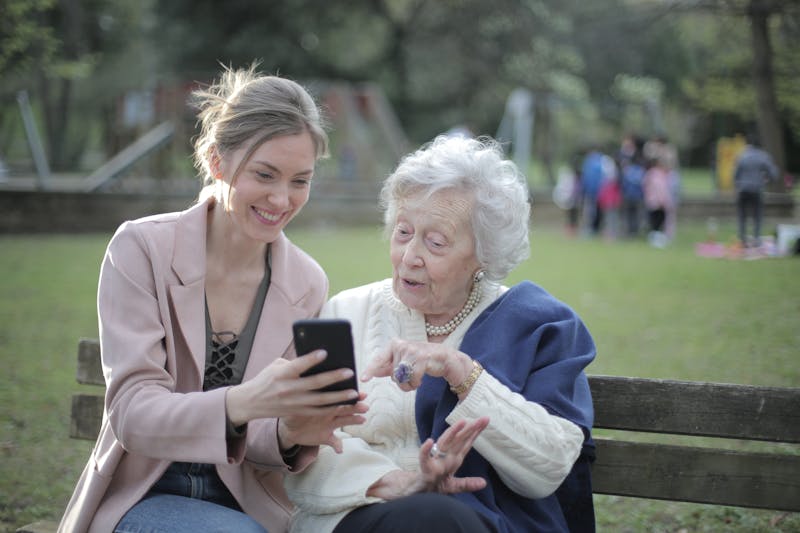
Orange County families have access to numerous local and national resources for elder fraud prevention and recovery:
| Resource | Contact | What They Do |
|---|---|---|
| OC DA Consumer Fraud Unit | (714) 834-6553 | Investigates fraud complaints, connects victims with support |
| National Elder Fraud Hotline | 833-FRAUD-11 (833-372-8311) | Free case management, guides recovery process |
| OC Family Justice Center | (714) 765-1645 | Confidential support for elder abuse survivors |
| OC Office on Aging | (714) 480-6450 | Senior services referrals, protective services |
| Adult Protective Services (OC) | (800) 451-5155 | Reports of elder abuse and financial exploitation |
| AARP Fraud Watch Network | 877-908-3360 | Free fraud prevention resources and helpline |
| FBI Internet Crime Complaint Center | ic3.gov | Online fraud reporting (cyber-enabled crimes) |
| FTC Report Fraud | reportfraud.ftc.gov | Federal fraud complaint database |
If you or a loved one in Orange County needs immediate assistance with a suspected AI voice scam, start with the National Elder Fraud Hotline at 833-372-8311. Their case managers are specifically trained to handle AI-related fraud and can guide you through reporting, recovery, and emotional support resources.
“In-home caregivers are often the unsung heroes in elder fraud prevention. They’re the ones who notice when something seems off — when Grandma is suddenly anxious about a phone call, or when unusual financial transactions start appearing. A trained, compassionate caregiver doesn’t just provide physical support; they’re a protective presence against exploitation.” — Robert Gordon, AHVA Home Care
How In-Home Caregivers Help Protect Against Scams
Professional in-home caregivers play a uniquely important role in protecting seniors from AI voice scams and other forms of financial exploitation. Here’s how:
- Physical presence during calls. When a caregiver is present, seniors have someone to consult before making financial decisions. Simply saying “Let me ask my caregiver to help me with this” often causes scammers to hang up immediately.
- Trained observation. Professional caregivers from reputable agencies are trained to recognize signs of financial exploitation: sudden anxiety, secretive phone conversations, requests to visit the bank unexpectedly, or new “friends” who call frequently.
- Technology assistance. Caregivers can help seniors set up call blocking, review suspicious text messages, and maintain privacy settings on devices — tasks that can feel overwhelming for someone who didn’t grow up with smartphones.
- Emotional support after a scam attempt. Even unsuccessful scam attempts can leave seniors feeling shaken and vulnerable. A caregiver provides reassurance and can help process the experience without judgment.
- Connection to family. Caregivers serve as a bridge between seniors and their broader family network, ensuring that suspicious activity gets communicated quickly to adult children who can help investigate.
At At Home VA Staffing, our Orange County caregivers receive specific training on recognizing and responding to elder fraud attempts, including the latest AI-powered scams. We believe that comprehensive care means protecting the whole person — including their financial security and peace of mind. Call us at (213) 326-7452 to learn how a trained caregiver can add a critical layer of protection for your loved one.
For more on how professional home care supports Orange County families, see our guides on respite care benefits, elderly care services, and companionship care.
Test Your Knowledge: AI Voice Scam Awareness Quiz
See how prepared you are to recognize and respond to AI voice cloning scams.
Q1. 1. How much audio does a scammer need to clone someone’s voice in 2026?
Q2. 2. What is the single biggest red flag in a grandparent scam call?
Q3. 3. If you receive a suspicious emergency call from a “family member,” what should you do FIRST?
Q4. 4. What percentage of AI voice scam victims report the crime to authorities?
Q5. 5. Which of the following is the BEST long-term protection against AI voice scams for seniors?
Frequently Asked Questions
Yes. As of 2026, advanced AI voice synthesis tools can create a convincing voice clone from as little as 3 seconds of audio. The technology has improved dramatically — it now captures not just tone and pitch, but breathing patterns, emotional inflections, speech cadence, and regional accent characteristics. Free tools available on the internet make this accessible to anyone, including scammers. This is why reducing your family’s public voice footprint on social media is an important protective step.
Recovery depends on the payment method and how quickly you act. Wire transfers reported within 24 hours can sometimes be recalled through the bank’s fraud department. Gift card funds may be recoverable if the cards haven’t been redeemed — contact the issuing company immediately. Cryptocurrency is generally unrecoverable. In all cases, file a report with your local police, the FTC (reportfraud.ftc.gov), and the National Elder Fraud Hotline at 833-372-8311. Even if full recovery isn’t possible, reporting helps law enforcement track and disrupt scam networks.
Scammers harvest voice samples from any publicly available source: Instagram stories, TikTok videos, YouTube content, Facebook videos, public voicemail greetings, recorded webinars, podcast appearances, and even school event recordings posted online. They target families by searching social media for people who publicly identify their grandparents or post about family relationships. Setting social media profiles to private and using generic voicemail greetings are simple ways to reduce exposure.
AI voice detection technology is emerging but still in early stages for consumer use. Companies like Pindrop, Reality Defender, and Resemble AI have developed detection tools that analyze voice patterns for synthetic artifacts. Most are currently enterprise-grade, but consumer apps are expected by late 2026. In the meantime, the most reliable “detection” method remains low-tech: the family safe word and hang-up-and-call-back rule. No AI detection app is as reliable as simply verifying the caller’s identity independently.
Seniors living alone are the most vulnerable to phone scams because they lack an immediate second opinion. Several strategies help: (1) Post a printed reminder card next to the phone with the safe word rules and family contact numbers; (2) Enable call screening features on their phone; (3) Set up daily check-in calls so they have regular contact with family; (4) Consider in-home companionship care — even a few hours per week provides a protective presence. At Home VA Staffing offers flexible scheduling for Orange County families, including companionship visits specifically designed around high-risk times. Call (213) 326-7452 to discuss options.
As of January 1, 2026, California’s Digital Replica Protection laws (AB 2602 and AB 1836) make it illegal to create AI replicas of a person’s voice without explicit consent. Additionally, using a cloned voice to commit fraud violates California Penal Code sections 530.5 (identity theft), 532 (fraud), and 368 (elder abuse). However, enforcement is challenging because many scam operations are based overseas, beyond the reach of California law enforcement. This is why prevention — safe words, call verification, caregiver presence — remains more effective than relying on legal deterrence.
Family AI Scam Protection Checklist
Complete these steps to protect your Orange County family from AI voice cloning scams. Click each item as you complete it.
Protect Your Orange County Family Today
A trained, compassionate caregiver provides more than physical care — they’re a protective presence against scams, exploitation, and isolation. At Home VA Staffing’s Orange County caregivers are specifically trained to recognize and respond to elder fraud.
Call (213) 326-7452 to learn how in-home care can add a critical layer of protection.
Talk to Our TeamServing Families Across Orange County