B.E. F.A.S.T.: The 2026 Stroke Warning Signs Every Orange County Family Should Know
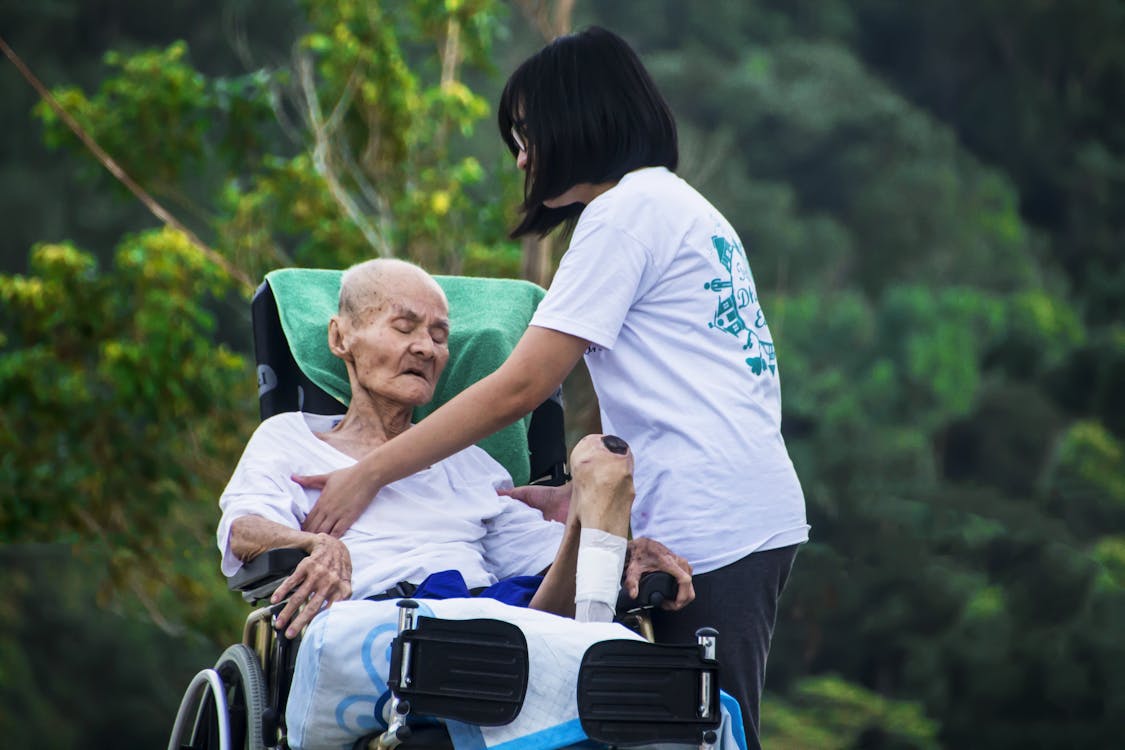
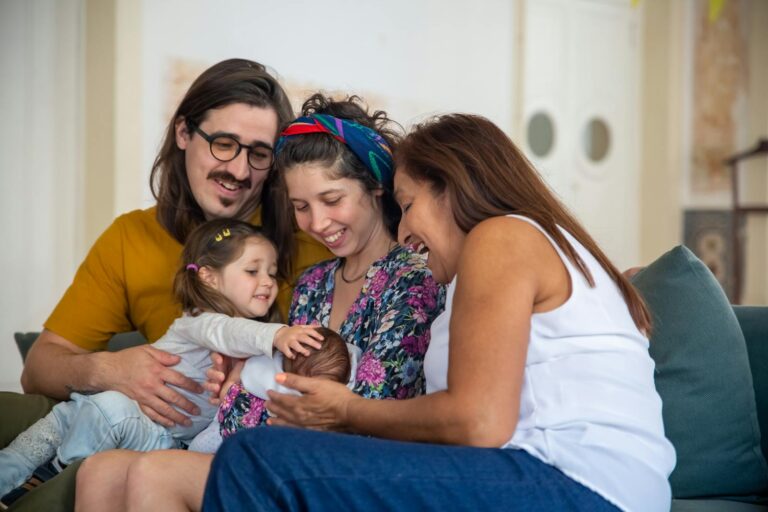
Maria Orosco was making breakfast in her Laguna Hills kitchen when her husband stumbled getting up from his chair. Just slightly — not dramatically, not falling. “He did that little hesitation step, like he was adjusting his footing,” she said. “I almost didn’t say anything.”
She said something. MemorialCare Saddleback Medical Center confirmed he was having a transient ischemic attack — a TIA, sometimes called a mini-stroke — and that the hesitation step was a balance failure, the earliest sign of something more serious developing. He received treatment in time. He recovered fully.
Her story comes back to one detail: Balance. The B in B.E. F.A.S.T. The warning sign that most families miss because it doesn’t look the way they expect a stroke to look.
The American Stroke Association teaches F.A.S.T. Many hospitals and health systems teach a longer version, B.E. F.A.S.T., which adds Balance and Eyes. For Orange County families who live with a stroke survivor — and the many more who care for someone at elevated risk — knowing every letter could determine whether a loved one recovers fully or doesn’t recover at all.
From FAST to B.E. F.A.S.T. — What Changed and Why
The original FAST acronym has been a public health staple since the early 2000s. Four letters. Four actions. Face drooping, Arms drifting, Speech difficulty, Time to call 911. Simple, memorable, and effective — it has saved lives by prompting faster 911 calls at a time when every second genuinely counts.
But the classic acronym does not capture every warning sign. Two warning signs that frequently appear before or alongside the classic FAST symptoms were not captured: sudden loss of balance and sudden changes in vision. Many hospital and health systems added Balance and Eyes to catch a broader range of stroke presentations — particularly posterior-circulation strokes (about 20% of ischemic strokes), which affect the back of the brain and often begin with balance or vision disturbances before the more obvious face and arm symptoms appear.
The American Stroke Association still uses F.A.S.T. as its official acronym. In a study it convened, presented in 2025, both acronyms prompted people to call 911, and people remembered face, arm and speech better with F.A.S.T. So keep F.A.S.T. as the core and treat Balance and Eyes as two extra signs to watch for. For home caregivers, family members, and anyone who spends significant time with an older adult, those two extra letters are worth learning.
| Acronym | Letters | What It Covers |
|---|---|---|
| FAST (original) | Face, Arms, Speech, Time | Classic stroke symptoms — the most obvious presentations |
| B.E. F.A.S.T. (expanded) | Balance, Eyes, Face, Arms, Speech, Time | Full spectrum including early posterior stroke warning signs |
Breaking Down Each Letter
Stumbling, inability to walk straight, unexpected unsteadiness. Often dismissed as tripping, waking up groggy, or “just a clumsy moment.” This is the sign most families miss — and for posterior strokes, it is frequently the first sign that appears.
Double vision, blurred vision, or sudden loss of sight in one or both eyes. Commonly explained away as “my glasses must be off” or “something in my eye.” Ask them to cover each eye alternately — if vision differs dramatically between eyes, call 911 immediately.
Ask them to smile. Does one side of the face droop or remain flat? Facial numbness or asymmetry is a classic stroke sign. The smile test takes three seconds and can change everything.
Ask them to raise both arms at the same time. Does one drift downward involuntarily? Arm weakness on one side — especially accompanied by any other sign — is a major stroke indicator. One arm drifting is not normal and warrants an immediate 911 call.
Ask them to repeat a simple sentence: “The sky is blue in Orange County.” Slurred words, garbled speech, inability to form words, or unexpected confusion all qualify. Any sudden change in how they speak — even mild — is worth calling 911 to verify.
Note the exact time symptoms began. The tPA (clot-busting medication) window is 4.5 hours from symptom onset — after that, options narrow significantly. Do not drive to the hospital. Paramedics can begin assessment en route. Time is brain: 1.9 million neurons are lost every minute a stroke goes untreated.
Why Home Caregivers Are the First Line of Defense
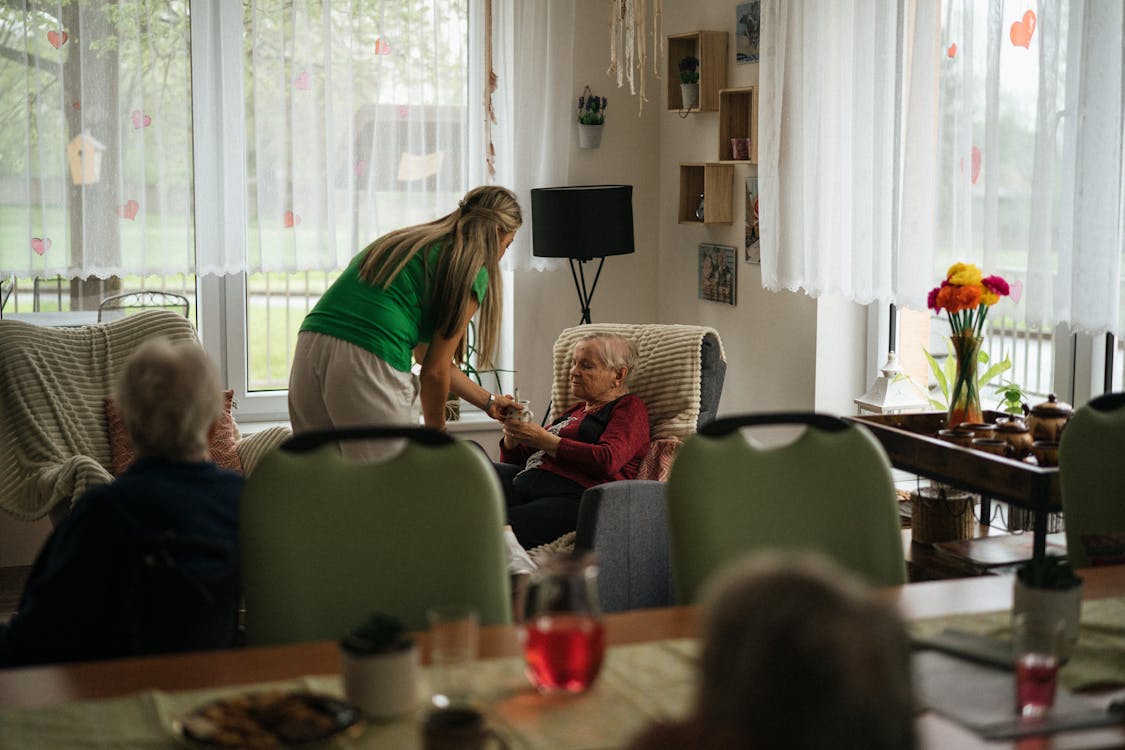
Approximately 80 percent of strokes occur at home, not in hospitals or care facilities. This is not a tragic statistic — it is an opportunity. It means that the first person to notice a stroke warning sign is usually someone the person knows and trusts: a family member, a spouse, or a professional home caregiver.
Home caregivers are uniquely positioned to catch what medical professionals cannot. They know their client’s baseline. They know how Mrs. Chen walks to the kitchen in the morning, whether her speech is typically crisp or naturally soft, whether she typically sits and stands with confidence. A caregiver who has been working with someone for six months has a reference point that no ER physician can replicate in a triage situation.
This is especially true for the two added letters: Balance and Eyes. A balance change that looks like “just a stumble” to a stranger looks different to someone who has watched a person walk the same path a hundred times. A vision complaint that seems like a mild inconvenience to a family member on the phone might register immediately to a caregiver who is present in the room.
At Home VA Staffing, our caregivers are trained to document changes in mobility, cognition, speech, and physical function as part of their regular care notes. We encourage every family to ensure their caregiver — and every household member — knows B.E. F.A.S.T. by name, not just by description.
The fastest stroke response I’ve ever seen was from a caregiver who knew exactly what she was looking at. She didn’t say ‘I think something’s wrong.’ She said ‘He’s having a stroke’ — and she called 911 before she finished the sentence. That kind of certainty only comes from knowing the signs in advance. — Robert Gordon
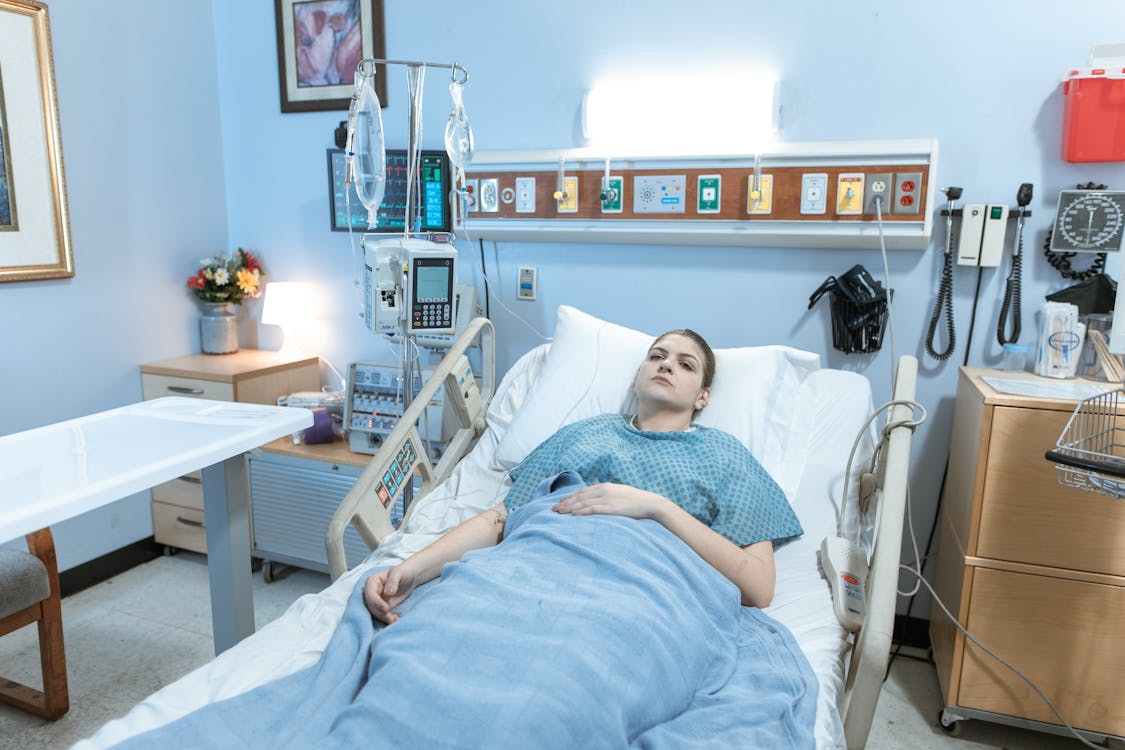
Orange County Stroke Centers: Where to Go and What to Expect
Not all emergency rooms are equal when it comes to stroke care. When someone in Orange County shows signs of a stroke, the destination matters nearly as much as the timing. California designates stroke centers by capability level, and OC has several high-level centers that can administer tPA and perform mechanical thrombectomy (clot removal) for severe strokes.
| Hospital | City | Stroke Designation |
|---|---|---|
| Hoag Hospital Neuroscience Institute | Newport Beach | Joint Commission Advanced Primary Stroke Center |
| UCI Health Medical Center | Orange | Comprehensive Stroke Center |
| Mission Hospital | Mission Viejo | Primary Stroke Center |
| MemorialCare Saddleback Medical Center | Laguna Hills | Primary Stroke Center |
| Fountain Valley Regional Hospital | Fountain Valley | Primary Stroke Center |
| CHOC Hospital | Orange | Pediatric Stroke (under 18) |
Important note: Do not drive a stroke patient to the hospital yourself. Call 911. Paramedics can communicate with the receiving hospital en route so the stroke team is ready before the patient arrives — a significant factor in time-to-treatment outcomes. In a stroke, 15 extra minutes of preparation at the hospital can be the difference between full recovery and permanent disability.
If you are unsure whether you are seeing a stroke, call 911 and describe what you observe. The dispatcher will help you assess. There is no penalty for calling when it turns out to be nothing. There is an irreversible cost to not calling when it turns out to be something.
After a Stroke: Home Care in the Critical Recovery Window
The hospital stay for an ischemic stroke is typically three to seven days. After discharge, many patients transition through a short-term rehabilitation stay — in a skilled nursing facility or inpatient rehab — before returning home. That return home is where the real recovery work happens, and where professional home care plays a critical role.
The first 90 days after a stroke represent a period of heightened neural plasticity — the brain’s greatest window for rewiring and recovering function. Physical therapy, occupational therapy, and speech therapy during this period produce dramatically better outcomes than the same interventions six months later. But for home-based recovery to be effective, the person needs a stable, supported environment: someone to manage medications (critical), encourage PT exercises, prevent falls, provide emotional presence, and monitor for signs of a second stroke.
AHVA home caregivers support post-stroke clients with:
- Medication management and reminders (missed doses raise the risk of a second stroke)
- Fall prevention and safe mobility assistance as strength and coordination return
- Companionship and cognitive engagement during the emotionally difficult recovery period
- Communication with family members and outpatient therapy teams
- Ongoing monitoring for new neurological symptoms — and the knowledge to recognize them
If a stroke leads to a dementia diagnosis (such as vascular dementia), Medicare’s CMS GUIDE Model may help with care navigation and caregiver support for people on Original Medicare, including respite for moderate-to-severe dementia when there is an unpaid caregiver. For Medi-Cal members, CalOptima’s Community Supports may cover respite or in-home help. Both can lower the out-of-pocket cost of recovery care.

Families We Serve Across Orange County
Your B.E. F.A.S.T. Preparedness Checklist
Ten steps. Check them off now — before you need them. The time to learn stroke warning signs is not while you are watching someone show them.
0 of 10 completed
- Memorize B.E. F.A.S.T. — Balance, Eyes, Face, Arms, Speech, Time
- Post or save the B.E. F.A.S.T. list where your caregiver and family members can see it
- Know the nearest Comprehensive Stroke Center — UCI Health or Hoag Hospital
- Know that you should always call 911, never drive — paramedics alert the hospital en route
- Know what your loved one’s normal baseline looks like — how they walk, speak, and move
- Share B.E. F.A.S.T. with your loved one’s primary caregiver this week
- Know their exact medication list — especially blood thinners, antihypertensives, and diabetes meds
- Ask their doctor if their stroke risk has been formally assessed this year
- If they have had a TIA or prior stroke, confirm they have a secondary prevention plan in place
- Bookmark this article so you can share B.E. F.A.S.T. with other family members
Do You Know B.E. F.A.S.T.? — 5-Question Quiz
Test Your Stroke Awareness
1. In B.E. F.A.S.T., what does the “B” stand for?
2. Your parent suddenly says their vision is blurry in one eye. This could be:
3. What is the tPA treatment window for an ischemic stroke?
4. Your loved one stumbles slightly getting up from a chair, then seems fine. What do you do?
5. In Orange County, which hospital has a Comprehensive Stroke Center designation?
Frequently Asked Questions
Stroke Preparedness Starts at Home
At Home VA Staffing provides attentive, trained non-medical home care for Orange County seniors and adults with disabilities. Our caregivers know B.E. F.A.S.T. — and they know your family member. That combination is the single most effective early-warning system for a medical event at home.
If you are looking for a caregiver who will notice the small things before they become emergencies, we would like to talk with you.
(213) 326-7452Talk to Our Team