California Now Pays Up to 90% to Care for Aging Parents: The SB 951 PFL Guide for Orange County Families (2026)
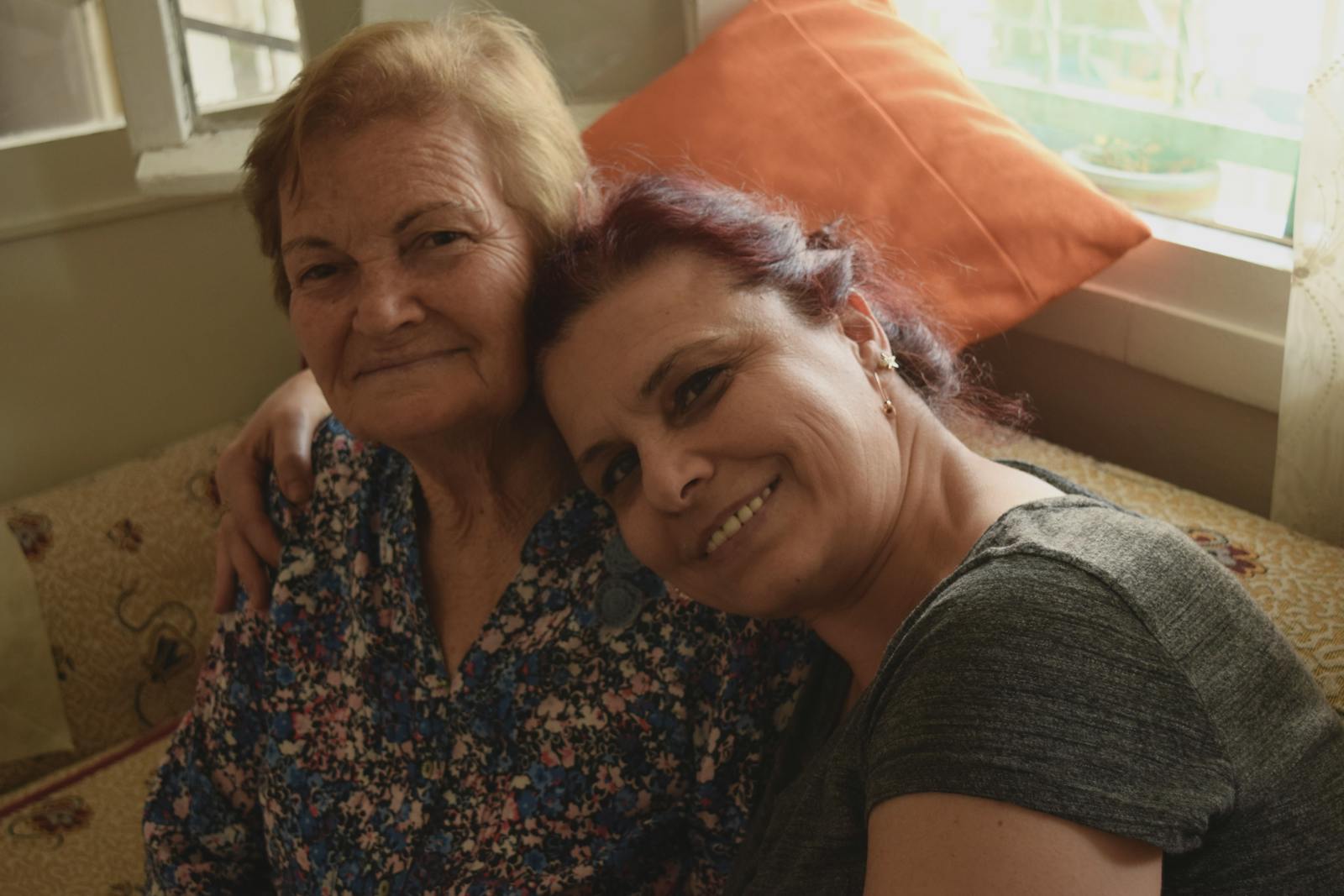
Your mom’s hospital discharge plan says home with caregiver assistance. The hospital social worker hands you a folder, says good luck, and sends you on your way. You start running the math in your head: take FMLA unpaid? Burn through PTO? Quit? Beg a sibling? You walk to the parking structure feeling like the floor just dropped out from under you.
Most working Orange County adults in this exact moment do not know that California’s Paid Family Leave (PFL) program will now pay them up to 90% of their wages for eight weeks to take care of an aging parent — and that the rules in 2026 are dramatically more generous than they were even two years ago. Senate Bill 951, the Assembly’s AB 2123, and a string of recent updates have quietly turned PFL into one of the most underused benefits in the state.
This guide explains what changed, who qualifies, how much you’ll actually receive, exactly how to apply, and what to do after the eight weeks run out — including how a home care agency like ours fits in when you go back to your job.
What changed in 2026: SB 951, AB 2123, and the broader definition of “family”
For nearly two decades California’s PFL program paid 55% of your wages while you cared for a seriously ill family member. That was a help, but for most middle-income OC families it wasn’t enough to pay the mortgage. The legislature rebuilt the math.
The 90/70/63 wage-replacement bracket is now permanent
Senate Bill 951, signed by Governor Newsom in 2022 and made permanent through 2026 and beyond, locked in a tiered wage-replacement schedule that took full effect on January 1, 2025 and continues into 2026:
- Up to 90% of your wages if you earn less than approximately one-third of California’s average quarterly wage (roughly under $30,000 a year, by 2026 EDD calculations).
- Up to 70% of your wages for low-to-middle earners.
- Up to 63% of your wages at higher income tiers, capped at the 2026 maximum weekly benefit of approximately $1,765.
That last cap matters for OC professionals: even an attorney earning $250,000 a year doesn’t get 63% of that — they get the cap. But the new bracket means a teacher’s aide earning $35,000 a year will receive close to her full take-home pay for the eight weeks she takes off to recover with mom after hip surgery.
AB 2123: no more burning your vacation first
Until 2024, California employers could force you to use up to two weeks of accrued vacation before you started receiving PFL benefits. Assembly Bill 2123, effective January 1, 2025, ended that. You no longer have to drain PTO to access state-paid leave, which preserves your time-off balance for after the crisis passes.
“Family member” includes more than you think
Since 2023, California PFL has covered far more than the traditional household. Eligible care relationships now include:
- Parent, parent-in-law, stepparent, and legal guardian
- Grandparent, grandchild, and sibling
- Spouse or registered domestic partner
- Child (biological, adopted, foster, stepchild, or a child for whom you stood in loco parentis)
- Designated person — any individual related by blood or whose relationship is the equivalent of family
That last bullet, added in 2023, was a quiet revolution. The aunt who raised you, the longtime neighbor who’s like a second mother, the chosen-family godmother — the EDD will accept any of them as your “designated person” once per 12-month period.

How much you’ll actually receive: the OC paycheck math
The benefit calculation uses your highest-earning quarter from a 5-to-18-month base period before your claim. Here’s a simplified table assuming a steady annual salary, calculated against 2026 EDD brackets and the $1,765 weekly cap:
| Annual gross income | Approx. weekly wages | Replacement rate | Approx. weekly PFL benefit |
|---|---|---|---|
| $28,000 (part-time retail) | $538 | 90% | $484 |
| $45,000 (administrative) | $865 | 70% | $606 |
| $72,000 (registered nurse) | $1,385 | 70% | $969 |
| $110,000 (teacher with stipend) | $2,115 | 63% | $1,332 |
| $160,000 (mid-career engineer) | $3,077 | 63% — capped | $1,765 (max) |
| $250,000+ (senior professional) | $4,800+ | Cap applies | $1,765 (max) |
How to apply, step by step
The EDD has streamlined PFL claims, but the process still trips up first-time filers. Here’s the actual sequence:
- Wait until your leave begins — you cannot file before you start providing care. The earliest you can submit is the first day you’re physically caring for your family member.
- Create an SDI Online account at edd.ca.gov — most claims filed online are processed within 14 days; paper claims (Form DE 2501F) take longer.
- Complete Part A: Claimant Statement — your information, employment history, and the eight-week period you’re requesting.
- Have a doctor complete Part B: Care Provider Certification — this is the medical certification that your family member has a “serious health condition” requiring care. Most OC primary-care physicians, hospital discharge planners, and Hoag, MemorialCare, UCI Health, Kaiser Permanente Orange County, Providence, and KPC providers can complete this on the EDD secure portal.
- Submit and watch your email — EDD’s notice of claim filed will arrive within 1–3 business days. The first benefit payment is typically issued 14 days after a fully complete claim.
- Notify your employer in writing separately — PFL pays you directly, but it does not by itself protect your job. That’s where CFRA comes in (next section).
Getting paid AND keeping your job: PFL + CFRA
This is the part most OC families miss, and it’s the difference between a manageable leave and an HR nightmare.
PFL is a wage-replacement program — it sends you a check. It does not automatically protect your job from termination. To keep your job protected during your leave, you also need to be eligible under one of these programs:
- California Family Rights Act (CFRA) — applies to employers with 5 or more employees and covers up to 12 weeks of unpaid, job-protected leave per 12-month period. Layered with PFL, you get 8 weeks of PFL pay + 4 additional weeks of unpaid CFRA-protected job security.
- Federal FMLA — applies to employers with 50+ employees within 75 miles. Provides 12 weeks of unpaid, job-protected leave that can run concurrently with CFRA in California.
The 5-employee CFRA threshold is critical for OC, where small family businesses, dental offices, real estate brokerages, and South County boutique firms are common. If your employer has 5+ workers, you have CFRA rights. If they have 4 or fewer, you may be relying on the goodwill of your boss — which means notifying HR in writing on day one matters.
What PFL doesn’t cover (and where home care fits)
Eight weeks goes by faster than you’d think. PFL ends; your parent’s recovery doesn’t. Here’s what the program is not:
- Not a long-term care benefit. PFL is for acute crises — surgery recovery, post-stroke rehab, hospice support, chemo cycles. It’s not designed for chronic dementia care that lasts years.
- Not a hands-on caregiving training program. The state pays you to provide care; it does not teach you how to safely transfer mom from bed to wheelchair, manage her medication schedule, prevent pressure injuries, or recognize a UTI before it becomes sepsis.
- Not a permanent solution for the work-care squeeze. When week eight ends and you head back to your manager’s office, the underlying care need usually hasn’t disappeared.
This is where a non-medical home care agency takes the handoff. At AHVA we work with Orange County families across this transition every week:
- Days 1–14 of the crisis: family-only, while PFL is being approved and the dust is settling.
- Weeks 2–8: family + part-time AHVA caregiver layered on the most physically demanding tasks (bathing, transfers, overnight monitoring, errands), so the family caregiver isn’t burning out by week three.
- Weeks 9 onward (back to work): AHVA covers the daytime hours your job needs you back, with you handling evenings and weekends.
That structure is what survives. Trying to do all 168 hours a week yourself for two months, then go back to work as if nothing happened — that’s the path to caregiver burnout and frequently the path to your parent’s avoidable second hospitalization.

Common mistakes Orange County PFL filers make
From watching dozens of OC families navigate this in real time, the same handful of avoidable errors come up again and again. Use the checklist below to side-step them.
Your 2026 California PFL caregiver checklist
Quick check: do you understand the 2026 PFL rules?
Five-question PFL knowledge check
Frequently asked questions
Yes. PFL can be taken in increments as small as one full day at a time, and you have up to 12 months from the start of your claim to use all eight weeks. Many OC working caregivers split their leave: a concentrated three-week block immediately after hospital discharge, then occasional days for follow-up appointments and acute episodes over the following months. Note that intermittent leave makes the EDD’s wage-replacement calculation more complex, but it does not reduce your total benefit.
It depends on whether the dementia is at a stage that meets the EDD’s “serious health condition” definition. Early-stage cognitive decline alone usually doesn’t qualify, but moderate-to-advanced dementia, especially when combined with safety risks (wandering, falls, inability to manage medications, or a recent hospitalization), typically does. The treating physician’s certification is what determines eligibility — it’s worth a candid conversation with the neurologist, geriatrician, or primary-care doctor before they fill out Part B.
If your employer has 5 or more employees, you have job-protected leave under CFRA — full stop. Your employer’s financial preferences do not override that statute. Retaliation, demotion, or termination for taking CFRA-protected leave can trigger Civil Rights Department complaints and significant damages. That said, smaller and less formal Orange County employers sometimes assume CFRA doesn’t apply to them; if you encounter pushback, the Civil Rights Department’s CRD complaint portal is the right escalation. Consider also consulting a free clinic such as Public Law Center in Santa Ana before taking action.
Yes — California PFL benefits are individual. Two adult children can each take eight weeks of PFL to care for the same aging parent, either staggered or in parallel. Many OC families coordinate this strategically: one sibling takes the first month after surgery, the other takes the second month, and the family avoids both burning all eight weeks of PFL at once. This is one of the most under-utilized features of the program.
PFL benefits depend on your California employment and SDI contributions, not your family member’s location. Your parent does not need to live in California at all — they can live in Florida, Texas, Mexico, or anywhere else. As long as you’ve been contributing to California’s SDI program through your paycheck, you can use PFL to travel to and care for them. The certifying physician can also be located out of state.
Yes, with planning. CFRA gives you up to 12 weeks of unpaid job protection in a 12-month period — that’s 4 weeks of unpaid coverage on top of 8 weeks of PFL-paid coverage if you stack them back-to-back. Once you return to work, you cannot take additional PFL until 12 months from the start of your previous claim. Most OC families combine this with a part-time non-medical home care arrangement that bridges the gap between intensive family caregiving and the eventual return to a sustainable work-care schedule.

Where AHVA fits in your leave plan
At Home VA Staffing serves Orange County families across this entire arc. We are a 100% woman-owned and minority-owned non-medical home care agency based in OC. We provide respite care, personal care, companionship, and dementia care — the four service categories that most directly fill the gaps that PFL by itself cannot.
If you’re already on PFL leave with mom and you can feel the burnout setting in by week three, that’s the moment to call us — not week seven, when you’re 14 days from going back to your job and panicking. We can typically begin part-time coverage within 72 hours of an initial care assessment. Our care plans flex around the working caregiver’s schedule, layering AHVA support exactly where you need it most.
For deeper context on related programs that often pair with PFL, see our guides to the OC sandwich generation, how to pay for home care in Orange County, and CalOptima Community Supports for personal care and respite.
Bridging the gap between week 8 and full return-to-work
Talk to our OC care team about a flexible part-time plan that takes the weight off your shoulders before you go back to your job.
Talk to Our TeamOr call us directly at (213) 326-7452