Caregiver Depression in Orange County: Why Mental Health Awareness Month Is for You, Too (2026 Guide)

Mary in Fullerton has not been to her own primary care doctor in three years. She knows this because the front desk reminded her the last time she called to schedule her father’s cardiology follow-up. “I’ll get around to it,” she said, the same answer she gives her sister when asked if she is okay. Her father has advanced Parkinson’s. Her teenager has anxiety. Her husband travels for work. Mary is doing everything for everyone, and she has stopped doing anything for herself.
Mary is not unusual in Orange County. She is the rule. May is Mental Health Awareness Month, and the 2026 theme from Mental Health America is More Good Days, Together. It is a quiet invitation to stop being alone with what you are carrying. If you are a family caregiver in OC reading this, it is for you, too.
What the Research Actually Says About Caregiver Depression
This is not a “self-care lecture.” It is a measurable public health pattern. The Centers for Disease Control reports that adults who serve as informal caregivers experience lifetime depression at a rate of 25.6%, compared with 18.6% of non-caregivers. That gap widens fast for people caring for someone with dementia, a serious mental illness, or a high-needs developmental disability — populations heavily represented in OC’s aging-in-place households.
The Family Caregiver Alliance, which has tracked the issue for three decades, finds that 40 to 70 percent of family caregivers show clinically significant depressive symptoms. About a quarter meet the criteria for major depression. Caregivers also report higher rates of sleep disruption, chronic pain, weakened immune response, and what researchers call “anticipatory grief” — the slow, daily mourning of a parent or partner who is still here but no longer the same.
None of this means a caregiver is failing. It means caregiving, done at the intensity it is done in Orange County, is a medical exposure. We treat surgeons, first responders, and emergency-room nurses as people whose mental health needs active protection. The unpaid daughter, son, spouse, or grandchild on the receiving end of a 3 a.m. call deserves the same recognition.
The Warning Signs Most Caregivers Miss in Themselves

Depression in caregivers does not always look like sadness. It often looks like efficiency that has tipped into numbness. Below are the patterns clinicians at NAMI Orange County and the OC Health Care Agency say are most commonly overlooked.
| Warning sign | What it actually looks like for OC caregivers |
|---|---|
| Sleep collapse | You fall asleep instantly from exhaustion but wake at 3 a.m. unable to stop your mind. Or you cannot sleep at all without a device on your nightstand. |
| Appetite shift | You finish your parent’s leftovers standing at the counter. Or you skip meals for 10 hours and call it not being hungry. |
| Loss of joy | Things that used to feel good (a walk on Crystal Cove, brunch with a friend, gardening) now feel like one more thing on the list. |
| Irritability | You snap at the person you are caring for, then feel crushing guilt. The cycle repeats weekly. |
| Isolation | You have not seen a friend outside your household in more than a month. Texts pile up. You stop initiating. |
| Body symptoms | Tension headaches, neck pain, digestive issues, a chest tightness that has no cardiac cause. Your own doctor’s appointments slip. |
| Hopelessness | Quiet thoughts like “this will never end” or “they would be better off without me drained.” These thoughts warrant a same-week call. |
Why Orange County Caregivers Face Extra Pressure
Caregiving in OC has its own profile of stressors, and pretending otherwise is one of the reasons families wait too long to ask for help.
| OC-specific pressure | What it does to a caregiver’s mental load |
|---|---|
| Cost of living | The median home in Orange County still hovers above $1.1 million. Many adult-child caregivers are also raising children in this market. There is no slack in the budget for paid help, even when the math says they need it. |
| Multi-generational households | OC has one of California’s highest rates of multi-gen housing, particularly in Hispanic and Asian American communities. One adult is often caring for a parent, parent-in-law, and children at the same time. |
| The IHSS hours gap | Even families enrolled in IHSS often receive fewer authorized hours than the actual need. The unpaid hours land on whoever is closest, usually a daughter or daughter-in-law. |
| Cultural expectations | “We take care of our own” is a beautiful value and a corrosive expectation when one family member is shouldering 80 percent of the work in silence. |
| Geographic isolation | Caring for someone in San Clemente while siblings live in Irvine or out of state, with no nearby respite network, leaves the closest sibling functionally alone. |
The Difference Between Stress and Clinical Depression
Not every hard week is a depressive episode. But the difference matters, and most caregivers err on the side of dismissing what they are feeling. Use this table as a private gut-check.
| Normal caregiver stress | Possible clinical depression |
|---|---|
| You feel overwhelmed after a hospital discharge, then recover within a week. | You have felt flat, hopeless, or numb for two or more weeks straight, even when things go relatively well. |
| You cry occasionally, often during a quiet moment. | You cannot remember the last time you cried — or the last time you felt anything. |
| You feel guilty asking for a break, but you ask anyway. | You cannot ask. The thought of accepting help feels worse than the exhaustion. |
| Your sleep is interrupted but you catch up on the weekend. | You have not slept more than 4 hours in a row in over a month, or you sleep 10 and still feel exhausted. |
| You skip the gym for a week, then return. | You have stopped every activity you used to love and have not resumed any of them. |
| You eat irregularly during stressful weeks. | You have gained or lost more than five percent of your body weight in a month without trying. |
If your column tilts heavily to the right, please do not push through. Make the call you would make if it were your parent feeling this way.
Where to Actually Get Help in Orange County

OC has one of the more developed caregiver-support ecosystems in California, and almost none of it gets used until a crisis. Here are the resources caregivers most often tell us they wish they had known about earlier.
| Resource | Phone | What it offers | Cost |
|---|---|---|---|
| NAMI Orange County WarmLine | (714) 991-6412 / (877) 910-9276 | 24/7 emotional support and live referrals, not a clinical crisis line. Spanish-speaking staff available. | Free |
| 988 Suicide & Crisis Lifeline | 988 | 24/7 crisis intervention for any thoughts of self-harm or severe distress. | Free |
| NAMI OC Family-to-Family | namioc.org | 8-week educational class for family caregivers of a loved one with mental illness. Live on Zoom and in person. | Free |
| OC HCA Behavioral Health | (855) 625-4657 | OC Adult Crisis Line. Triage, mobile crisis response, referrals to county clinics. | Free or sliding scale |
| Alzheimer’s OC | (844) 373-4400 | Care consultations, dementia-specific support groups, free family education. | Free |
| Council on Aging Southern California | (714) 479-0107 | HICAP Medicare counseling, Friendly Visitor program, Care Manager on Call. | Free |
| California Caregiver Resource Centers (CRC OC) | (800) 543-8312 | Free care planning, counseling, and respite vouchers for family caregivers. | Free, state-funded |
Community Is the Treatment Plan
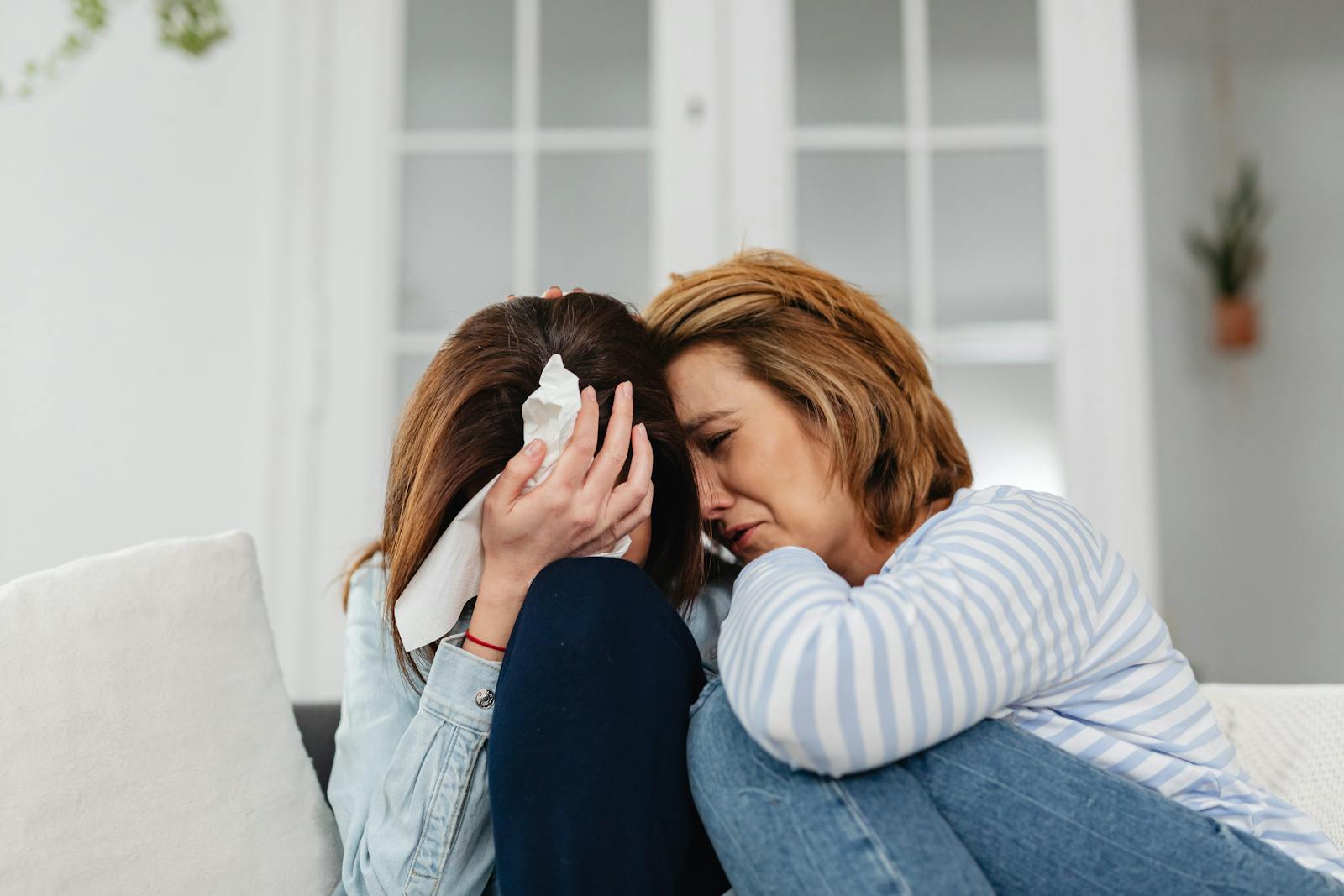
Mental Health America chose More Good Days, Together as the 2026 theme for a reason. Decades of research show that the single biggest modifiable risk factor for depression — in caregivers and everyone else — is loneliness. Not stress. Not workload. Loneliness.
That fact is good news. Workload is hard to change overnight. Connection can change in one afternoon. A few things OC caregivers tell us actually move the needle:
- One weekly text thread with two people who get it. Other family caregivers, ideally. Not advice. Just witness.
- One in-person human contact per week that is not about caregiving. A friend, a church or temple group, a walk with a neighbor.
- One support group per month. Many NAMI OC and Alzheimer’s OC groups now run on Zoom, which removes the “I cannot leave the house” barrier entirely.
- One professional in your corner. A therapist, a social worker, a faith leader, or a primary care doctor who knows what you are carrying. Telehealth makes this far easier than it was five years ago.
“Self-Care” Without the Eye Roll

The phrase “self-care” has been so flattened by marketing that many caregivers now reject the term outright. Strip it back and what works is unromantic. A consistent bedtime. A 10-minute walk after lunch. A regular meal that you sit down for. A doctor’s appointment that is your own. Reminders on your phone for water. A weekly hour where someone else is in the house and you are not on duty.
Respite is the underused tool here. The state-funded California Caregiver Resource Center for OC (CRC OC) can authorize free or low-cost respite hours specifically so a primary caregiver can sleep, attend their own appointment, or simply leave the house. For caregivers of someone with dementia who are enrolled in Medicare’s GUIDE Model through a participating provider, up to $2,625 a year in respite is now available. If you are CalOptima Medi-Cal, CalAIM Community Supports may cover homemaker or personal-care hours that meaningfully reduce the load.
The 10-Item Caregiver Mental Health Reset
5-Question Self-Check: Could This Be More Than Stress?
This is not a diagnostic tool. It is a quick way to notice whether the patterns you are living with deserve a phone call.
Frequently Asked Questions
No. Burnout is exhaustion that improves with rest and time off. Depression does not improve with a weekend off. The two can coexist, and chronic burnout is a known risk factor for clinical depression. If you have rested, taken time away, and still feel flat, hopeless, or numb for more than two weeks, treat it as a depression question, not a burnout question.
Several free routes exist. The California Caregiver Resource Center for OC (CRC OC, (800) 543-8312) offers free caregiver counseling. Medi-Cal members can access mental health services through CalOptima — call (888) 587-8088 to start. Many OC private therapists offer sliding-scale slots, and Open Path Collective lists therapists at $40 to $80 per session. NAMI OC support groups are always free.
Almost every caregiver thinks this, and almost every caregiver who finally tries respite reports that their loved one tolerated it better than expected. Respite is most often offered as 2 to 6 hour blocks at home with a trained caregiver, which is very different from a hospital admission or facility stay. It is also state-funded and largely free if you qualify. Start with a 3-hour test on a low-stakes day.
Dementia caregiving carries the highest documented rates of caregiver depression, in part because the role lasts an average of 5 to 7 years and includes “anticipatory grief” — the slow loss of the person while they are still here. Alzheimer’s OC at (844) 373-4400 runs dementia-specific support groups in English, Spanish, Vietnamese, and Korean, and the CMS GUIDE Model now funds free dementia care navigation and up to $2,625 a year in respite for qualifying Medicare-enrolled families.
Yes, and for most caregivers, that is the best first step. Primary care can screen for depression in 5 minutes (often with the PHQ-9 questionnaire), prescribe first-line treatment if appropriate, and refer to therapy or a specialist if more is needed. The biggest barrier is usually not the doctor — it is booking the appointment in the first place. Block 20 minutes today to call.
Asking for caregiver mental health support has no legal bearing on conservatorship, IHSS authorization, or family court matters in California. Mental health treatment records are strictly confidential under both HIPAA and California’s stricter mental health privacy laws. The myth that asking for help will be “used against you” is one of the most damaging assumptions caregivers make. If you have specific concerns about a custody or conservatorship matter, consult an attorney — but do not let that question delay the call.
You take care of everyone. Let us help take care of some of it.
At Home VA Staffing provides professional in-home respite, personal care, and companionship throughout Orange County — so the person you love is safe and supported while you take an hour, an afternoon, or a real day off. Insurance, IHSS, CalAIM, GUIDE Model, VA Aid & Attendance, and private pay all welcome.
Talk to Our Team Or call us today: (213) 326-7452