What the Proposed 2026-27 IHSS Budget Cuts Mean for OC Families
Update — October 25, 2026: these cuts did not happen
Governor Newsom signed the final 2026–27 state budget on June 29, 2026. The Legislature rejected all three of the Governor’s January IHSS cut proposals in their entirety: eliminating the IHSS Backup Provider System, shifting IHSS costs to counties by using a statewide average of assessed hours, and automatically ending IHSS eligibility when a recipient loses Medi-Cal. (Source: Assembly Budget Committee, Floor Report of the 2026–27 Budget, June 11, 2026, pp. 25–26.) This article was written in March, before the final budget. Several items in the proposal table below, including reassessment criteria, hour caps, mandatory EVV, share-of-cost increases and an 8% funding reduction, are not among the Governor’s January IHSS proposals listed in that report.
Governor Newsom’s proposed 2026–27 state budget includes sweeping changes to California’s In-Home Supportive Services (IHSS) program that could affect hundreds of thousands of elderly and disabled Californians who depend on in-home care to live independently. For Orange County’s approximately 27,000 IHSS recipients, these proposed cuts represent a direct threat to their daily quality of life. This guide breaks down what’s being proposed, how it affects OC families, and what you can do to protect your loved one’s care.

$4.1B
California’s Annual IHSS Budget
27,000+
OC IHSS Recipients
680,000
Statewide IHSS Recipients
8%
Proposed Funding Reduction
Understanding the IHSS Program
In-Home Supportive Services (IHSS) is California’s largest home care program, funded jointly by federal Medicaid dollars, state general fund money, and county contributions. IHSS provides personal care assistance to elderly, blind, and disabled individuals who might otherwise require institutional care in nursing homes or assisted living facilities. The program covers services including meal preparation, housecleaning, laundry, personal care (bathing, grooming, dressing), accompaniment to medical appointments, and protective supervision for those with cognitive impairments.
How IHSS Works in Orange County
In Orange County, IHSS is administered by the Orange County Social Services Agency (SSA). Recipients are assessed by county social workers who determine the number of authorized hours per month based on the individual’s functional limitations and care needs. Most IHSS recipients choose their own care providers — often family members, neighbors, or friends — who are then employed through the IHSS program. Some recipients work with home care agencies to find qualified providers.
The average IHSS recipient in Orange County receives approximately 87 hours of care per month, though this varies widely based on individual need. Those with the most severe disabilities may receive up to 283 hours per month (the maximum for 24-hour protective supervision). IHSS providers in Orange County are paid $18.90 per hour as of January 1, 2026 (the $16.90 California minimum wage plus a $2.00 supplement from the OC IHSS Public Authority), and this rate has long been a point of contention given the county’s high cost of living.
Who Depends on IHSS in OC
Orange County’s IHSS caseload reflects the diversity of the county itself. Approximately 60% of IHSS recipients are elderly adults (65+), while 40% are younger adults or children with disabilities. The program serves residents across every city in OC, from the dense urban neighborhoods of Santa Ana and Anaheim to the suburban communities of Irvine, Mission Viejo, and Laguna Niguel.

What the 2026–27 Budget Proposes
The Governor’s January budget proposal includes several significant changes to IHSS that, taken together, represent the most substantial restructuring of the program in over a decade. While the administration frames these changes as “modernization” and “efficiency improvements,” advocacy organizations and recipients view many of them as cuts that will reduce access to care.
Key Proposed Changes
| Proposal | What It Means | Estimated Impact |
|---|---|---|
| Reassessment criteria tightening | Stricter standards for determining functional limitations during needs assessments | Could reduce authorized hours for 15-20% of recipients |
| Provider rate restructuring | Changes to how provider wages are calculated and reimbursed | May freeze or reduce provider pay in some counties |
| Service hour caps | New maximum hour limits for certain service categories | Could cap hours below current authorization levels |
| Electronic Visit Verification (EVV) | Mandatory GPS/phone-based time tracking for all providers | Privacy concerns; may deter family providers |
| Share-of-cost increases | Higher income thresholds for recipient cost-sharing | More recipients required to pay out-of-pocket |
The Reassessment Crisis
Perhaps the most concerning proposal is the tightening of reassessment criteria. Under current rules, IHSS recipients are assessed based on their ability to perform activities of daily living (ADLs) and instrumental activities of daily living (IADLs). The proposed changes would introduce stricter documentation requirements and narrow the definitions of several functional limitation categories.
Disability rights attorneys warn that these changes could result in significant hour reductions for recipients who haven’t experienced any change in their actual condition. “We’re seeing proposals that would essentially move the goalposts,” said a representative from Disability Rights California. “People who’ve been stable on their current hours for years could suddenly find themselves reassessed at lower levels.”
How These Cuts Would Affect Orange County Families
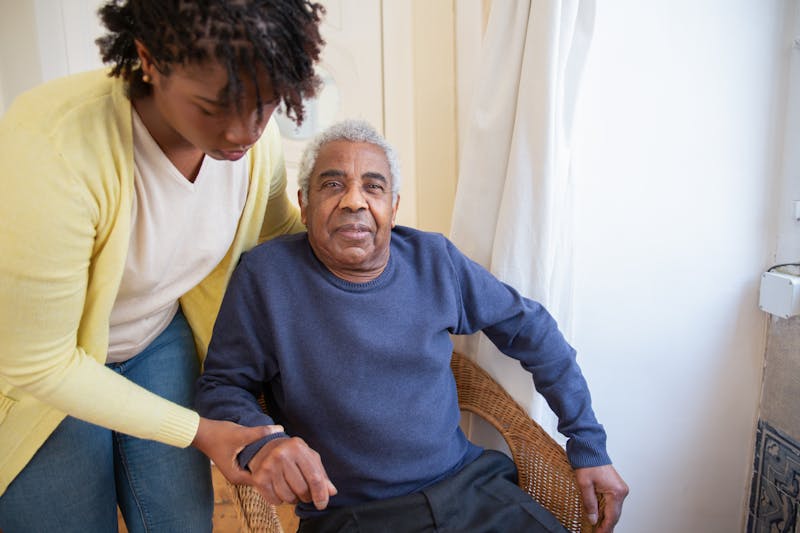
The ripple effects of IHSS funding changes extend far beyond the program’s direct recipients. When an elderly person loses care hours, the burden typically falls on family members — adult children who may already be juggling careers, their own families, and the emotional weight of watching a parent decline. For OC families, this could mean the difference between a parent aging safely at home and an unwanted move to institutional care.
Real Scenarios in Orange County
The Anaheim grandmother: Maria, 78, lives alone in Anaheim and receives 120 IHSS hours per month for help with bathing, meal preparation, and light housekeeping. Under the proposed reassessment criteria, her authorized hours could be reduced to 85–90 hours. That’s a loss of one to two hours of care per day — potentially the difference between eating a hot meal and going without, or between a safe shower and a dangerous fall.
The Irvine family: The Chen family in Irvine relies on IHSS to help care for their father, who has advanced Parkinson’s disease and requires protective supervision. The proposed hour caps could limit their father’s care below what’s needed to keep him safe, potentially forcing a move to a memory care facility at $8,000–$12,000 per month.
The Santa Ana caregiver: Rosa provides IHSS care for her disabled adult son in Santa Ana. The proposed EVV system would require her to clock in and out via a smartphone app and verify her location via GPS. Rosa, who doesn’t own a smartphone and has limited English proficiency, may struggle to comply with the new system, putting her ability to continue as her son’s provider at risk.
The Hidden Cost of Cuts
| If IHSS Hours Are Cut… | The Alternative Costs… | Who Pays |
|---|---|---|
| Bathing assistance reduced | Emergency room visits from falls | Medi-Cal / Medicare ($5,000-15,000/visit) |
| Meal prep eliminated | Malnutrition, hospitalization | Medi-Cal / Medicare ($20,000-50,000) |
| Protective supervision capped | Wandering incidents, injuries | Families, emergency services |
| Provider wages frozen | Workforce shortage, unfilled shifts | Recipients go without care |
| Program eligibility tightened | Nursing home placement | Medi-Cal ($10,000-15,000/month) |
Research consistently shows that every dollar invested in home-based care saves $3–$5 in avoided institutional costs. A 2024 study by the AARP Public Policy Institute found that diverting just 5% of IHSS recipients to nursing facilities would cost California an additional $2.1 billion per year in Medi-Cal spending.
The Workforce Crisis: Provider Pay and Retention
IHSS provider wages have long been a critical issue in Orange County. While the state has gradually increased the minimum IHSS wage, the current rate in OC ($18.90/hour, including the $2.00 Public Authority supplement) remains well below what’s needed to attract and retain quality caregivers in one of California’s most expensive counties. The proposed budget changes could freeze or even reduce effective provider compensation, worsening an already severe workforce shortage.
Why Caregivers Are Leaving
At $18.90 per hour, an IHSS provider working full-time (40 hours/week) earns approximately $39,312 per year before taxes. In Orange County, where the median rent for a one-bedroom apartment exceeds $2,200 per month, this puts IHSS work well below a living wage. Many experienced caregivers have left for retail, food service, or warehouse jobs that pay equal or higher wages with benefits like health insurance and paid time off.
The result is a growing gap between the number of IHSS recipients who need care and the number of providers available to deliver it. Orange County’s IHSS provider registry has seen a 30% decline in active registrations since 2019, even as the number of recipients has grown. Recipients report waiting weeks or months to find a provider, and some go without care entirely.
Electronic Visit Verification: Privacy vs. Accountability
One of the most controversial proposals is the mandatory implementation of Electronic Visit Verification (EVV) for all IHSS providers. EVV systems use GPS-enabled devices (typically smartphones) to verify that a caregiver was at the recipient’s home during their authorized service hours. While EVV is presented as a fraud prevention measure, it raises significant privacy and practical concerns.
How EVV Would Work
Under the proposed system, IHSS providers would be required to use a state-approved mobile application to check in at the beginning of each shift and check out at the end. The app would record the provider’s GPS location and timestamp each action. This data would be transmitted to the state for verification against the provider’s authorized schedule.
Concerns About EVV
- Digital divide: Many IHSS providers, particularly family members and older caregivers, lack smartphones or the technical skills to use EVV apps reliably.
- Privacy: GPS tracking of care activities raises concerns about surveillance of both providers and recipients in their own homes.
- Reliability: Smartphone GPS can be inaccurate, leading to false “no-shows” that could result in provider payment denials.
- Family dynamics: When a family member provides IHSS care while living in the same home, EVV becomes logistically awkward and raises questions about tracking family members’ movements.
- Language barriers: The EVV app may not be available in all languages spoken by OC’s diverse caregiver population.
What You Can Do: Advocacy and Action Steps
The 2026–27 budget is final: the Legislature rejected the Governor’s January IHSS cuts, and the budget was signed June 29, 2026. IHSS funding is decided again in every state budget, and the Governor proposes the next one each January, so the contacts below are still the right people to call when the 2027–28 proposal comes out.
Contact Your Representatives
Orange County is represented by several state legislators who sit on key budget committees. Contacting them directly is one of the most effective ways to influence the budget process.
- State Senate: Contact your state senator’s office to express concerns about IHSS cuts. Find your senator at findyourrep.legislature.ca.gov
- State Assembly: Assembly members from OC districts serve on the Health and Human Services budget subcommittee
- Governor’s Office: (916) 445-2841 or submit comments online at gov.ca.gov/contact
- OC Board of Supervisors: Request that the Board adopt a resolution opposing IHSS cuts
Join Advocacy Organizations
- United Domestic Workers (UDW/AFSCME Local 3930): The union representing Orange County IHSS providers organizes advocacy events and legislative visits
- Disability Rights California: Provides legal advocacy and know-your-rights resources for IHSS recipients
- California Association for Health Services at Home (CAHSAH): Industry association tracking legislative developments
- AARP California: Advocates for older adults’ access to home and community-based services
Protecting Your Loved One’s Care: Practical Steps
While advocating for systemic change is important, families also need to take practical steps to protect their loved one’s care in the near term. Here are specific actions you can take now.
Document Everything
If your loved one currently receives IHSS, start documenting their care needs in detail. Keep a daily log of what assistance they receive, how long each task takes, and what happens when care isn’t available. This documentation will be critical if a reassessment results in hour reductions and you need to appeal.
Request a Current Assessment
If your loved one’s needs have changed since their last IHSS assessment, you can ask for a reassessment. Contact OC IHSS at (714) 825-3000 to schedule a reassessment.
Know Your Appeal Rights
If IHSS hours are reduced, recipients have the right to appeal through a State Hearing. Importantly, if an appeal is filed within 10 days of receiving a notice of action, the recipient’s current hours must continue (called “aid paid pending”) until the hearing is resolved. This is a crucial protection that many families don’t know about.
Explore Supplemental Care Options
For families who may face IHSS hour reductions, supplementing with private-pay caregiving can fill the gap. At Home VA Staffing provides professional in-home caregivers who can work alongside IHSS providers to ensure complete coverage. Whether you need a few extra hours per week or full-time supplemental care, we can tailor a plan to your family’s needs and budget.
The Federal Factor: Medicaid and IHSS
IHSS funding doesn’t exist in a vacuum. The program relies heavily on federal Medicaid matching funds, which cover approximately 50% of IHSS costs. Any changes to federal Medicaid policy — such as the per-capita caps proposed in the federal “One Big Beautiful Bill” — would compound the state-level cuts, potentially devastating the program.
If both state and federal cuts are implemented simultaneously, IHSS could face a perfect storm of funding reductions that would fundamentally alter the program’s ability to serve California’s most vulnerable residents. This makes advocacy at both the state and federal level critically important.
Community Resources for IHSS Recipients
- OC IHSS Office: (714) 825-3000
- OC IHSS Public Authority (provider registry): (714) 825-3174
- Disability Rights California: (800) 776-5746
- Legal Aid Society of OC: (800) 834-5001
- 2-1-1 Orange County: Dial 2-1-1 for social services referrals
- AARP California Helpline: (866) 448-3614
- At Home VA Staffing: (213) 326-7452
Knowledge Check Quiz
Test your knowledge. Click on your answer.
1. What percentage of IHSS funding comes from federal Medicaid?
2. How many IHSS recipients are in Orange County?
3. What should you do if your IHSS hours are reduced?
4. What does EVV stand for in the context of IHSS?
5. How much does nursing home care typically cost per month in California?
Frequently Asked Questions
Action Checklist
Click each item as you complete it.
0 of 10 completed
Contact your state senator and assembly member about IHSS funding concerns
Document your loved one’s daily care needs in a written log
Request a current IHSS assessment if it’s been over 12 months
Save and organize all IHSS notices, assessments, and correspondence
Learn the appeal process and the 10-day aid-paid-pending rule
Connect with Disability Rights California for legal resources
Explore supplemental private care options to fill potential gaps
Attend local IHSS advisory committee meetings in OC
Sign up for email alerts from advocacy organizations (UDW, AARP)
Call At Home VA Staffing at (213) 326-7452 to discuss backup care plans
Don’t Wait for Cuts to Hit — Plan Your Backup Care Now
At Home VA Staffing provides professional in-home caregivers who can supplement IHSS hours, fill gaps during provider shortages, or provide complete care if your loved one’s IHSS authorization is reduced. We serve all of Orange County with compassionate, reliable caregivers trained to support seniors and adults with disabilities.
Call us today at (213) 326-7452
Related Articles
Serving All of Orange County
AnaheimSanta AnaIrvineHuntington BeachGarden GroveOrangeFullertonCosta MesaMission ViejoWestminsterNewport BeachBuena ParkLake ForestTustinYorba LindaSan ClementeLaguna NiguelLa HabraFountain ValleyPlacentiaRancho Santa MargaritaAliso ViejoCypressBreaStantonSan Juan CapistranoDana PointLaguna HillsSeal BeachLos AlamitosLaguna BeachLa PalmaVilla ParkLaguna Woods
Disclaimer: This article is for general informational purposes only and does not constitute medical, legal, or financial advice. Always consult with qualified professionals before making decisions about healthcare, benefits, or legal matters. At Home VA Staffing provides non-medical in-home care services. Information is believed accurate as of the publication date but may change. Contact relevant agencies for current information.
You Might Also Like

Medi-Cal Retroactive Coverage Cut: New 2027 Rule Slashes Backdated Eligibility From 3 Months to 1 — What OC Families Need to Know
Robert Gordon Home Care Policy Analyst, AHVA Published May 14, 2026 ·...

Senate Medicaid Vote Is 12 Days Away: The Orange County Home Care Action Plan Every Family Needs Right Now
Robert Gordon Home Care Policy Analyst, AHVA · Published June 19, 2026...
California Care Corps Ends July 1, 2026: What Orange County Dementia Families Must Do Right Now
Robert Gordon Home Care Policy Analyst, AHVA | Published June 8, 2026...