
Update, October 20, 2026: The National Weather Service Heat Advisory that covered Orange County from Thursday, October 15 through Saturday, October 17 has ended, along with the Wind Advisory and High Wind Warning that ran alongside it. Fall heat in Southern California often comes in waves, though, and this plan is written so you can use it the next time an advisory is issued.
When the National Weather Service issues a Heat Advisory for Orange County, most of us crank the AC and wait it out. But for an older parent, a frail spouse, or a neighbor living alone, the same forecast is a genuine health threat — one that can escalate from “a little tired” to a 911 call in a matter of hours. The good news is that almost every heat tragedy among seniors is preventable with a few specific, practical steps. This is the AHVA action plan for keeping the older adults you love safe through the next advisory and every hot stretch after it.

Steady, scheduled hydration is the single most protective habit during a heat advisory — and most older adults will not feel thirsty until they are already behind.
Why This Heat Is More Dangerous for Older Adults
A Heat Advisory is not a generic weather note. The National Weather Service issues one when high temperatures are expected to put vulnerable people at risk if they do not take precautions. During the October 15-17 advisory, the forecast for Orange County called for highs in the upper 80s to mid 90s, with Friday the hottest day at around 95°F, and overnight lows only in the low 70s, which is what removes the body’s chance to recover between days. For seniors, the word “vulnerable” is literal: aging changes the body’s ability to cope with heat in ways that are invisible until something goes wrong.
Older adults sweat less efficiently, so they lose their primary cooling system. Their sense of thirst dulls with age, so dehydration sets in before they notice. Their hearts have to work harder to push blood to the skin to shed heat, which is especially risky for anyone with cardiovascular conditions. And many seniors take medications that quietly make all of this worse — a topic we cover in depth in our guide to common senior medications that raise heat risk. The result is that a 90-degree afternoon that feels merely uncomfortable to you can push an 80-year-old’s core temperature toward dangerous territory without any obvious warning.
Orange County’s geography adds its own twist. Coastal cities like Newport Beach, Huntington Beach, and Laguna Beach often get a marine-layer reprieve, while inland communities — Anaheim, Orange, Fullerton, Yorba Linda, and the canyon areas around Mission Viejo — can run 15 to 20 degrees hotter on the same day. If your loved one lives inland, every heat advisory deserves your full attention.
Heat Illness: Spot It Early, Respond Fast
Heat illness moves along a predictable path, and catching it at the first stage is what prevents the last one. Print this table or save it to your phone — and share it with anyone who helps care for your loved one.
| Stage | What You’ll Notice | What To Do Right Away |
|---|---|---|
| Heat cramps | Painful muscle cramps or spasms (often legs or abdomen), heavy sweating during or after activity | Stop all activity, move to a cool place, sip water or an electrolyte drink, rest until cramps fully ease |
| Heat exhaustion (Act now) | Cool, clammy or heavily sweating skin, weakness, dizziness, headache, nausea, fast but weak pulse, irritability | Move to air conditioning, loosen clothing, apply cool wet cloths, sip water slowly. If there is no improvement within 30–60 minutes or vomiting begins, seek medical care |
| Heat stroke (Call 911) | Hot, red skin that may be dry or damp, body temperature of 103°F or higher, confusion, slurred speech, fainting, or seizures | Call 911 immediately. Cool the person aggressively with cold wet cloths on the neck, armpits, and groin. Do not give fluids to anyone who is confused or unconscious |

During the hottest hours — roughly 11 a.m. to 6 p.m. — the safest place for a senior is indoors in air conditioning, with outdoor errands shifted to early morning.
What To Do When a Heat Advisory Is Issued
You do not need a complicated plan to make a real difference during an advisory. You need a few concrete actions, done consistently. Here is where to focus.
1. Lock In a Hydration Routine
Do not wait for your loved one to feel thirsty — that signal is unreliable in older adults. Set a simple schedule: a glass of water every hour or two while they are awake. Keep a filled water bottle within arm’s reach of wherever they sit. If they have a heart or kidney condition that limits fluids, call their doctor for a heat-specific target rather than guessing. For anyone on diuretics (“water pills”), ask the physician about electrolytes, because plain water alone can dilute sodium dangerously.
2. Control the Indoor Temperature
Air conditioning is not a luxury during a Heat Advisory — for a frail senior it is a medical safeguard. Aim to keep the living space at or below the mid-70s. Close blinds and curtains on the sunny side of the home during the day, and shift any cooking, laundry, or errands to the early morning. If the home has no working AC, do not wait it out: head to a cooling center (see the resource table below) or arrange for your loved one to spend the hottest hours somewhere cool.
3. Dress and Schedule for the Heat
Loose, light-colored, lightweight clothing helps the body shed heat. Any outdoor activity — a walk, a doctor’s appointment, gardening — should move to before 9 a.m. or after sunset. A wide-brimmed hat and water bottle should be non-negotiable for any time outside.
4. Set Up Daily Check-Ins
The seniors most at risk are those who live alone. A heat wave is exactly when isolation turns dangerous, because there is no one to notice the early confusion or fatigue. Arrange at least one in-person or phone check-in every day of the advisory — a family member, a neighbor, or a professional caregiver. Looking the person in the eye and asking how they feel catches problems a text message never will.
5. Plan for a Possible Power Interruption
Heat in Orange County often arrives together with Santa Ana winds. During the October 15–17 advisory, for example, NWS also posted a Wind Advisory for inland Orange County and a High Wind Warning for the Santa Ana Mountains and foothills, and warned that power outages were possible. Gusty winds can snap tree limbs onto power lines, and SCE may also shut off power in high-fire-risk areas when winds are strong. When a heat advisory is issued, check the NWS forecast for wind alerts too. For a senior, losing power is not just an inconvenience: it can mean losing air conditioning during the hottest hours, and for anyone who depends on an oxygen concentrator, a powered hospital bed, a CPAP machine, or other electric medical equipment, a sudden outage is a real safety risk. If your loved one uses powered medical equipment, confirm a backup plan now — a charged battery backup, a car charger, or a ready plan to relocate to a cooling center or a relative’s home. Our full guide on preparing medical equipment for a power outage walks through backup power options and SCE’s Medical Baseline program, which lowers electricity rates for households that rely on powered medical equipment at home. If a senior living alone loses power during the heat, a same-day check-in matters even more than usual.
Where Orange County Seniors Can Cool Down
If a senior’s home is too warm or loses AC during an advisory, OC has a network of free resources designed exactly for this situation. Keep these handy.
| Resource | Best For | How to Reach It |
|---|---|---|
| OC Cooling Centers (libraries, senior & community centers) | Anyone without reliable home air conditioning during an advisory | ocgov.com/cooling-centers, or dial 2-1-1 for the current open list |
| 211 Orange County | Finding the nearest open site, transportation help, and other services | Dial 2-1-1 — free, 24/7, available in multiple languages |
| LIHEAP utility assistance | Lower-income seniors struggling to afford AC or electric bills | Community Action Partnership of OC: (714) 839-6199 |
| OC Office on Aging | Older-adult services and referrals to in-home support | (714) 480-6450 |
| Emergency (heat stroke or any medical crisis) | Confusion, fainting, hot/dry skin, or temperature of 103°F+ | Call 911 immediately — do not wait |
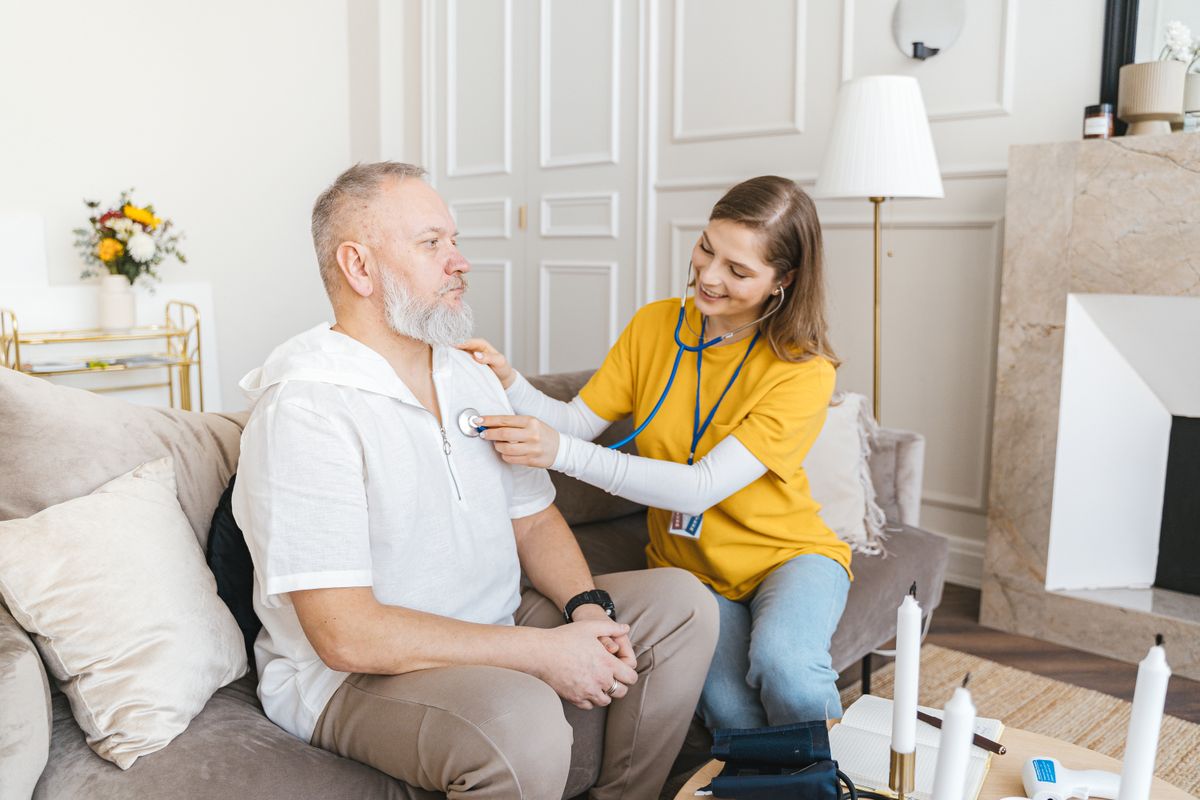
A daily wellness check — from a family member, neighbor, or professional caregiver — is the safety net that catches heat illness before it becomes an emergency.
The People Most at Risk — and Why Check-Ins Matter
Not every senior faces the same level of danger during an advisory. The highest-risk group includes those who live alone, those without working air conditioning, and those managing chronic conditions like heart disease, diabetes, kidney disease, or COPD. Seniors taking multiple daily medications are also more exposed, as are those recovering from a recent illness or hospital stay.
Adults living with dementia deserve special mention. They may not recognize that they are overheating, may not be able to communicate distress, and sometimes dress for cold weather or wander outdoors at the worst possible hour. If you care for someone with Alzheimer’s or another form of dementia, an advisory calls for closer supervision than usual. Our guides to at-home dementia care in Orange County and the CMS GUIDE Model dementia support program walk through building that kind of daily safety structure.
For families spread across the county — or across the country — the hardest part of a heat advisory is simply not being there. An adult child 40 minutes away cannot personally confirm that Mom drank enough water at 2 p.m. or that Dad’s AC is actually keeping up. That gap is precisely where a consistent daily presence becomes the difference between a safe summer and a crisis.
How AHVA Helps OC Families During Heat Events
At Home VA Staffing provides trained, compassionate in-home caregivers across Orange County, and heat-season safety is one of the most practical ways we support local families. During an advisory, our caregivers focus on the fundamentals that prevent emergencies: prompting and tracking hydration, keeping the home environment cool, watching for the early signs in the table above, helping with transportation to a cooling center when needed, and staying in direct communication with family members.
We are a non-medical home care agency — we do not provide clinical or medical services — but we are the steady, attentive presence that notices when something is off and acts before it escalates. Care can be arranged short-term to cover a specific heat wave, or as an ongoing routine for added peace of mind. If your loved one receives IHSS, many of those authorized hours can be used for the kind of supervision and safety monitoring that matters most during extreme heat. To understand how flexible care scheduling works, our overview of the benefits of respite care is a helpful starting point. As a woman-owned, minority-owned local agency, our entire focus is the wellbeing of Orange County seniors.
Heat Advisory Caregiver Checklist: 10 Steps to Take When an Advisory Is Issued
Tap each item to check it off as you complete it during an advisory.
Quick Quiz: Are You Ready for the Next Heat Advisory?
5 questions to test your senior heat-safety know-how.
Frequently Asked Questions: Heat Advisories and OC Seniors
Worried About a Loved One During the Next Heat Advisory?
You don’t have to manage it alone. AHVA’s trained Orange County caregivers can step in quickly — checking on your loved one, keeping them hydrated and cool, and catching the early warning signs before they become an emergency. Woman-owned, minority-owned, and 100% focused on OC seniors.
(213) 326-7452 — Talk to Our Team