
April is Parkinson’s Awareness Month, and for the estimated 90,000 people newly diagnosed each year in the United States, the journey from diagnosis to daily management can feel overwhelming. In Orange County alone, where nearly half a million residents are over age 65, thousands of families are navigating the complexities of Parkinson’s disease right now — from managing unpredictable tremors to preventing dangerous falls, from juggling multiple medications to preserving dignity during personal care. This comprehensive guide is built specifically for OC families who want to understand Parkinson’s, learn practical in-home care strategies, connect with local resources, and discover how professional home care can transform the quality of life for their loved ones.
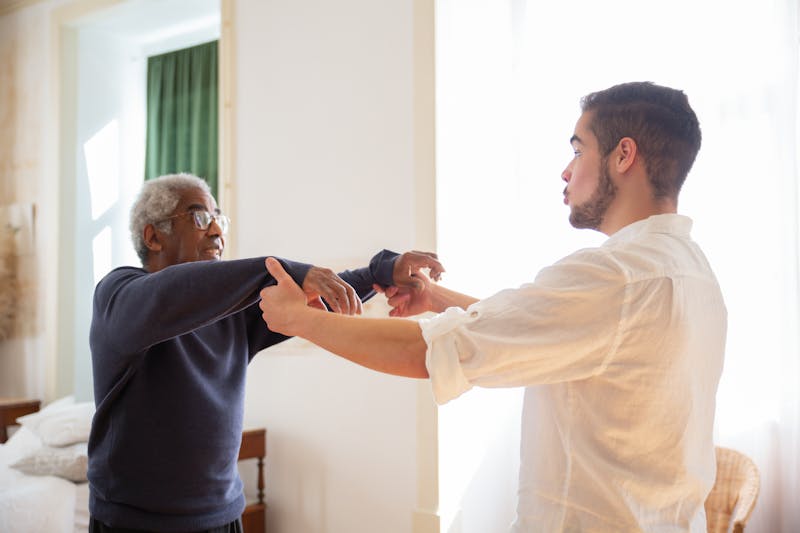
Understanding Parkinson’s Disease: What Orange County Families Need to Know
Parkinson’s disease is a progressive neurological disorder that affects movement, balance, and a wide range of bodily functions. It occurs when nerve cells in a region of the brain called the substantia nigra begin to deteriorate and die. These neurons produce dopamine, a chemical messenger critical for smooth, coordinated movement. As dopamine levels drop, the brain loses its ability to regulate movement properly, leading to the tremors, stiffness, and slowness that characterize the disease.
But Parkinson’s is far more than a movement disorder. Modern neuroscience has revealed that it affects virtually every system in the body — from digestion and sleep to mood, cognition, and autonomic functions like blood pressure regulation. For families in Orange County, understanding this full picture is essential for providing effective home care.
The disease typically develops after age 60, though early-onset Parkinson’s can appear in people as young as their 30s or 40s. Men are approximately 1.5 times more likely to develop Parkinson’s than women. Importantly, research from the Parkinson’s Foundation has shown that Southern California — including Orange County — has higher-than-average Parkinson’s incidence rates compared to many other U.S. regions, possibly linked to environmental factors such as pesticide exposure in agricultural areas.

The Dopamine Connection
Dopamine doesn’t just control movement — it influences motivation, pleasure, sleep regulation, and cognitive function. When 60–80% of dopamine-producing neurons are lost, motor symptoms typically become noticeable. But by the time a person receives a diagnosis, the disease process has usually been underway for years, with non-motor symptoms like constipation, loss of smell, and sleep disturbances often preceding the tremor by a decade or more.
For Orange County caregivers, this means that a loved one’s Parkinson’s experience extends well beyond the visible tremor. Understanding the full scope of the disease helps families provide more comprehensive and compassionate home care. The UCI Health Parkinson’s Disease and Movement Disorders Program in Orange is one of the region’s leading centers for diagnosis and treatment, offering both clinical care and cutting-edge research opportunities.
Risk Factors Relevant to Orange County Residents
While the exact cause of Parkinson’s remains under investigation, several risk factors are particularly relevant to OC families:
- Age: Risk increases significantly after 60, and Orange County’s senior population is growing faster than the state average
- Environmental exposure: Historical agricultural use of pesticides like paraquat and rotenone in parts of Southern California has been linked to higher PD rates
- Head trauma: Repeated head injuries increase risk — relevant for the region’s active senior sports community
- Genetics: About 10–15% of cases have a genetic component, particularly mutations in the LRRK2, GBA, and SNCA genes
- Gender: Men are diagnosed at approximately 1.5 times the rate of women
The 5 Stages of Parkinson’s: Planning Care at Every Level
Parkinson’s disease progresses through five recognized stages, known as the Hoehn and Yahr scale. Understanding these stages helps Orange County families plan ahead, adjust care strategies, and know when to bring in additional support. Every person’s progression is different — some may stay at Stage 2 for many years, while others may progress more quickly.

| Stage | Symptoms | Independence Level | Home Care Needs |
|---|---|---|---|
| Stage 1 | Mild tremor on one side, subtle changes in posture/walking/facial expression | Fully independent | Minimal — education, exercise support, medication reminders |
| Stage 2 | Symptoms on both sides, balance difficulties begin, daily tasks take longer | Independent but slower | Moderate — help with complex tasks, fall prevention setup, companionship |
| Stage 3 | Significant slowness, impaired balance, falls more frequent | Needs some assistance | Regular — personal care help, meal prep, medication management, safety monitoring |
| Stage 4 | Severe symptoms, can stand but needs assistance to walk | Cannot live alone safely | Full-time — 24/7 care, all ADLs, transfer assistance, skilled observation |
| Stage 5 | Wheelchair or bed-bound, may experience hallucinations/dementia | Fully dependent | Comprehensive — total care including feeding, positioning, comfort measures |
When to Increase Care: Key Transition Signals
Many Orange County families struggle with the question of when to bring in more help. These red flags indicate it’s time to reassess the care plan:
- Two or more falls within a month
- Unexplained weight loss or difficulty swallowing
- The primary caregiver is showing signs of burnout (exhaustion, irritability, health decline)
- Medication timing errors are becoming frequent
- The person with Parkinson’s is left alone for extended periods and cannot safely manage emergencies
- Nighttime wandering or confusion has begun
- Personal hygiene is declining because bathing and dressing have become too difficult
If any of these apply, it’s worth consulting with a home care provider like At Home VA Staffing to discuss care options tailored to your family’s situation. Our team serves families across Orange County and understands the specific challenges of Parkinson’s care at every stage.
Motor Symptoms: What Caregivers See Every Day
The motor symptoms of Parkinson’s are what most people think of when they hear the diagnosis. But for in-home caregivers, the reality of managing these symptoms day after day is far more complex than the textbook descriptions suggest. Each symptom creates its own cascade of daily challenges that require patience, creativity, and skill.

Tremor: More Than Just Shaking
The resting tremor of Parkinson’s typically begins in one hand and is most visible when the limb is at rest. For caregivers, this means mealtimes become a challenge — soup spills, drinks slosh, and cutting food becomes an exercise in frustration. Practical adaptations include weighted utensils (available at medical supply stores throughout Orange County, including those in Irvine, Costa Mesa, and Anaheim), non-slip placemats, lidded cups with straws, and plates with raised edges.
Tremor also affects writing, buttoning clothes, and using a phone or remote control. Adaptive aids like button hooks, zipper pulls, and large-button phones can preserve independence and reduce the daily frustration that often leads to depression in Parkinson’s patients.
Rigidity: The Invisible Barrier
Muscle rigidity — a constant stiffness that resists passive movement — makes almost everything harder. Getting dressed requires moving stiff limbs through sleeves and pant legs. Bathing requires lifting rigid arms and legs. Even sitting comfortably can be difficult when muscles won’t relax. Caregivers should learn gentle range-of-motion exercises that can be done daily to maintain flexibility, and dressing techniques that work with rigidity rather than against it (such as dressing the stiffer side first).
Bradykinesia: When Everything Slows Down
Bradykinesia, or slowness of movement, is often the most disabling symptom. It affects not just walking speed but the ability to initiate movement at all. A person with Parkinson’s might sit at the edge of the bed for several minutes, unable to stand up even though they want to. Caregivers learn to use cueing techniques — rhythmic counting, clapping, or visual markers on the floor — to help “unstick” the brain and initiate movement.
Postural Instability: The Fall Risk
Balance problems typically emerge in Stage 3 and become a primary safety concern. The stooped posture of Parkinson’s shifts the center of gravity forward, making backward falls especially common and dangerous. In Orange County, where many homes have tile floors, stairs, and narrow hallways, fall prevention is critical. We’ll cover specific home modifications in detail in the next section.
The Hidden Challenge: Non-Motor Symptoms of Parkinson’s
While tremors and slow movement are the visible face of Parkinson’s, the non-motor symptoms are often what families find most challenging to manage at home. These “invisible” symptoms affect mood, sleep, digestion, cognition, and autonomic function — and they can be more disabling than the movement problems.

Depression and Anxiety
Up to 50% of people with Parkinson’s experience clinical depression, and 40% develop significant anxiety. These are not simply reactions to having a chronic disease — they are caused by the same brain chemistry changes that produce motor symptoms. Depression in Parkinson’s can manifest as apathy (loss of motivation and interest), which family members sometimes misinterpret as laziness or “giving up.” In-home caregivers trained in Parkinson’s care understand these patterns and can provide both emotional support and structured daily activities that combat apathy.
Sleep Disturbances
Sleep problems affect up to 75% of Parkinson’s patients and include insomnia, vivid dreams, REM sleep behavior disorder (acting out dreams physically), restless leg syndrome, and excessive daytime sleepiness. For the family caregiver sharing a home, this means disrupted sleep for everyone. Nighttime care support from a professional caregiver can make a transformative difference for the entire household.
Cognitive Changes and Parkinson’s Dementia
Cognitive impairment develops in up to 80% of people with long-standing Parkinson’s disease. This can range from mild difficulties with multitasking and word-finding to full Parkinson’s disease dementia (PDD). Unlike Alzheimer’s, PDD primarily affects executive function (planning, decision-making) and visuospatial skills rather than memory initially. Families often notice that their loved one has trouble following multi-step instructions, managing finances, or navigating familiar routes.
For Orange County families dealing with cognitive changes, professional dementia care at home can preserve quality of life far longer than institutional care. Our Dementia & Memory Care services are specifically designed for these challenges.
Autonomic Dysfunction
Parkinson’s frequently disrupts the autonomic nervous system, leading to orthostatic hypotension (blood pressure drops when standing), constipation, urinary urgency, excessive sweating, and difficulty regulating body temperature. Orthostatic hypotension alone accounts for a significant portion of falls in Parkinson’s patients — a person stands up, their blood pressure drops, and they faint or lose balance. Trained caregivers know to assist with slow, staged position changes and monitor for dizziness.
✓ What Trained Caregivers Do
- Assist with slow sit-to-stand transitions
- Monitor “on/off” medication cycles
- Use cueing techniques for freezing episodes
- Provide structured daily routines
- Watch for depression and apathy signs
- Time meals around medication schedules
✗ Common Mistakes Without Training
- Rushing the person to stand or move
- Missing medication timing windows
- Confusing apathy with laziness
- Ignoring non-motor symptoms
- Over-helping (reducing independence)
- Serving protein-heavy meals with levodopa
Fall Prevention: Making Your Orange County Home Parkinson’s-Safe
Falls are the number one safety concern in Parkinson’s disease. The Parkinson’s Foundation reports that 60% of people with PD experience at least one fall per year, and two-thirds of those who fall will fall again. Hip fractures, head injuries, and the fear of falling itself (which leads to decreased activity and further decline) make fall prevention absolutely critical for home care.

Room-by-Room Safety Modifications
Bathroom (highest-risk area):
- Install grab bars near the toilet, in the shower/tub, and by the sink (secure into wall studs, not just drywall)
- Use a shower chair or transfer bench — never let a Parkinson’s patient stand in a wet shower
- Replace glass shower doors with a curtain to eliminate injury risk during falls
- Add non-slip mats inside the tub/shower AND on the bathroom floor
- Install a raised toilet seat with armrests to ease sit-to-stand transitions
- Use a handheld showerhead for seated bathing
Bedroom:
- Install bed rails or a trapeze bar for independent repositioning
- Place motion-sensor nightlights along the path to the bathroom
- Remove area rugs entirely — bare floor or wall-to-wall carpet is safest
- Ensure the bed height allows feet to touch the floor when sitting on the edge
- Keep a phone or medical alert device within arm’s reach
Living areas and kitchen:
- Eliminate all throw rugs, loose cords, and clutter from walkways
- Rearrange furniture to create wide, clear pathways
- Use bright, contrasting tape on stair edges (top and bottom steps especially)
- Install handrails on both sides of all staircases
- Replace small cabinet knobs with large, easy-grip handles
- Move frequently used items to counter level — no reaching overhead or bending low
The Freezing of Gait Problem
Freezing of gait (FOG) is one of the most frightening Parkinson’s symptoms. The person suddenly feels as if their feet are glued to the floor, typically occurring in doorways, narrow spaces, or when turning. FOG is a leading cause of falls. Effective strategies include:
- Visual cues: Place brightly colored tape strips on the floor at regular intervals — the brain can use these visual targets to “restart” walking
- Auditory cues: A rhythmic beat (metronome app, counting out loud, or music) helps the brain bypass the freezing signal
- Weight shifting: Gently rocking side to side before stepping can break a freeze
- Laser pointers: Some walking aids now include a laser line projected on the floor as a stepping target
- Wide turns: Always make U-turns in a wide arc rather than pivoting in place, which commonly triggers freezing
Daily Care Strategies: Nutrition, Exercise, and Medication
Effective in-home Parkinson’s care revolves around three pillars: proper nutrition, regular exercise, and precise medication management. Getting these right can dramatically improve quality of life and slow functional decline.

Nutrition for Parkinson’s: What to Eat and When
Diet plays a crucial role in Parkinson’s management, particularly because of the relationship between protein and levodopa (the primary Parkinson’s medication). Dietary protein competes with levodopa for absorption in the small intestine, which means eating a protein-heavy meal at the wrong time can render the medication ineffective.
Key nutritional strategies:
- Time protein intake: Eat the majority of daily protein at dinner rather than lunch, when medication effectiveness is most needed
- Mediterranean diet: Research from the Michael J. Fox Foundation shows that a Mediterranean-style diet (rich in vegetables, fruits, whole grains, olive oil, and fish) is associated with slower Parkinson’s progression and reduced inflammation
- Fiber is essential: Constipation affects 80% of PD patients — high-fiber foods (beans, whole grains, prunes, leafy greens) combined with adequate hydration are critical
- Bone-protecting foods: Calcium and vitamin D are vital because Parkinson’s patients are at much higher risk of osteoporotic fractures from falls
- Hydration: Aim for 6–8 glasses daily; dehydration worsens constipation, orthostatic hypotension, and confusion
Swallowing Difficulties
Dysphagia (difficulty swallowing) affects up to 80% of Parkinson’s patients over the course of the disease. It increases the risk of aspiration pneumonia, which is one of the leading causes of death in PD. In-home caregivers should watch for signs like coughing during meals, a “wet” voice after drinking, food remaining in the cheeks, and weight loss. Speech-language pathologists can evaluate swallowing and recommend texture modifications — UCI Health’s Parkinson’s Rehabilitation Services in Orange offers specialized swallowing assessments.
Exercise: The Only Proven Way to Slow Progression
Exercise is the single most effective non-medication intervention for Parkinson’s disease. Research consistently shows that vigorous exercise (at least 2.5 hours per week) can slow the progression of motor symptoms. The Parkinson’s Foundation specifically recommends:
| Exercise Type | Examples | PD Benefit | OC Resources |
|---|---|---|---|
| Aerobic | Cycling, brisk walking, swimming | Slows motor symptom progression | OC parks & trails, YMCA locations |
| Balance training | Tai chi, yoga, dance | Reduces falls by up to 67% | PEP4U free classes across OC |
| Strength | Resistance bands, weight training | Combats rigidity, improves transfers | Senior centers in Irvine, Fullerton, Costa Mesa |
| PWR! Moves® | Parkinson’s-specific power exercises | Targets PD-specific movement patterns | UCI Health Parkinson’s Wellness Program |
| Boxing | Rock Steady Boxing (non-contact) | Improves balance, speed, and confidence | Multiple OC gyms offer RSB classes |
| Voice therapy | LSVT LOUD program | Strengthens voice volume and clarity | LSVT-certified therapists throughout OC |
Medication Management: Timing Is Everything
Parkinson’s medications, particularly levodopa/carbidopa (Sinemet), must be taken on a precise schedule. Even a 30-minute delay can cause a dramatic return of symptoms — a phenomenon called an “off” episode. For in-home caregivers, medication management is one of the most critical responsibilities:
- Set alarms: Use phone alarms or a medication management app to ensure doses are never late
- Take levodopa on an empty stomach: 30 minutes before meals or 1 hour after for best absorption (unless nausea is an issue)
- Avoid protein interference: Don’t take levodopa with protein-rich foods or dairy
- Track “on” and “off” times: Keep a daily log of when symptoms improve (on) and return (off) to help the neurologist fine-tune dosing
- Never stop medications abruptly: Sudden withdrawal of Parkinson’s meds can cause neuroleptic malignant syndrome, a life-threatening emergency
Orange County Parkinson’s Resources: Your Local Support Network
One of the advantages of living in Orange County is access to world-class Parkinson’s care and a robust support network. Here are the resources every OC family should know about:

Medical Centers and Specialists
- UCI Health Parkinson’s Disease and Movement Disorders Program (Orange) — Comprehensive care including diagnosis, treatment, DBS surgery evaluation, clinical trials, rehabilitation, and a dedicated Parkinson’s Wellness Program with weekly exercise classes
- UCI Health Parkinson’s Disease Support Group — Virtual meetings via Zoom for patients and caregivers; next meeting April 14, 2026, 5–6 PM. Contact blagasse@hs.uci.edu to register
- Hoag Memorial Hospital (Newport Beach) — Neuroscience Institute with movement disorder specialists
- St. Joseph Hospital (Orange) — Neurology department with PD expertise
- MemorialCare Neuroscience Institute (Long Beach/Fountain Valley) — Movement disorder clinic
Community Organizations
- Parkinson’s Orange County (parkinsonsoc.org) — The dedicated OC chapter providing support services, educational workshops, exercise programs, and community connections throughout the county
- PEP4U (Power, Endurance, Positivity For You) — FREE Parkinson’s exercise classes held at locations across Orange County, led by professional therapists and trained fitness instructors
- Parkinson’s Foundation California Chapter — Statewide resources including a free helpline (1-800-4PD-INFO), educational materials, and research updates
- Parkinson’s Disease and Movement Disorder Institute (Fountain Valley) — Support groups meeting at the PMDI office, focused on coping strategies and peer connection
- South Orange County Parkinson’s Support Group (Mission Viejo) — Monthly meetings for patients and caregivers in the south county area
Financial Assistance and Insurance
Parkinson’s care can be expensive, but Orange County families have several financial resources:
- IHSS (In-Home Supportive Services): Medi-Cal program that pays for in-home care hours for eligible individuals. Apply through OC Social Services Agency at (714) 825-3000
- CalOptima CalAIM Community Supports: Medi-Cal managed care benefits that cover personal care services for eligible OC residents
- Veterans benefits: VA Aid & Attendance pension can provide up to $2,431/month for veterans needing home care assistance
- Long-term care insurance: Many policies cover in-home care for Parkinson’s — review your policy or contact your agent
- Parkinson’s Foundation grants: Emergency assistance for PD-related expenses
2026 Treatment Breakthroughs: What’s New in Parkinson’s Research
April 2026 brings encouraging news on the research front. While there is still no cure for Parkinson’s, several breakthrough developments are changing the outlook for patients and families:

Stem Cell Therapies Show Promise
Researchers have successfully transplanted dopamine-producing cells derived from induced pluripotent stem cells (iPSCs) into the brains of Parkinson’s patients. After up to two years, no serious side effects or tumors were reported, and brain scans showed increased dopamine activity in treated areas. A stem cell product called RNDP-001 has received FDA fast-track designation for its Phase 1 clinical trial, accelerating the development timeline. While these therapies are still experimental, they represent the closest science has come to potentially replacing the lost neurons that cause Parkinson’s.
Disease-Modifying Drug Candidates
Unlike current medications that only manage symptoms, several drugs in development aim to actually slow or stop Parkinson’s progression:
- HER-096: Completed a promising Phase 1 trial showing safety and tolerability, with Phase 2 trials expected in 2026
- BIIB122 (LUMA study): An LRRK2 inhibitor being tested in early-stage Parkinson’s — LRRK2 mutations are one of the most common genetic causes of PD
- CS2 (Case Western Reserve): A novel treatment that blocks harmful protein interactions that cause dopamine neurons to die
The World’s Largest PD Clinical Trial
A £26 million global initiative has launched the largest-ever clinical trial for Parkinson’s disease, using an innovative “platform trial” design that tests multiple treatments simultaneously. This approach dramatically accelerates the timeline for identifying effective therapies. UCI Health in Orange County participates in numerous PD clinical trials — ask your neurologist about eligibility or visit the UCI Clinical Trials portal.
What This Means for Home Care
Even as research advances, the reality is that people living with Parkinson’s today need expert daily care now. New treatments take years to move from trials to availability. In the meantime, comprehensive in-home care remains the most impactful intervention for quality of life. The best approach combines cutting-edge medical treatment from specialists like those at UCI Health with compassionate, skilled daily care at home.
When to Bring In Professional Home Care
Many Orange County families try to manage Parkinson’s care entirely on their own, often out of love and a sense of duty. But Parkinson’s is a marathon, not a sprint — and caregiver burnout is one of the most common and devastating consequences of going it alone. The Parkinson’s Foundation reports that family caregivers of PD patients experience depression at twice the rate of the general population.
Services That Make the Biggest Difference
Professional Parkinson’s home care goes far beyond basic companionship. A skilled caregiver provides:
- Medication management: Precise timing of levodopa and other PD medications, tracking “on/off” patterns, and communicating changes to the neurologist
- Fall prevention and mobility assistance: Cueing techniques for freezing, transfer assistance, and continuous safety monitoring
- Personal care with dignity: Bathing, dressing, grooming, and toileting assistance that respects the person’s preferences and preserves autonomy
- Meal preparation: PD-specific nutrition including proper protein timing, high-fiber foods, texture-modified meals for dysphagia
- Exercise support: Encouraging and assisting with the daily exercise that is critical for slowing progression
- Cognitive engagement: Activities, conversation, and mental stimulation that combat cognitive decline and isolation
- Respite for family caregivers: Giving family members time to rest, work, and maintain their own health
At At Home VA Staffing, we provide experienced in-home caregivers across Orange County who understand the unique demands of Parkinson’s care. Whether your family needs a few hours of respite care each week or full-time personal care support, we match you with caregivers who have the training and compassion to make a real difference.
Our companionship care services also address the isolation and depression that so many Parkinson’s patients experience, while our elderly care programs are designed for the complex, evolving needs of progressive neurological conditions.
Parkinson’s Home Care Checklist for OC Families
☑ Your Parkinson’s Home Safety & Care Checklist
Check off each item as you complete it. Track your progress below.
0 of 10 completed
Test Your Parkinson’s Care Knowledge
🎓 Quick Quiz: How Much Do You Know About Parkinson’s Home Care?
Test your knowledge with these 5 questions. Select your answer and click “Check Answer” to see how you did.
Q1. 1. What percentage of people with Parkinson’s experience at least one fall per year?
Q2. 2. Why should levodopa medication NOT be taken with a protein-rich meal?
Q3. 3. Which technique can help a Parkinson’s patient who is “frozen” and unable to initiate walking?
Q4. 4. How much weekly exercise does the Parkinson’s Foundation recommend to slow motor symptom progression?
Q5. 5. What is the MOST dangerous area of the home for a person with Parkinson’s disease?
Frequently Asked Questions About Parkinson’s Home Care
Talk to Our Team About Parkinson’s Home Care in Orange County
Every Parkinson’s journey is different. Whether you need a few hours of respite care each week or comprehensive daily support, At Home VA Staffing matches your family with experienced caregivers who understand the unique demands of Parkinson’s disease. We serve all 34 cities across Orange County.
(213) 326-7452
Talk to Our TeamFree consultations • Flexible scheduling • Experienced Parkinson’s caregivers • All of Orange County
Serving Families Across Orange County
Disclaimer: This article is for informational purposes only and does not constitute medical advice. Parkinson’s disease management should be guided by a qualified neurologist or movement disorder specialist. At Home VA Staffing provides non-medical in-home care services including personal care, companionship, respite care, and daily living assistance. We are not a medical provider and do not diagnose or treat medical conditions. Always consult your healthcare provider before making changes to your care plan, medications, or exercise routine. If you experience a medical emergency, call 911 immediately.