
If the only time you really see your parents is through a phone screen, Thanksgiving can be a jolt. A weekly call hides a lot: the ten pounds someone has lost, the stack of unopened mail on the counter, the unsteady walk from the kitchen to the table. This year, Thanksgiving falls on November 26, which gives Orange County families roughly five weeks of advance notice to plan what to actually look for when they walk through the door, and what to do if what they see worries them.

A video call shows a face and a voice. It does not show the stack of mail on the counter, the bruise on an arm, or how long it took someone to get to the door.
Why This Thanksgiving Might Be Different
Most families who live more than a short drive from an aging parent settle into a rhythm: a Sunday phone call, a holiday card, the occasional video chat around a birthday. None of that is a bad thing, but all of it has the same blind spot. A phone call tells you how someone sounds. A video call tells you how someone looks, from the shoulders up, in flattering light, for the ten minutes they knew you were calling. Neither tells you how someone actually lives.
That gap is exactly why so many families describe the same moment: they walk into a parent’s home for a holiday and notice, almost all at once, a dozen small things that do not add up to “everything is fine.” It is not that the decline happened overnight. It is that an in-person visit is often the first unfiltered look families have had in months.
If you are headed to Orange County for Thanksgiving this year, or your parents are coming to you, this is the one holiday built for a quiet, clear-eyed look around. You do not need to turn dinner into an inspection. You do need to know what you are actually looking for, and what to do if you see it.
12 Signs Worth a Second Look
None of these, on their own, is an emergency. Together, or even two or three together, they are worth a private conversation and a follow-up plan. We have grouped them the way families usually notice them: at the table, around the house, in conversation, and in the mail.
| Category | What to Watch For |
|---|---|
| Physical & Health | Noticeable weight loss, clothes that no longer fit, unexplained bruises, a new unsteadiness getting up from a chair, a cane or walker that appears suddenly unused or in a corner |
| The Home Itself | Spoiled or expired food in the refrigerator, a pantry that is unusually bare or unusually overstocked with the same item, dishes piling up, a house that smells different than you remember, burnt pots or pans |
| Thinking & Safety | Repeating the same question or story within the same conversation, trouble following a recipe they have made for decades, getting lost on a familiar errand, missed medications still in the pillbox |
| Money & Mail | Unopened mail piling up, stacked unpaid bills, new unfamiliar charities or subscriptions, confusion about a recent purchase, a car with new dents or an expired registration sticker |
A single missed bill or one forgotten word is ordinary. A pattern across more than one category, especially one that has crept up since your last visit, is the signal worth acting on.
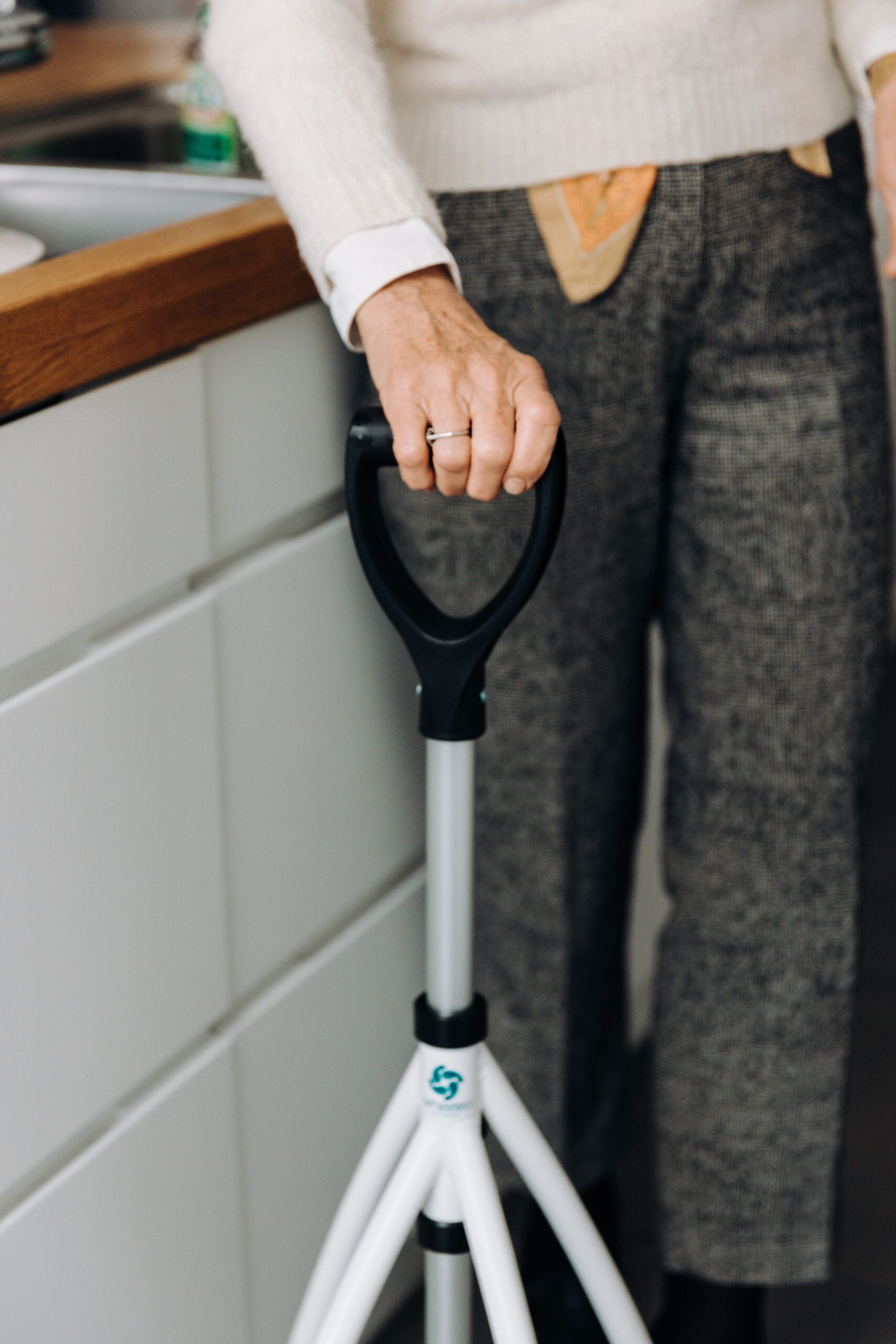
A walker or cane that has quietly appeared since your last visit, whether it is being used or sitting unused in a corner, is worth asking about directly.
What Not to Do at the Table
However clear the signs are, Thanksgiving dinner in front of the whole extended family is the wrong moment to raise them. Putting a parent on the spot in front of grandchildren, in-laws, or siblings who have not noticed the same things tends to produce defensiveness, not honesty. It can also cause real embarrassment for someone who already suspects something is wrong and has been quietly trying to manage it alone.
Your First Two Weeks After the Visit
If the visit leaves you with real concerns, the period right after Thanksgiving matters more than the dinner itself. A few steps make the difference between a vague worry that fades by Christmas and an actual plan.
Write it down while it is fresh. Specific, dated notes (what you saw, in whose home, on what date) are far more useful later, to a doctor, a sibling, or an elder law attorney, than a general impression recalled months later.
Loop in siblings and other close family before deciding anything. One person acting alone, especially from out of town, often triggers resistance. A short family call to compare notes and agree on next steps tends to go further than a single adult child pushing for immediate change.
Schedule a primary care visit, and go if you can. A sudden weight change, new confusion, or a fall is exactly what a primary care physician should know about, and an adult child’s observations from a holiday visit are useful clinical information, not an overreaction.
Consider a trial of help rather than an immediate, permanent decision. Few families need to decide between “nothing” and “assisted living” in the same week. A few hours a week of non-medical in-home help, someone to check in, assist with meals, and keep an eye on the home, is often the right first step while the bigger picture becomes clearer. If cost is the open question, our Orange County home care cost guide breaks down typical ranges so the conversation starts with real numbers.
If what you noticed was more cognitive than physical, repeated questions, confusion about dates, getting lost somewhere familiar, it is worth reading our guide on the early diagnosis pathway for memory concerns before your next visit, so you know what a doctor will actually ask.

A short meeting with a primary care doctor, a geriatric care manager, or a home care provider can turn a vague worry into a specific plan within a week or two.
Where Orange County Families Can Get Help
You do not have to figure this out alone, and you do not have to figure it out immediately. Orange County has a few starting points worth knowing before you need them:
- OC Office on Aging (Area Agency on Aging): serves county residents age 60 and older with information, referrals, and access to publicly funded aging services. Call (800) 510-2020 toll-free or (714) 480-6450, Monday through Friday, 8 a.m. to 5 p.m.
- 2-1-1 Orange County: a free, confidential information and referral line, reachable by dialing 2-1-1 or at 211oc.org, that connects families to local aging, disability, and caregiving resources.
- In-Home Supportive Services (IHSS): California’s Medi-Cal program that can fund in-home care hours for people who meet income and functional eligibility requirements, worth exploring if a long-term, Medi-Cal-funded plan may fit.
- Private non-medical home care: for families who are not yet ready for, or do not qualify for, IHSS, a licensed home care agency can usually start within days rather than weeks, with flexible hours that scale up as needs change.
If a trial of in-home support feels like the right next step after this Thanksgiving, that is exactly where we can help. At Home VA Staffing serves families across Orange County with flexible, non-medical in-home care, and a conversation does not commit you to anything.
Your Post-Visit Checklist
Click each step as you complete it.
- Write down specific, dated observations from the visit while they are fresh
- Check the refrigerator and pantry for expired food or unusual patterns
- Look at the mail and bill pile for anything unopened or overdue
- Note any new mobility aids, bruises, or changes in weight or clothing fit
- Check the pillbox or medication organizer against the actual date
- Have a private, specific conversation rather than raising concerns at the table
- Call siblings or other close family to compare notes before deciding anything
- Schedule or confirm an upcoming primary care appointment
- Save 2-1-1 Orange County and the OC Office on Aging as resources
- Consider a short trial of in-home help rather than an immediate, permanent decision
Test Your Knowledge
Frequently Asked Questions
A phone call only carries voice and a few minutes of conversation. It does not show weight loss, the state of the kitchen, a new limp, or a pile of unopened mail. Many families’ first real look in months comes at an in-person visit like Thanksgiving, which is exactly why the gap can feel sudden even though the changes were gradual.
Yes. Needing a bit more support over time is a normal part of aging, not a crisis on its own. The signs worth acting on are a cluster of changes, or a clear safety issue like a fall, a missed medication pattern, or an unpaid utility bill, rather than any single small thing.
Share specific, dated observations rather than a general impression. “The pantry had three expired items and the mail looked like it hadn’t been opened in weeks” is easier to discuss than “I’m worried about Mom.” If possible, invite the sibling to the next visit or a video walkthrough of the areas that concerned you.
Usually not immediately. Many families start with a lighter step, a primary care visit, a few hours a week of in-home help, or a check-in system, and reassess from there. Assisted living or a bigger change can always come later if needs increase; it rarely needs to be the first move.
IHSS is California’s Medi-Cal-funded program, which requires meeting income and functional eligibility rules and typically takes time to process. Private non-medical home care, like At Home VA Staffing, does not require Medi-Cal eligibility and can usually begin within days, which makes it a common bridge while a family sorts out longer-term options.
Start with 2-1-1 Orange County (211 or 211oc.org) or the OC Office on Aging ((800) 510-2020), both free. If you are weighing in-home care specifically, At Home VA Staffing can also talk through options, call (213) 326-7452.
More on Caring for Aging Parents in Orange County
- Sandwich Generation: Orange County Families Caring for Parents and Children at Once
- The Real Cost of Home Care in Orange County (2026): A Family’s Honest Pricing Guide
- What an Early Alzheimer’s Diagnosis Pathway Looks Like in Orange County
Noticed Something Over the Holiday? Let’s Talk Through It.
At Home VA Staffing provides non-medical in-home care across Orange County, from a few check-in hours a week to full-time support. If Thanksgiving left you with questions about a parent’s safety or independence, we can help you think through what a reasonable next step looks like.
Talk to Our Team: (213) 326-7452Proudly Serving Orange County Communities
This article is for general informational purposes and is not medical, legal, or financial advice. Observations about a loved one’s health or safety should be discussed with a qualified physician. Program eligibility for IHSS and other public resources can change; confirm current rules with the relevant county or state agency. This article is current as of October 19, 2026. At Home VA Staffing is a non-medical home care agency.
You Might Also Like

California's New Health Care AI Law (AB 1979): What Orange County Seniors and Families Should Know Before 2027
Robert Gordon Home Care Policy Analyst · LinkedIn · October 6, 2026...

The 'One Big Beautiful Bill': How Federal Medicaid Cuts Could Devastate OC Home Care
Robert GordonHome Care Policy Analyst · LinkedIn · March 31, 20268 min...

Medi-Cal Asset Limit Is Back: What OC Seniors Must Do Before Their 2026 Redetermination
Robert Gordon Home Care Policy Analyst · LinkedIn · April 6, 2026...