El Niño Is Strengthening and OC’s Free Sandbag Season Opens October 1 — Nobody Fills the Bags for You
By Robert Gordon, Home Care Policy Analyst, AHVA · Published September 25, 2026 · Updated October 27, 2026
On September 21, the Governor signed a statewide state of emergency for a strengthening El Niño. On Thursday, October 1, Orange County opens its free sandbag season. Both of those facts made the news. Neither one answers the question that matters in a home care household: who, exactly, is going to shovel the sand?
Update, Wednesday, October 21, 2026: Rain moves into Orange County this afternoon. The National Weather Service in San Diego’s latest forecast puts the chance of showers and thunderstorms at 90% today and tonight, with a quarter to half an inch of new rainfall possible in each period, followed by an 80% chance of additional showers Thursday (another tenth to quarter inch). Taken together, that is roughly half an inch to just over an inch of rain across Wednesday and Thursday — not warning-level flooding, but enough to matter for a gutter that has not been cleared since last winter, a walkway a homebound parent uses, or a roof leak nobody has looked at since the last rain. The system clears out fast: by Friday, October 23, the forecast is sunny and dry. For families managing a parent’s home, this window is the moment to walk the property once — clogged drains, worn door-threshold weatherstripping, and anything stored low in a garage are the three things that turn a quarter-inch of rain into a bigger problem. Free empty sandbags remain available at 2301 N. Glassell St., Orange (details below).
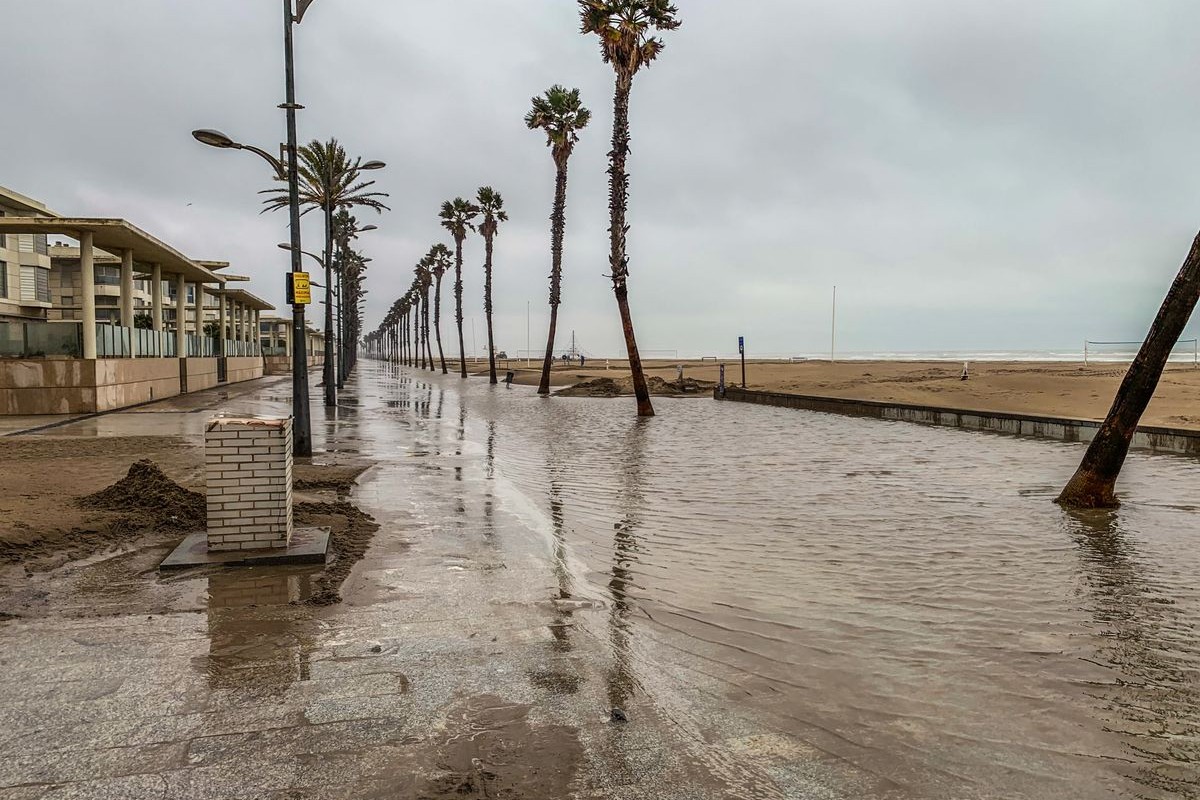
Update, October 22, 2026: Newport Beach declares a local emergency ahead of King Tides. On Monday, October 19, the Newport Beach City Council declared a local emergency ahead of this month’s King Tides, forecast for October 26–28. City Manager Seimone Jurjis told residents that recent ocean water levels have been running 15 to 20 inches higher than predicted, meaning a forecasted 6.5-foot tide could reach 8 feet or more — conditions the city attributes in part to this season’s strengthening El Niño. The council also approved moving roughly 100,000 cubic yards of sand from the Santa Ana River mouth to replenish eroded beaches. The city has named Newport Island, Balboa Island, the Finley Tract, Lido Village, Balboa Village, the Peninsula, and the Marcus Avenue/Lake Avenue area as the most flood-prone spots, and crews are reinforcing sand berms, checking seawalls, and pre-staging pumps and sandbags. When this update was written on October 22, the National Weather Service had not yet issued a coastal flood watch or warning for Orange County. It has since issued a Coastal Flood Warning (see the October 24 update below). If an aging parent or client lives on or near the Balboa Peninsula or one of the other low-lying areas named above, this is the week to confirm they know the nearest high ground and have a way to reach it if a street floods. Free empty sandbags remain available at 2301 N. Glassell St., Orange.
Update, Saturday, October 24, 2026: NWS upgrades to a Coastal Flood Warning for Orange County. The National Weather Service in San Diego has issued a Coastal Flood Warning for San Diego and Orange County coastal areas, in effect from 5 AM Sunday, October 25 through 1 PM PDT Thursday, October 29 — covering the same stretch of high tides as this month’s King Tides event. NWS says observed high tides are running 1.5 to 1.7 feet above predicted levels each day in the late morning, numerous roads may close, and low-lying homes, businesses and some critical infrastructure could flood, with some shoreline erosion expected in the morning hours. The agency’s instruction is direct: protect flood-prone property now, and if you must travel, never drive around a barricade or through water of unknown depth. For a family managing an aging parent’s home near the coast, this is the week those free sandbags (details below) stop being a hypothetical and start being homework. Free empty sandbags remain available at 2301 N. Glassell St., Orange.
Update, Sunday, October 25, 2026: The Coastal Flood Warning is now in effect, and Newport Beach is handing out filled sandbags. The warning began at 5 AM today and runs until 1 PM Thursday, October 29. The National Weather Service’s forecast discussion issued at 4:34 AM says morning high tides “may exceed 7.5 feet this morning and will approach and potentially exceed 8 feet starting Monday morning,” and calls them “near if not record-breaking tides.” The City of Newport Beach is offering free, prefilled sandbags while supplies last at three sites: the Corporation Yard, 592 Superior Ave.; Marina Park, 1600 W. Balboa Blvd.; and Temporary Fire Station No. 1 in the East Ocean Front parking lot near Balboa Pier. Empty bags are also available at Newport Beach fire stations and Lifeguard Headquarters. For an older homeowner, a prefilled bag is the difference between doable and impossible. A filled bag is still heavy, though, so plan for a family member or neighbor to do the loading and placing. The city also asks residents to sign up for Newport Notified, its emergency text-alert system, at NBPD.org. Alerts cover changing conditions, road closures and evacuation instructions. Sign up a parent’s phone and your own, too. For caregivers and visit schedules: the flooding comes with the morning high tides. If an aide is due early in the day at a home on the Balboa Peninsula or another low-lying coastal street, ask about moving the visit to later in the day through Thursday so they aren’t driving through standing water.
Update, Tuesday, October 27, 2026: Today’s high tide is the one to watch. NOAA’s tide tables for the Newport Bay entrance put this morning’s predicted high tide at 6.65 feet around 9:50 AM. Layer in the 1.5 to 1.7 feet of extra water the National Weather Service has been tracking all week, and the observed level near Newport Beach could run close to or above 8 feet around that same time — in the range NWS has called “near if not record-breaking.” The Coastal Flood Warning itself doesn’t end today: it runs through 1 PM Thursday, October 29, so Wednesday and Thursday mornings carry the same risk. If a caregiver or family member already moved a morning visit near the coast to later in the day, keep that schedule through Thursday rather than reverting after today. AHVA families can call us at (213) 326-7452 to adjust a schedule.
Orange County’s free sandbag season runs October 1 through April 30. The bags are free. The sand, the filling and the lifting are not.
>83%Chance of a strong-to-very-strong El Niño through Jan-Mar 2027, per NOAA CPC (Oct 8, 2026)
Oct 1OC free sandbag season opens (runs to April 30)
50Free EMPTY sandbags per Orange County resident
0Pounds of sand the county puts in them for you
What the forecast actually says — and what it carefully does not
The National Oceanic and Atmospheric Administration’s Climate Prediction Center issues a monthly ENSO Diagnostic Discussion. The one dated October 8, 2026 carries an El Niño Advisory and opens with this sentence: “El Niño continues to strengthen, with a strong-to-very strong El Niño likely through January-March 2027 (remaining greater than an 83% chance).”
That is a strong statement about the ocean. It is a much softer statement about your street, and the CPC is careful to say so in the same document: “With an event of this magnitude, the chances of experiencing impacts consistent with El Niño are larger, though not guaranteed.” That qualifier matters. A strong El Niño loads the dice toward a wet Southern California winter. It does not promise one, and anyone telling you it does is selling something.
What the October 8 discussion said
What that does and does not mean
Strong-to-very-strong event likely through January-March 2027, greater than an 83% chance
Forecasters remain highly confident the event will stay strong through winter
Niño-3.4 index at +2.1°C; Niño-1+2 at +3.9°C
Warming is now even more extreme in the eastern Pacific, nearest South America
Impacts more likely, “though not guaranteed”
No promise of rain on any given Orange County street
Next discussion scheduled November 12, 2026
The picture gets its next update about six weeks into sandbag season
The honest framing. You are not preparing because rain is certain. You are preparing because the preparation costs one afternoon, and the thing you are preparing against — a flooded street between your parent and their caregiver — is expensive, dangerous and hard to fix once it happens.
A strong El Niño shifts the odds toward a wetter winter. It does not guarantee one — and the CPC says so in the same sentence.
Orange County’s free sandbag program, straight from the county
OC Public Works runs the county’s sandbag distribution, and its emergency response page states the terms plainly: “Each year from October 1 to April 30 residents living in Orange County can obtain up to 50 free EMPTY sandbags for the protection of their home from rain and mud.” Here is the program in full.
Detail
What the county says
Season
October 1 through April 30, every year
Quantity
Up to 50 bags per Orange County resident
Condition
EMPTY — the county’s own capitalization
Cost
Free
Main location
2301 N. Glassell St., Orange, CA 92865
Other locations
Seasonal staging locations, “subject to conditions”
Who may not use it
“Contractors or commercial entities are not permitted”
Phone
(714) 955-0200 (OC Operations & Maintenance main office)
Alternative
“Sandbags can also be purchased through home centers and other vendors”
Storm-time reporting
(714) 955-0333 for County roads or flood control channels during an active event
Check before you drive. The address above is the standing distribution point. Seasonal staging locations are explicitly “subject to conditions,” which means they open and close with the weather. One phone call to (714) 955-0200 saves a wasted trip across the county in the rain. Separately: several OC cities run their own sandbag programs with different rules and different limits. Do not assume a neighboring city’s terms apply to the county program, or the reverse.
Fifty bags is a real barrier. It is also, once filled, several hundred pounds of material that somebody has to move.
The part every family should know: the bags are empty
Read the county sentence again and notice which word is capitalized. Not “free.” Not “50.” The county capitalized EMPTY, because that is the part people miss.
What the program actually hands you is fifty folded woven sacks. To convert those into flood protection, someone has to source sand, drive to Orange, load the bags, shovel them full, haul them back, and stack them correctly at the exact points where water enters the house. That is a half-day of genuinely heavy physical labor.
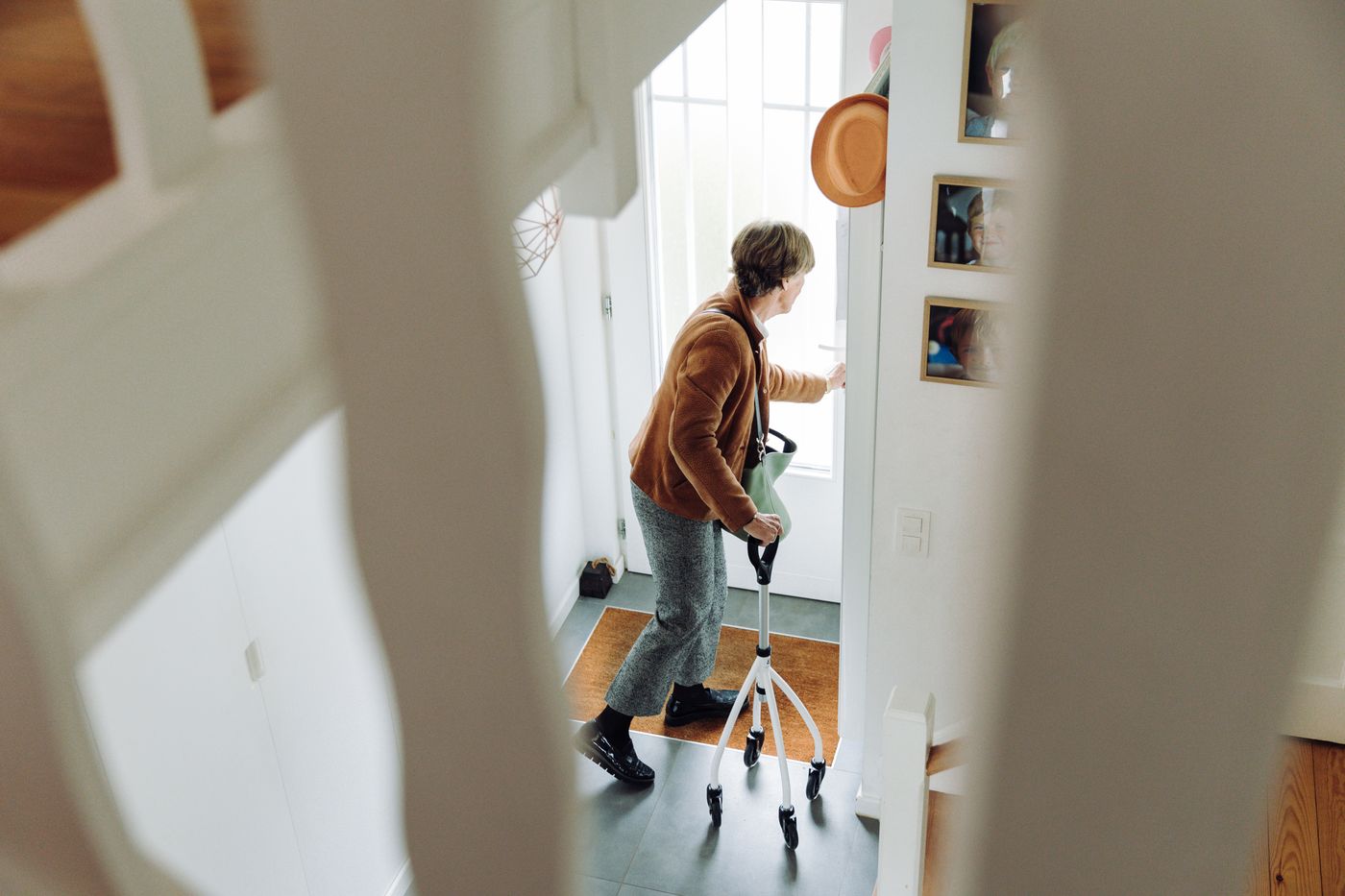
Now picture the household this article is written for: an 84-year-old in Fountain Valley who uses a walker, whose daughter lives in Riverside County, and whose caregiver comes four hours a day. Every step in that sequence is a step that household cannot perform. And the county rule closes the obvious workaround — “Contractors or commercial entities are not permitted” — so a paid agency cannot simply go pick the bags up on a client’s behalf.
This is the whole gap. Orange County’s sandbag program is genuinely good, and it is genuinely free. It is also designed around a resident who can lift, drive and shovel. The residents most likely to be hurt by a flooded home are precisely the residents least able to use the program without help. Nobody fills the bags for you — so the single most useful thing a family can do this week is decide, by name, who will.
There is a second tell. The county’s emergency response page links a document called the Sandbag Manual. We read it. It is a 2004 flood-fight publication covering levee boils, wavewash, levee topping, mud boxes and current scouring, with a suggested outline for a Flood Fight Training Course and photographs of sandbag rows along Santiago Canyon Road and the 91 freeway. The words “homeowner,” “resident,” “door,” “garage” and “house” do not appear in it at all. It is a fine manual — for flood control crews working on levees. It is not instructions for an adult child trying to keep three inches of water out of a parent’s garage.
California already named your parent. The sandbag page did not.
On September 21, 2026, the Governor signed a statewide proclamation of a state of emergency ahead of the El Niño winter. Buried in its recitals is a sentence worth reading closely:
“WHEREAS low-income communities, farmworker families, rural residents, seniors, persons with disabilities, residents with limited transportation access, people experiencing homelessness, and communities in flood-prone, coastal, or post-fire areas may face disproportionate risks…”
The state has already identified who is most exposed. Two details are worth being precise about, though. First, the proclamation is statewide — the word “Orange” does not appear in it, so this is not an Orange County declaration. Second, naming a group in a proclamation is not the same as delivering anything to them. The recognition exists at the state level. The practical help still has to be assembled household by household.
For a homebound older adult, a storm is not a weather event. It is the day the help could not get down the street.
Four ways a storm actually breaks a home care household
Flooding damages houses. That is the story that gets covered. In a household organized around an older adult with real care needs, the damage usually arrives through one of four doors instead — and none of them require a single drop of water inside the home.
Failure point
What it looks like
What prevents it
Access
A closed or flooded street means the caregiver, the adult child or the meal delivery simply does not arrive
A named backup caregiver, written on paper, who already knows the routine and how to get in
Power
Oxygen concentrators, CPAP machines, lifts, beds and scooters stop together, not one at a time
Devices charged before the storm, plus Medical Baseline enrollment with the utility
Medication
The pharmacy closes or the delivery driver cannot reach the house mid-course
A two-week buffer requested before the first storm, not during one
Falls
Wet entryway tile, a soaked doormat, a dark hallway on the walk to find a flashlight
Absorbent matting at every entrance, and a flashlight in the bedroom — not in a kitchen drawer
The power failure mode deserves more room than we can give it here; we wrote a full guide to keeping medical equipment running through an outage, including utility Medical Baseline enrollment, in When the Power Goes Out. On the alerting side, California expanded the languages emergency information must be provided in — we covered what changed in AB 2341 Is Now Law. And if this winter has you re-examining the house itself, our aging in place guide covers the permanent fixes that outlast one storm season.
Access is the first failure point. The house can stay perfectly dry and the household can still lose all of its care coverage.The trip to the front door is the trip that matters. Wet tile and a soaked doormat are a fall risk, not an inconvenience.
Sign up for alerts — in both places, because they are two systems
Orange County residents routinely believe they are signed up for emergency alerts when they are signed up for one of two entirely separate things. AlertOC is the county’s registration-based notification system; you enroll at AlertOC.com and it takes roughly ten minutes. Nixle is separate: you text your ZIP code — 92656, 92802, 92701, whatever yours is — to 888777. Signing up for one does not sign you up for the other. Do both. The county’s general preparedness resources live at readyoc.com.
One caution worth passing along: California’s Office of Emergency Services has warned that alert and access-and-functional-needs registries can create false confidence. Being on a list is not the same as being visited. Treat alerts as one thin layer of a plan whose real substance is a named human being who will show up.
Alerts are one thin layer. The substance of a storm plan is a named human being who will show up.
Your Orange County storm plan: ten things to do before the next storm
Tap each item as you finish it. Nothing here requires money, and the whole list is one afternoon.
0 of 10 steps done
Confirm the sandbag site and its hours before you drive. OC Public Works distributes free empty sandbags at 2301 N. Glassell St., Orange, CA 92865, and at seasonal staging locations that depend on conditions. Call (714) 955-0200 first.
Decide now who physically fills and places the bags. The county supplies the bags empty. Somebody has to supply sand, fill them, carry them and stack them. If that person is not your parent, name them today.
Walk the property and find where water actually enters. Garage thresholds, side doors, patio sliders and the low corner of a driveway. Bags placed in the wrong spot do nothing.
Clear the gutters, downspouts and the street drain nearest the house. A blocked downspout turns a normal rain into standing water against a foundation.
Build a two-week medication buffer. Ask the pharmacy for an early refill before the first storm, not during it. Storms close pharmacies and strand delivery drivers.
Write down the caregiver backup plan on paper. If your regular aide cannot reach the house, who is the second call? Put the name and number on the refrigerator, not only in a phone.
Charge and test every powered medical device. Oxygen concentrators, CPAP machines, lifts and scooters all fail together when the power does.
Register for local emergency alerts twice. Sign up at AlertOC.com, and separately text your ZIP code to 888777 for Nixle. They are two different systems.
Keep a flashlight in the room where your parent sleeps. Not in a kitchen drawer down the hall. The fall risk is the walk to the flashlight.
Photograph the outside of the house while it is dry. Date-stamped ‘before’ photos make an insurance claim far easier, and they take four minutes.
Ask the pharmacy for an early refill before the first storm. Mid-storm is the worst possible time to discover a three-day gap.
Test yourself: five questions on OC storm season
1. Orange County’s free sandbags come to you in what condition?
Pre-filled and ready to place
Empty — you supply and shovel the sand
Filled on request for residents over 65
Delivered filled to the home address
The county’s own page says residents may obtain up to 50 free EMPTY sandbags. Sand, filling, hauling and placement are all on you.
2. How many free sandbags can an Orange County resident get, and during what window?
25 bags, November through February
Unlimited bags during a declared emergency
Up to 50 bags, October 1 through April 30
100 bags, year round
OC Public Works: “Each year from October 1 to April 30 residents living in Orange County can obtain up to 50 free EMPTY sandbags.”
3. What did the Climate Prediction Center actually forecast on October 8, 2026?
Guaranteed heavy rain in Southern California
A strong-to-very-strong El Niño likely through January-March 2027
A weak El Niño with minimal impact
That the El Niño had ended
CPC wrote that El Niño continues to strengthen, with a strong-to-very-strong El Niño likely through January-March 2027 — remaining greater than an 83% chance — and added that impacts are more likely “though not guaranteed.” A strong El Niño is not a rain promise.
4. Who is explicitly named in California’s September 21, 2026 El Niño emergency proclamation?
Only coastal property owners
Nobody — it is a general document
Seniors, persons with disabilities and residents with limited transportation access
Only residents of post-fire burn areas
The proclamation names “seniors, persons with disabilities, residents with limited transportation access” among groups that “may face disproportionate risks.” The state named your parent. The county’s sandbag page does not.
5. Can a home care agency or contractor pick up the free bags on a client’s behalf?
Yes, with the client’s written permission
No — contractors and commercial entities are not permitted
Yes, for clients over 80
Only during a declared emergency
The county page states plainly: “Contractors or commercial entities are not permitted.” This is why a family member, neighbor or friend has to be the one who goes.
Two weeks of shelf-stable food and water matters more than it sounds when a closed road lasts 36 hours.
Frequently asked questions
Thursday, October 1, 2026. The county runs the program annually from October 1 through April 30, so the 2026-27 window closes Friday, April 30, 2027. Distribution is at 2301 N. Glassell St., Orange, CA 92865, and at seasonal staging locations that open depending on conditions. Call OC Public Works at (714) 955-0200 before you drive out.
Yes. The county’s wording is explicit: up to 50 free EMPTY sandbags. You supply the sand, fill the bags, transport them and place them. For a household built around an 80-year-old with limited mobility, that is the whole problem, and it is the part we most want families to know.
No, and the forecasters say so themselves. The Climate Prediction Center’s October 8, 2026 discussion says a strong-to-very-strong El Niño is likely through January-March 2027 — remaining greater than an 83% chance — then adds that with an event of this magnitude the chances of El Niño-consistent impacts are larger, “though not guaranteed.” Prepare because the downside is severe and the preparation is cheap — not because rain is certain.
Decide the answer before it happens. Name a backup person, write the number on paper somewhere visible, and make sure that person already knows the medication routine and how to get in. Flooded or closed streets are the most common way a home care household loses coverage, and it is the failure that gets planned for least.
Use both systems, because they are separate. AlertOC is the county’s registration-based notification system and takes about ten minutes to set up at AlertOC.com. Nixle is different: text your ZIP code — for example 92656 — to 888777. Registering for one does not register you for the other. Cal OES has also cautioned that alert registries can create false confidence, so treat them as one layer, not the plan.
Yes. Power loss is the failure that hits medically complex households hardest, and it deserves its own plan — we covered that in detail in our medical equipment power outage guide. Debris flows are also a specific risk below recent burn scars, and road closures can isolate a house for a day or more even when the house itself stays dry.
The most valuable line in any storm plan is a name and a phone number of someone who will actually come.
Who shows up when the street floods?
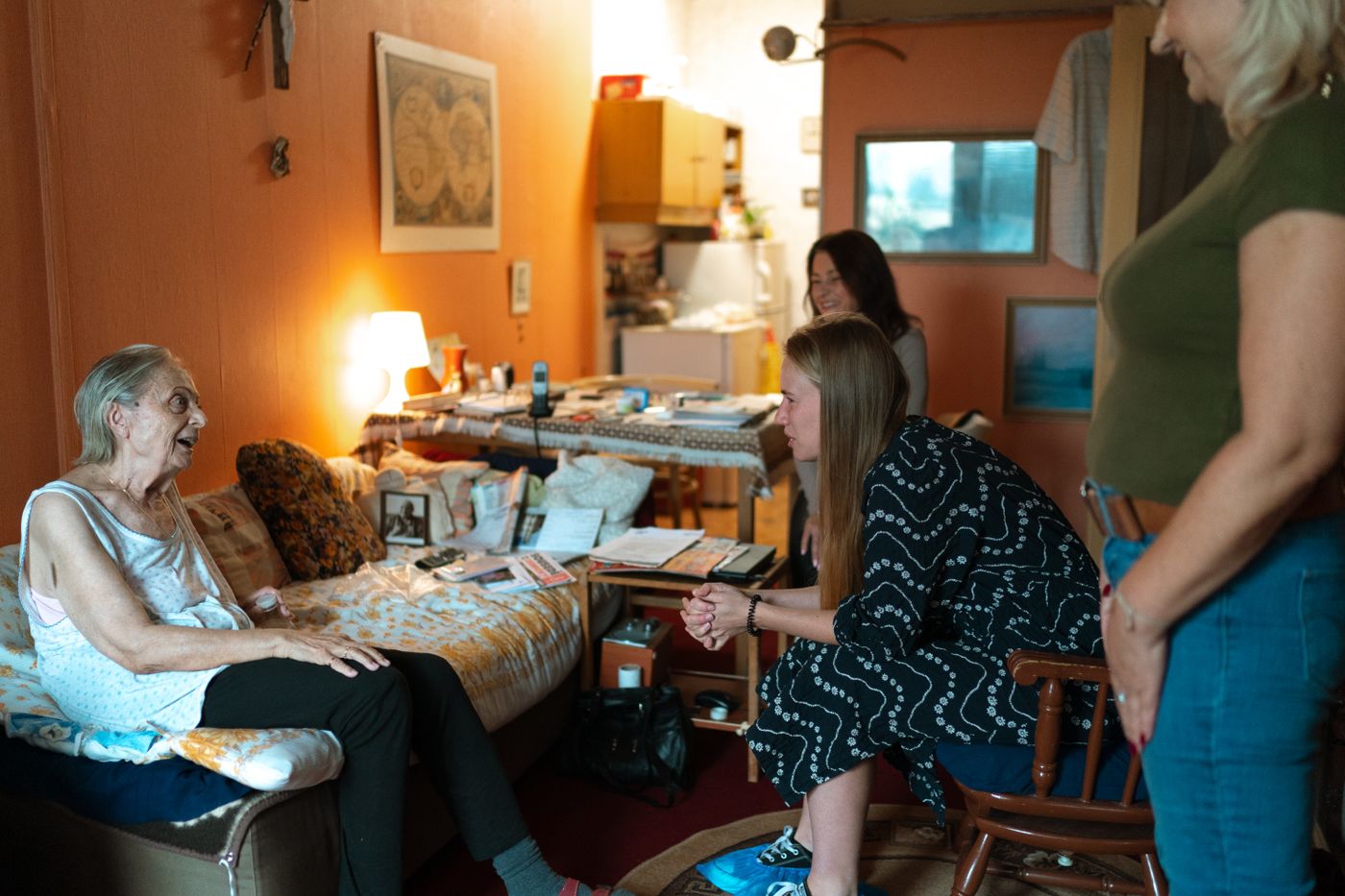
At Home VA Staffing builds Orange County care schedules that hold up when the weather does not — including backup caregiver coverage, storm-week check-ins, and help thinking through the practical things this article raises. If you are looking at this winter and realizing there is no second name on your list, let’s fix that before the next storm.
Disclaimer: This article is general information for Orange County families and is not legal, medical, insurance or emergency-management advice. Weather forecasts change; the National Oceanic and Atmospheric Administration’s Climate Prediction Center issues an updated ENSO discussion roughly monthly (next due November 12, 2026), and its October 8, 2026 outlook states that El Niño-consistent impacts are more likely “though not guaranteed.” Sandbag program terms, locations and hours are set by OC Public Works and can change — confirm current details at (714) 955-0200 before traveling. In a life-threatening emergency, call 911. At Home VA Staffing is a home care staffing company; we do not provide skilled nursing, medical treatment or emergency response services.