

Updated October 26, 2026: This article was written during the May 11, 2026 heat wave, which has passed. The forecasts and alerts below describe that event. The senior heat-safety guidance applies to any Orange County heat wave; for current alerts, check the National Weather Service San Diego office.
A second heat wave of 2026 baked Southern California in mid-May. The National Weather Service’s San Diego office had a Heat Advisory in effect through 8 p.m. Monday, May 11, for the neighboring Inland Empire valleys and an Extreme Heat Warning for the deserts, and inland OC valleys were forecast to peak near 98°F before cooler air arrived Tuesday. For seniors — especially those living alone, on heart or kidney medications, or with dementia — this 60-hour window is more dangerous than the August peaks that follow. The body hasn’t acclimated yet, and a single afternoon indoors without working air conditioning can land an older adult in the emergency room.
What’s Happening: The May 2026 Heat Wave in Orange County
This is the second significant heat event of the 2026 season, and the first to push inland Orange County valleys into the high 90s. Orange County is covered by the National Weather Service (NWS) San Diego office, which posted a Heat Advisory from 10 a.m. to 8 p.m. Monday, May 11, 2026, for the San Bernardino and Riverside County valleys next door (95 to 101 degrees), and an Extreme Heat Warning for the Coachella Valley and San Diego County deserts. Orange County itself was not placed under a heat advisory, but the same weather pattern drove its warm-up. The heat was triggered by an upper-level ridge of high pressure that has pushed daytime highs 15–20°F above seasonal averages.
Inland communities are facing the steepest temperature climb. Forecast highs for Monday include Anaheim and Fullerton near 95°F, Orange and Tustin around 96°F, and Yorba Linda, Mission Viejo, and the Inland Empire valleys reaching the upper 90s — within striking distance of 100°F. The Inland Empire as a whole is forecast to hit 98°F at the peak. A modest cooldown is expected by Tuesday evening, with a stronger marine push by Wednesday, but those first 48–60 hours are the danger window.
What makes this particular heat wave especially risky is the calendar. AccuWeather and the Centers for Disease Control and Prevention (CDC) both consistently warn that early-season heat is more dangerous than mid-summer heat. By August, OC residents have had three months to physiologically acclimate to warm afternoons. In May, the body has not yet adjusted — sweating efficiency is lower, blood plasma volume hasn’t expanded, and the cardiovascular system is working harder to cool the core. The same 96°F afternoon that’s uncomfortable in August can be a medical emergency in May.

Why Seniors Are at Higher Risk — And Why That Risk Is Bigger in OC
Adults over 65 are the most vulnerable group during any heat event, and the reasons stack on top of each other. The body’s ability to regulate temperature declines with age. Older adults sweat less efficiently and feel thirst less acutely, so they dehydrate before they realize anything is wrong. Many seniors take medications that worsen heat tolerance — diuretics, beta-blockers, ACE inhibitors, some antidepressants, and antipsychotics can all impair cooling, hydration, or judgment in hot weather.
Orange County adds a few specific risks on top of those baseline vulnerabilities. About 18% of OC residents are 65 or older (roughly 516,800 people), and the county’s Office on Aging Area Plan projects that share to reach 29% by 2060. Housing stock in older inland neighborhoods — Anaheim, Santa Ana, Garden Grove, and parts of Fullerton — often lacks central air, and many fixed-income seniors avoid running window units to keep utility bills down. Wildfire smoke from the elevated fire risk that accompanies heat waves adds another layer for residents with COPD, asthma, or heart disease.
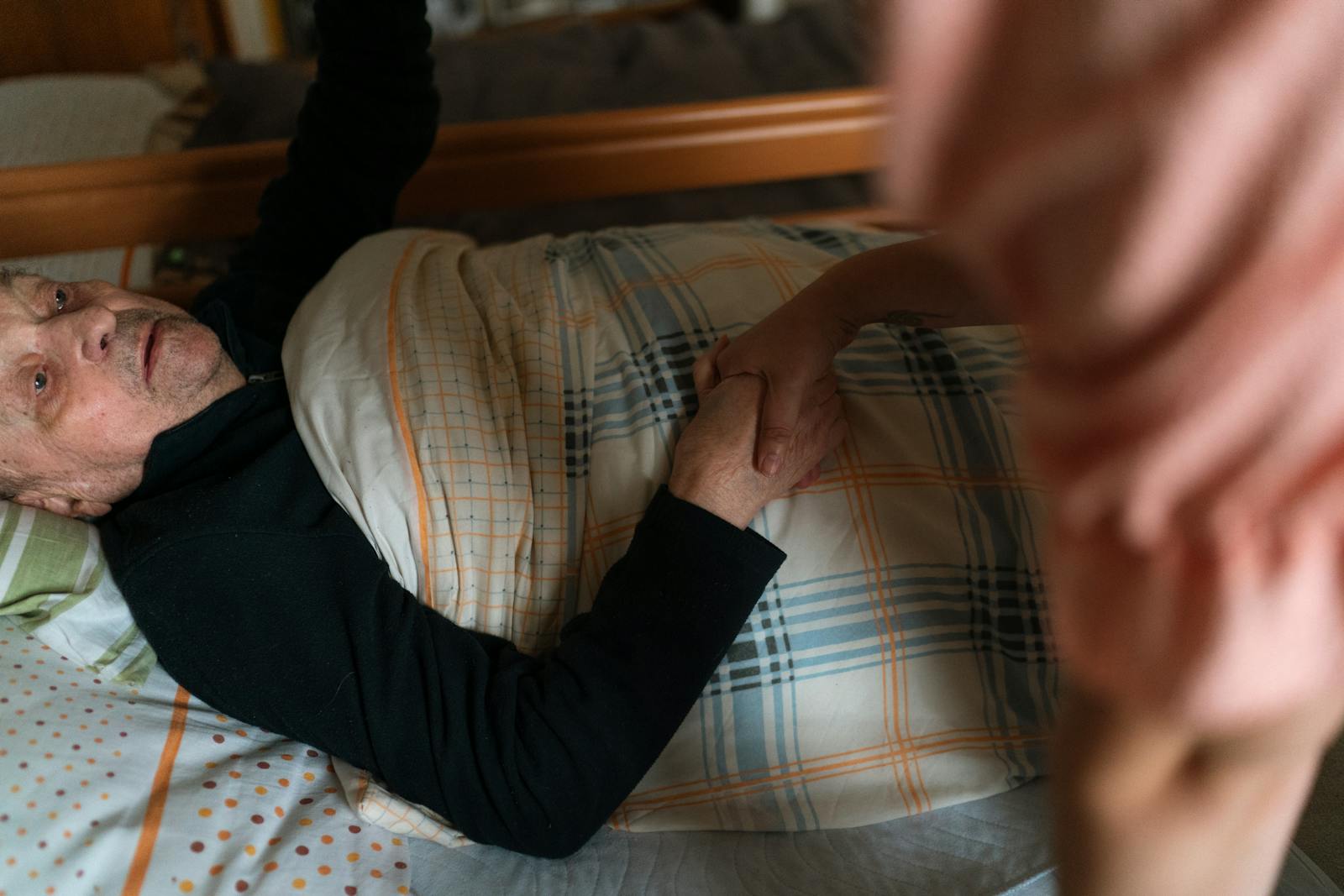
The single most dangerous combination is a senior who lives alone, has limited mobility, and doesn’t have a daily check-in. Heat-related deaths in California historically cluster in this profile — alone, indoors, with non-functioning or unused AC, in the 24–72 hours after a heat advisory begins. A daily visit, even a brief one, breaks that chain.
Heat Illness: Three Stages Every OC Family Should Recognize
Heat-related illness is a progression. Catching the early signs and reversing course buys you the time you need; missing them risks a 911 call. Here’s the three-stage picture.
The most important shift for caregivers is this: confusion or altered behavior in a senior during a heat wave is a heat stroke symptom until proven otherwise. Don’t write off a sudden personality change as a bad day or a worsening of dementia. Check skin temperature, ask the date, and if anything is off, call 911 and cool aggressively while you wait.
Where to Cool Off: OC Cooling Centers and Resource Locations
Orange County’s Office on Aging maintains a year-round list of cooling locations, and during heat advisories the County opens additional Cool Zones in partnership with cities, senior centers, libraries, and community rooms. For the May 2026 heat advisory, the most reliable refuges are:
- Public libraries — every OC city library is air-conditioned, free, and open to walk-ins. Check your city library’s Monday hours; most are open through at least 6 p.m.
- Senior centers — the Anaheim Senior Center (Downtown Anaheim Community Center), Santa Ana’s Garfield and Jerome community centers, the Norman P. Murray Senior Center (Mission Viejo), Newport Beach’s OASIS Senior Center, and the Fullerton Community Center are all on the County of Orange cooling-center list (hours vary, so call ahead).
- OC Community Resource Centers — call the Office on Aging Information & Assistance line at (800) 510-2020 for the closest open site and transportation options.
- Shopping malls and grocery stores — South Coast Plaza, MainPlace Mall, the Outlets at Orange, and any Costco or Target are reliable cool, no-pressure indoor spaces.
- Movie theaters — a matinee at an AMC, Regal, or Cinépolis in the afternoon is an underrated 2–3 hour cooling break.
If your loved one doesn’t drive, OC Access (the county’s paratransit service) and city-specific senior shuttles can help. Several OC cities — including Irvine, Newport Beach, and Laguna Woods — offer free or reduced-fare senior transportation specifically for medical and wellness-related trips, and Office on Aging volunteers can often coordinate same-day rides during heat events.
The Indoor Cooling Playbook: What Actually Works (And What Doesn’t)
Air conditioning is the gold standard, but not every OC household has functioning AC, and even those that do often run it at temperatures that are too high to protect a frail older adult. A few things to know:
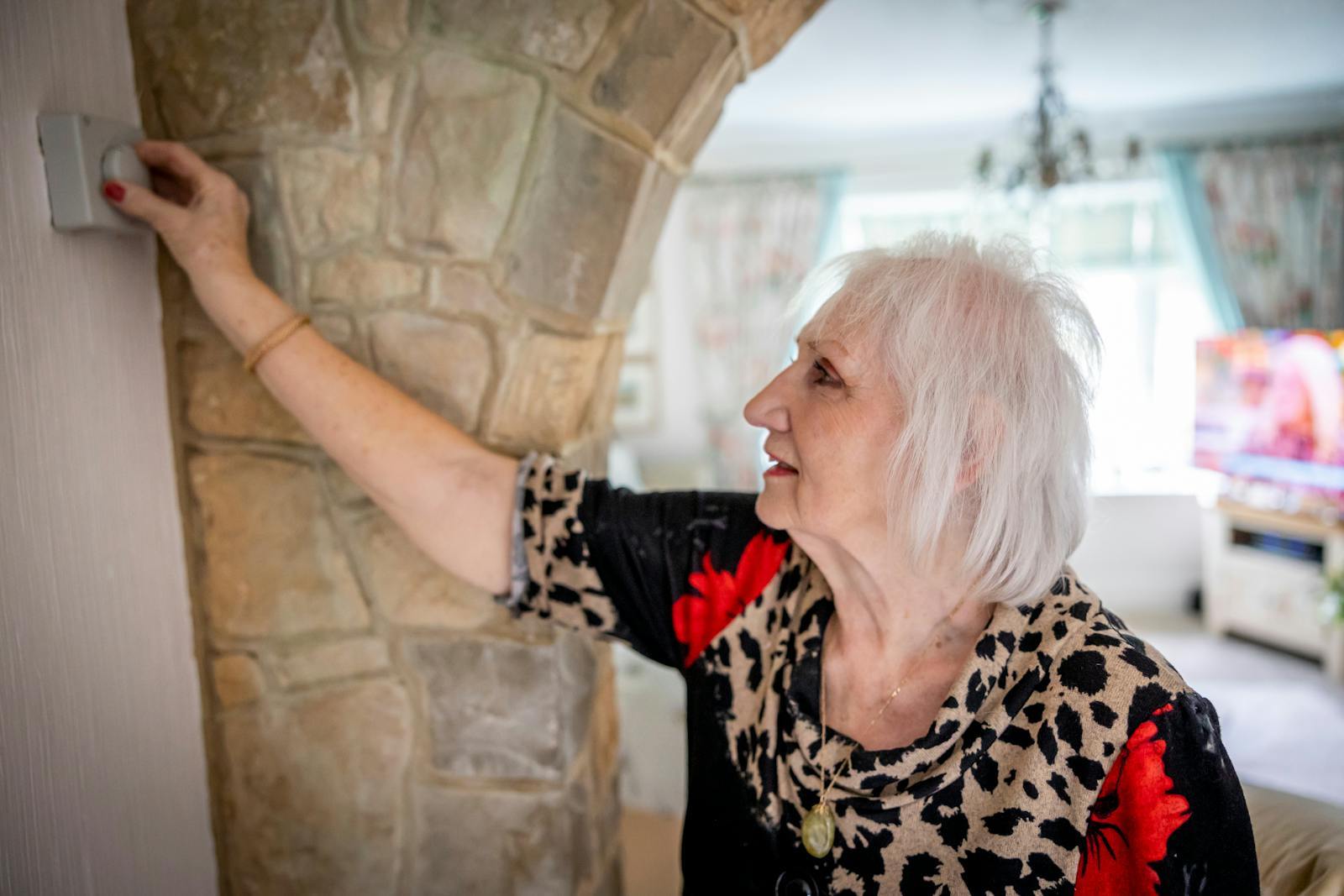
- Set the thermostat at 78°F or lower during heat advisories, even if it costs more for the day. Frail older adults need it cooler than what feels right for younger adults.
- Fans alone are not enough when temperatures exceed 95°F. The CDC has been explicit on this: when ambient air is above body temperature, a fan blowing hot air over you can actually accelerate dehydration. Use fans with AC or with cool damp cloths, not as a standalone strategy.
- Close blinds and curtains on the sun-facing side of the home by 9 a.m. The radiant heat gain through an unshaded window can raise indoor temperatures 8–12°F.
- Cook outside or use the microwave — running the oven during a heat advisory adds significant heat to the kitchen and adjoining rooms.
- Schedule outdoor activities for before 10 a.m. or after 7 p.m. Avoid the 11 a.m.–5 p.m. window entirely if possible.
For households worried about their May electric bill, Southern California Edison and SoCalGas both offer income-based assistance programs (CARE, FERA, ESA), and the federal LIHEAP program through Community Action Partnership of Orange County can help cover summer cooling costs. The Office on Aging can connect families to those programs in a single phone call.
Medications That Increase Heat Risk
Many of the medications most commonly prescribed to OC seniors meaningfully reduce the body’s ability to handle heat. This is one of the most under-discussed pieces of heat-wave safety. If your loved one takes any of the following, call the prescribing physician’s office (or the on-call line) for guidance about whether to adjust timing or hydrate more aggressively during a heat event:
- Diuretics (furosemide/Lasix, hydrochlorothiazide, spironolactone) — increase fluid loss.
- Beta-blockers (metoprolol, atenolol) — reduce heart rate response to heat stress.
- ACE inhibitors and ARBs (lisinopril, losartan) — interact with kidney function during dehydration.
- Anticholinergics (some bladder, sleep, and allergy medications) — reduce sweating.
- Antipsychotics and some antidepressants — impair the brain’s temperature-regulation signaling.
- Stimulants and decongestants (pseudoephedrine) — raise core temperature.
Do not stop any prescribed medication on your own. Call the doctor, explain the heat advisory, and ask whether the timing of the dose or fluid intake should change for the next few days.
Your Heat Wave Checklist for Seniors at Home
This is the practical task list for the next 60 hours. Tap each item as you complete it.
Quick Quiz: How Heat-Ready Is Your OC Household?
Five quick questions every OC family should be able to answer right now.
How AHVA Helps OC Families Get Through Heat Advisories
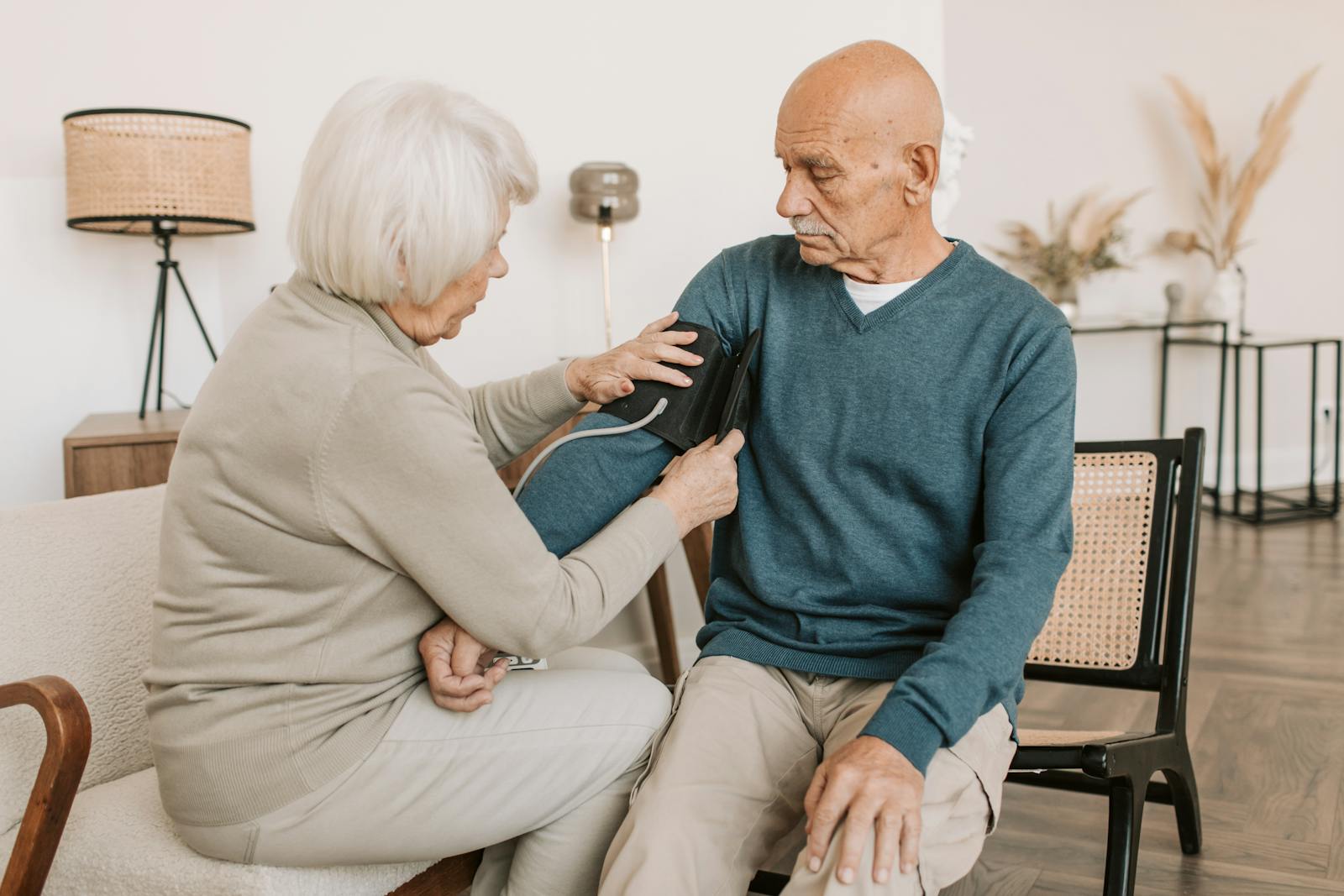
For families who can’t physically be present every day during a heat wave — or who have a loved one with dementia, mobility challenges, or chronic illness — a professional caregiver is the closest thing to insurance against a 911 call. At Home VA Staffing builds custom schedules for OC families during heat events: morning wellness check-ins, hydration prompts every 90 minutes, AC and thermostat verification, light meal prep with cooling foods, and a same-day escalation plan to the family if anything looks off.
We serve every OC city — Anaheim, Santa Ana, Irvine, Huntington Beach, Fullerton, Orange, Tustin, Costa Mesa, Mission Viejo, Newport Beach, Yorba Linda, Garden Grove, Westminster, Cypress, La Habra, Buena Park, Placentia, Brea, Laguna Woods, Laguna Hills, Laguna Beach, Aliso Viejo, Lake Forest, Rancho Santa Margarita, San Clemente, San Juan Capistrano, Dana Point, Seal Beach, Stanton, Villa Park, Los Alamitos, Fountain Valley, La Palma, and Midway City. If today is the day to set up coverage, we can usually have a caregiver in place within 24 hours.
Frequently Asked Questions: OC Heat Wave Senior Safety
The Bottom Line
The May 2026 heat wave passed in about 48–60 hours, and most OC heat waves are just as short. The risk to OC seniors comes from treating one like a normal warm afternoon. Three actions move the needle: two daily contacts (in-person or phone), a confirmed-working AC set at 78°F or cooler, and a plan for where to go between 1 and 5 p.m. if cooling at home isn’t reliable. Make those three things real before the heat peaks, and the rest of the week takes care of itself.
For deeper background on related OC home-care topics, see our earlier coverage of the March 2026 heat wave, spring allergy season senior safety, and the role of respite care for OC family caregivers.
Need Coverage During the Heat Wave?
AHVA can place a trained caregiver in an OC home within 24 hours — daytime, overnight, or full week.
Wellness check-ins, hydration coverage, AC verification, meal prep with cooling foods, and a same-day family escalation plan. Call us before the next heat spike arrives.
Talk to Our Team — (213) 326-7452Disclaimer: This article is for general informational purposes only and is not medical, legal, or financial advice. Heat-related illness can progress quickly and unpredictably in older adults. If you suspect heat stroke — confusion, hot dry skin, body temperature above 103°F — call 911 immediately. For non-emergency guidance, contact your loved one’s primary care physician or the Orange County Office on Aging at (800) 510-2020. Forecast data was current as of publication; check the National Weather Service for the latest advisory updates.